BJP Leaders, Office Bearers Resign Over UGC's New Caste Discrimination Rules
Bareilly City Magistrate Alankar Agnihotri resigned in protest against UGC's new regulations on caste discrimination
advertisement
Several Bharatiya Janata Party (BJP) office bearers in Lucknow and Bareilly, including Bareilly City Magistrate Alankar Agnihotri, have resigned in protest against the University Grants Commission’s (UGC) new regulations on caste-based discrimination in higher education institutions.
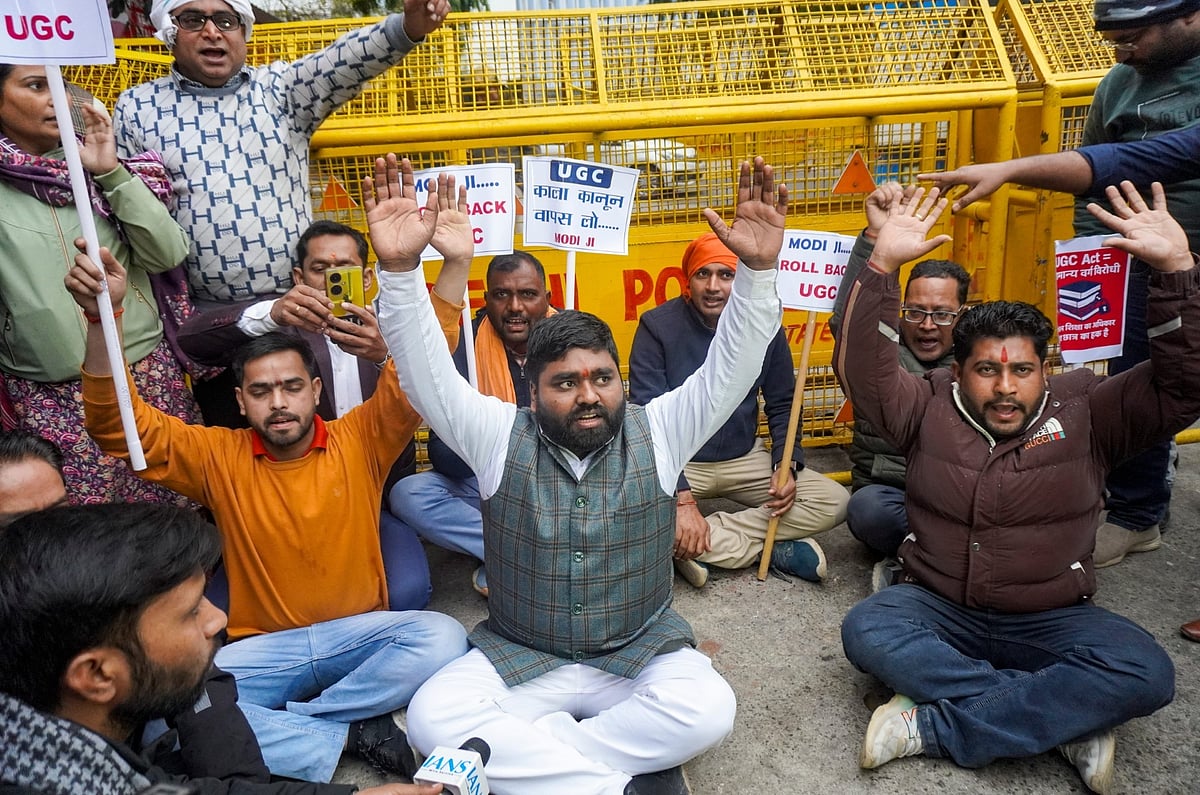
The resignations, which occurred on 26 January 2026, were triggered by concerns that the regulations unfairly target general category students and could lead to increased social division on campuses. The UGC’s Promotion of Equity in Higher Education Institutions Regulations, 2026, mandate the formation of Equity Committees and helplines to address discrimination complaints, particularly from students belonging to Scheduled Castes, Scheduled Tribes, and Other Backward Classes.
According to The Indian Express, the new UGC regulations were introduced following Supreme Court directions after petitions related to the deaths of Rohith Vemula and Payal Tadvi. The rules require all higher education institutions to establish Equal Opportunity Centres, Equity Committees, and Equity Squads, with mandated representation from reserved categories. Critics, including BJP members, argue that the regulations lack provisions for penalising false complaints and could result in the harassment of general category students.
As reported by Maktoob Media, nearly a dozen BJP members in Lucknow submitted their resignations, echoing the concerns raised by Bareilly City Magistrate Alankar Agnihotri. The resignations were accompanied by public statements and social media campaigns, with protesters claiming that the regulations position upper-caste students as likely perpetrators of discrimination. BJP Member of Legislative Council Devendra Pratap Singh wrote to the UGC, stating that the rules make general category students feel unsafe.
Political reactions have included assurances from senior BJP leaders. Coverage revealed that BJP MP Nishikant Dubey stated on social media that all misconceptions about the regulations would be addressed and that Prime Minister Narendra Modi’s government would protect the interests of upper-caste students. The controversy has also led to legal challenges, with a petition filed in the Supreme Court seeking a more inclusive definition of caste-based discrimination.
In Bareilly, City Magistrate Alankar Agnihotri’s resignation letter described the UGC rules as a “black law” and alleged that they harm the academic environment and treat general category students as “self-declared criminals.” Reporting indicated that Agnihotri called for the immediate withdrawal of the regulations and urged Brahmin representatives to resign in solidarity. The Uttar Pradesh government subsequently suspended Agnihotri for indiscipline and initiated departmental proceedings.
“Those who consider themselves leaders of Brahmins are also staying silent, just like corporate employees. I appeal to them that if their conscience is still alive, they should stand with the people,” Agnihotri stated, as quoted in official statements.
Legal scrutiny of the regulations has intensified. Analysis showed that petitions before the Supreme Court argue the regulations are exclusionary, as they deny grievance redressal to those not belonging to Scheduled Castes, Scheduled Tribes, or Other Backward Classes. Petitioners seek a direction to restrain the implementation of the rules in their current form, contending that the denial of access to grievance mechanisms based on caste identity constitutes impermissible state discrimination.
Student groups and political leaders have also voiced opposition. Further details show that Agnihotri’s resignation letter warned of potential misuse of the equity committees and expressed concern that the regulations could institutionalise discrimination rather than promote fairness. The letter also referenced recent incidents involving religious leaders, alleging a broader pattern of anti-Brahmin sentiment in the state administration.
Amid the ongoing controversy, recent developments include calls for the UGC to ensure that grievance redressal mechanisms are available to all students, regardless of caste. The Supreme Court has been urged to direct the UGC to adopt a caste-neutral and constitutionally compliant approach to discrimination in higher education institutions.
“Caste-based discrimination should be defined so that protection is accorded to all persons discriminated on the basis of caste, irrespective of their specific caste identity,” a petitioner stated in the Supreme Court filing.
Meanwhile, statements from officials indicate that the government is reviewing the situation and considering further action. The resignations and protests have prompted ongoing discussions within the BJP and among state authorities regarding the future of the UGC regulations and their impact on campus dynamics.
Note: This article is produced using AI-assisted tools and is based on publicly available information. It has been reviewed by The Quint's editorial team before publishing.