
'I Support Clean Air in Delhi, But Vehicle Ban Policies Must Protect Livelihood'
'The government needs to frame policies aimed at protecting both the right to health and the right to livelihood.'
advertisement
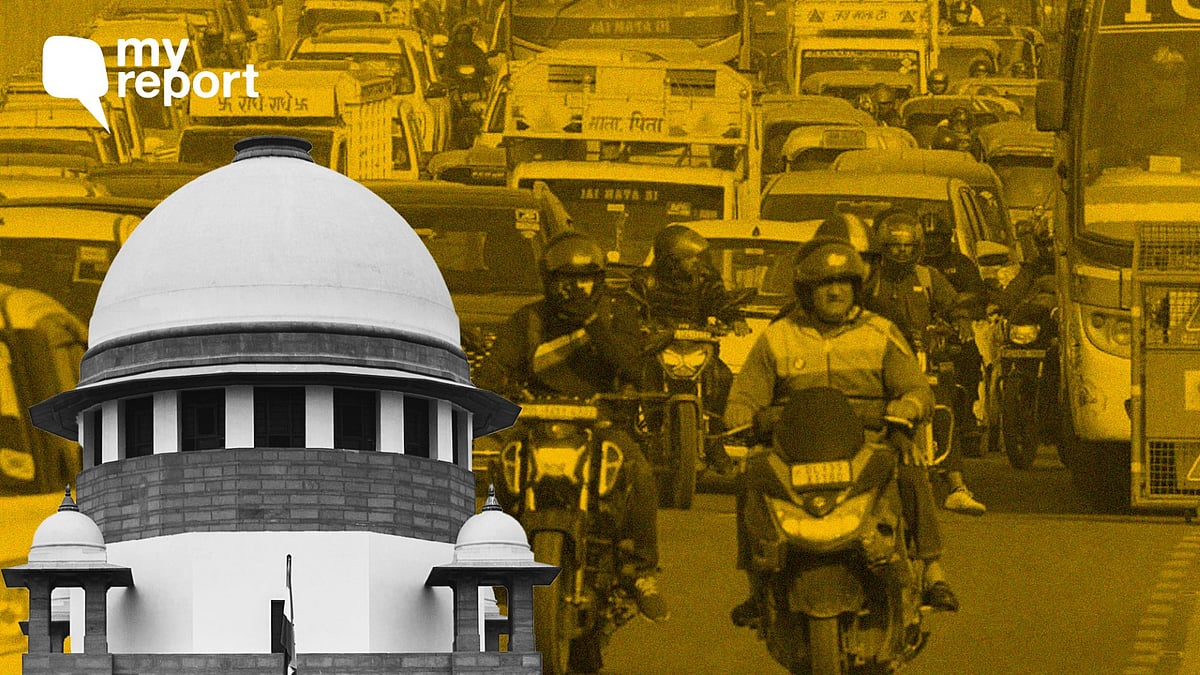
On 17 December, the Supreme Court of India revised its August interim order, which had shielded diesel vehicles older than 10 years and petrol vehicles older than 15 years from coercive action. In light of the rising pollution levels, the court has once again directed that these end-of-life vehicles in Delhi NCR can now be subject to enforcement action, including impoundment and fines.
In addition, all vehicles that fall below Bharat Stage (BS)-IV emission norms have currently been prohibited under the GRAP-III restrictions.
The National Green Tribunal (NGT) had first ordered the ban against overeage vehicles in 2015, which was later upheld by the Supreme Court in 2018. Considering the toxic air in Delhi and the rest of North India, the step seems rational.
'Impact of These Bans on My Livelihood'
In October 2022, I bought a second-hand 2012 Maruti Suzuki Swift Petrol with BS-III emission standards, purely because my job demands it.
I live in Delhi, and I work as a sales manager for a consumer electronics company in Gurugram. As part of my job, I collect orders for electronic items across all districts in Haryana.
My job isn't a typical office job. It requires me to be on the go, and commuting using a private vehicle is not a luxury, but a necessity for me. Ask any salesperson, and they will tell you that it's simply not possible to do a door-to-door job using public transport.
After that, I bought a 2012 Maruti Suzuki Swift for Rs 3.2 lakh. Now, once again, I am staring at the prospect of selling this car in two years at a throwaway price.
'Delhi Government's U-Turn'
In August, Delhi's Environment Minister, Manjinder Singh Sirsa, had said, "We need a data-backed policy, not blanket bans. Pollution needs to be tackled, yes, but in a way that is fair and scientifically accurate."
When the Delhi government had filed a petition before the court, arguing that the 'end of life' for a vehicle should be determined not by its age, but by the pollution it emits, I was relieved.
What does this show on the part of the Delhi government? Doesn’t it seem like the government is constantly playing catch-up and falling behind the curve? Policies need to be visionary and anticipatory, not merely reactionary.
The government needs to frame balanced policies aimed at protecting both the right to a healthy life and the right to livelihood and profession.
I no longer have the financial capacity to buy a third car. Nor am I at an age where I can easily switch to another office job, especially in these difficult market conditions.
'My Sincere Appeal To The Government'
First, if citizens are being asked to upgrade their vehicles, then the government, which has already collected enormous sums through taxes at the time of purchase, should allocate a part of that money to incentivise people so they can transition to newer emission norms.
Second, the government should invest in rigorous research on retrofitting technologies for existing vehicles to reduce emissions cost-effectively.
This has a dual benefit. If vehicles can be used longer with lower emissions, it would also reduce automobile waste, which in itself is an environmental concern. After all, this is what Sirsa had said post the order in August:
I hope they stand by what they have promised.
Third, the government must study policies followed across the world. For instance, in the US, a vehicle’s compliance is determined by its year of manufacture. A 2005 car is not expected to meet 2025 norms. If it meets the standards applicable to its year, it is allowed to operate.
(The Quint has reached out to the Environment Ministry of the Delhi government for a response. The story will be updated as and when they respond.)
(All 'My Report' branded stories are submitted by citizen journalists to The Quint. Though The Quint inquires into the claims/allegations from all parties before publishing, the report and the views expressed above are the citizen journalist's own. The Quint neither endorses, nor is responsible for the same.)
- Access to all paywalled content on site
- Ad-free experience across The Quint
- Early previews of our Special Projects
Published: undefined