Bold, Driven, Unapologetic: Women on OTT Are Getting to Be More Than One Thing
New OTT stories portray women as complex individuals, balancing ambition, family, and societal expectations.
advertisement
This article has been authored by a member of The Quint. Our membership programme allows those who are not full-time journalists or our regular contributors to get published on The Quint under our exclusive 'Member's Opinion' section, along with many other benefits. Our membership is open and available to any reader of The Quint. Become a member today and send us your articles at TQmembersonly@thequint.com.
For years, women in Indian television serials were mostly shown as devoted wives, caring mothers, obedient daughters or daughters-in-law struggling with family problems. Their lives often revolved around marriage, household responsibilities and keeping everyone happy. While some shows did present strong female characters, the overall picture remained largely traditional. Today, however, OTT platforms are slowly changing the way women are represented on screen.
With the growing popularity of Netflix, Amazon Prime Video, JioHotstar and other streaming platforms, audiences are seeing women in roles that go beyond the traditional image of the ideal Indian woman. They are politicians, police officers, working professionals and ordinary women trying to make their own choices.
From 'Maharani' to 'Panchayat'
One of the best examples is Maharani, featuring Huma Qureshi as Rani Bharti. The series follows the journey of a homemaker who enters politics and gradually becomes a confident political leader. Initially, she is underestimated because of her background and lack of experience. However, she slowly learns to make her own decisions and establish her authority. Her journey reminds us that leadership is not limited to people with powerful backgrounds or formal political training. Given the right opportunity, women can develop the confidence and ability to lead.
A similar change can be seen in Panchayat. The character of Manju Devi, played by Neena Gupta, is particularly relatable. Although she holds the position of village pradhan, her husband initially handles most of the official responsibilities. As the series progresses, she becomes more involved in village politics and starts expressing her opinions with greater confidence.
These characters reflect what feminist sociologist Sylvia Walby explains through her theory of patriarchy. She argues that male dominance is not limited to the family but also operates through political, economic, and social institutions. Women may enter politics or take up important positions, but this does not always mean that they enjoy equal power. Rani Bharti and Manju Devi show that there is a difference between being given a position and being able to exercise authority independently.
The Faces of Liberal Feminism
The portrayal of working women has also become more realistic. In Delhi Crime, Shefali Shah's character, Vartika Chaturvedi, is a capable police officer who leads difficult investigations. She is shown dealing with serious responsibilities, difficult decisions and the pressures of her profession. Her character is important because her strength comes from her experience, intelligence and commitment to her work, rather than from dramatic displays of power.
In Kohrra Season 2, Mona Singh plays Dhanwant Kaur, a police officer who leads a complicated murder investigation. What makes her character interesting is that she is not presented as a woman who has everything under control. She carries emotional burdens and faces difficulties in both her personal and professional life. Her character reminds us that women can be strong and vulnerable at the same time.
Such characters also connect with the ideas of liberal feminism, which emphasises equal opportunities, individual freedom and women's right to participate in public life.
Some of the most meaningful changes in women's representation are coming through simpler stories of ordinary families. Gullak Season 5, released in 2026, continues the story of Shanti Mishra, played by Geetanjali Kulkarni. Shanti is a middle-class homemaker who spends much of her time looking after her husband, children and household needs. She worries about money, manages family problems and often puts her own wishes aside. Yet ,she is much more than just a mother or wife. Her character encourages us to think about why the work done by women at home is so often taken for granted.
There is something familiar about Shanti Mishra. She reminds us of women in our own families who spend years caring for others but rarely receive recognition for their efforts. A similar character is Sushma Kataria, played by Sheeba Chaddha in Bakaiti, which returned for a second season in 2026. Sushma manages the everyday problems of a middle-class family while dealing with her children's expectations, financial concerns and her own wishes. Both characters represent women whose contribution to the family is enormous but often goes unnoticed.
Their experiences bring attention to an important concern raised by feminist thinkers: the unequal division of household work.
Feminist scholars have long argued that cooking, cleaning, childcare and looking after elderly family members are forms of work, even when no salary is attached to them.
Cases of Gender Socialisation
The 2026 OTT film Babita Singh Reporting, featuring Nimisha Sajayan, presents another interesting female character. Babita is a police officer who is used to adjusting to the expectations of people around her. She is not the typical confident police officer often seen in crime dramas. She faces family pressures, an unsupportive environment and doubts about her own abilities. As she investigates a murder, she gradually begins to trust her judgement and find her voice. Her journey is relatable because many women struggle to balance their responsibilities towards their families with their own professional identities.
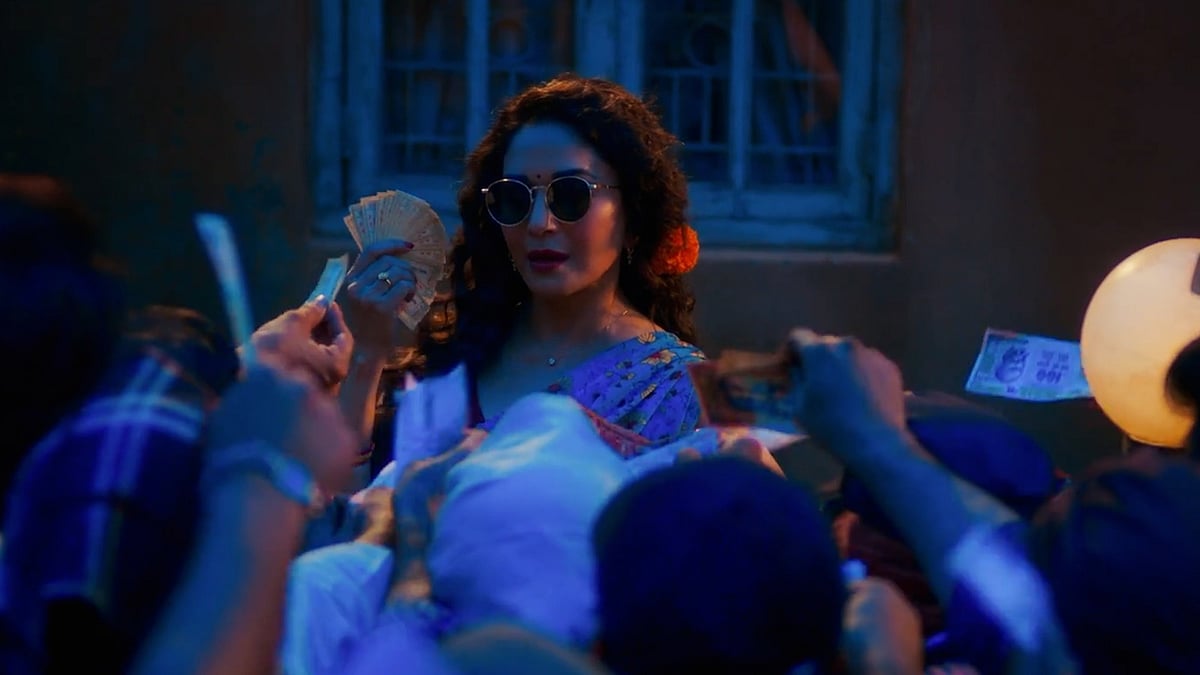
Even the 2026 film Maa Behen, starring Madhuri Dixit, Triptii Dimri and Dharna Durga, raises familiar questions about how society judges women. Through the story of a mother and her two daughters, it brings out family relationships, social expectations and the fear of public judgement. Although the film uses comedy and an unusual crime story, it offers an opportunity to reflect on the different standards society often applies to men and women. A woman who makes independent choices may face criticism that a man in a similar situation does not.
French feminist thinker Simone de Beauvoir challenged the belief that women's social roles are fixed by nature. In her famous work The Second Sex, she explained how society shapes the expectations associated with being a woman. Her ideas remain relevant today.
Why is a woman expected to be more adjusting after marriage? Why is household work still considered primarily her responsibility? Why are ambitious women sometimes judged differently from ambitious men?
When OTT characters begin questioning these expectations, they also encourage viewers to think about traditions that have been accepted for generations.
Caste, class, economic background, age and social circumstances also shape the opportunities available to women.
This becomes clear when we compare characters such as Rani Bharti, Manju Devi, Vartika Chaturvedi and Shanti Mishra. Their lives are very different, and so are their struggles. For one woman, empowerment may mean entering politics. For another, it may mean being respected at work. For someone else, it may simply mean having a say in household decisions. There cannot be one definition of empowerment that applies equally to every woman.
However, there is another side to this changing representation. Not every woman needs to become a politician, police officer or successful professional to be considered empowered. A homemaker who participates equally in family decisions, a woman who starts a small business, a mother who returns to education or a young girl who chooses her career can also represent empowerment. Such everyday experiences are equally important.
What is encouraging about some of the newer OTT shows is that women are being shown as ordinary human beings rather than perfect individuals. They can be emotional, confused, ambitious, caring or sometimes wrong. They may love their families but also want some time and space for themselves. They may respect traditions but still question certain expectations. These are the contradictions that make their characters more realistic.
At the same time, there is still room for improvement. Many OTT shows continue to focus on women's suffering, violence, troubled relationships or personal struggles. While these issues deserve attention, women's lives are not defined only by difficulties. Their happiness, friendships, ambitions, humour and everyday achievements deserve equal space.
There is also a need for more stories about women from different social and economic backgrounds. Women living in villages, small towns and less privileged communities face their own challenges and make important contributions to society. Their stories should not remain in the background while the idea of the modern Indian woman is limited to those living in big cities.
Ultimately, a woman who chooses to manage her home deserves as much respect as one who chooses a professional career. What matters is that the decision should be her own.
(Dr Jyotika Teckchandani is an Assistant Professor at the Amity Institute of Social Sciences, Amity University ,Uttar Pradesh. Her areas of interest include Foreign Policy Analysis, Indian Politics, International Relations, Gender Studies and West Asian Politics, with a particular focus on Iran. This is an opinion piece, and the views expressed above are the author’s own. The Quint neither endorses nor is responsible for the same.)