
Why 'Haq' Resonated Across the Border: A Pakistani Woman on its Netflix Success
'Haq' not only became the most watched movie on Netflix, but a topic of discussion among women in Pakistan.
advertisement
It is rare to see a woman challenging the system.
Those who stand up against societal pressure to change the status quo are frightening, and if it’s a woman, even more so. Society seems to fear that her voice will pierce the webs of patriarchy that have held her back. However, once unleashed, a woman’s voice pierces these barriers, generating traction and power, threatening the very social infrastructure constructed over centuries by patriarchy and misogyny.
A Film That Transcends Borders
Although this film is focussed on Islamic marriage laws and divorce inspired by some real-life cases in India, the issue transcends borders, nationalities, cultures, and even religion. This is a gender issue which may manifest in different ways in different countries, but the gist is the same suppression of human rights of a section of society—women in this case— based on their gender.
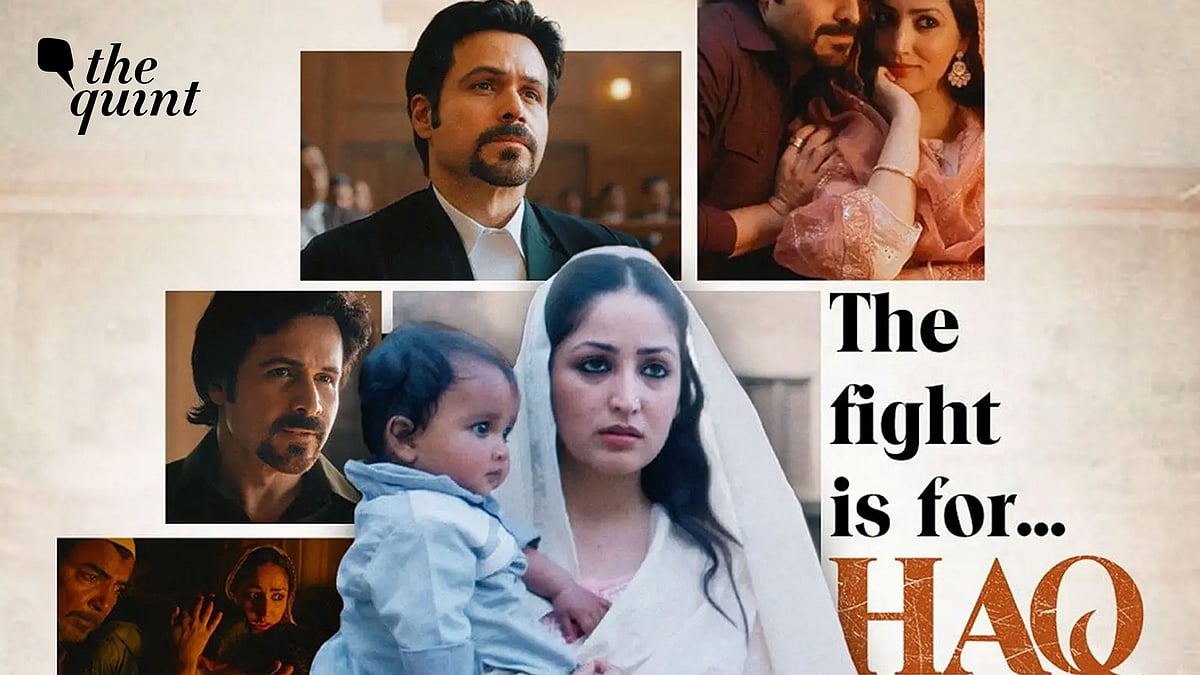
Haq is a glamourless, simple story which has piqued interest and begun a much-needed conversation about human rights and the usurping of the same. It unsurprisingly became the most watched movie on Netflix Pakistan—and a topic of discussion among women in Pakistan, with demands that gender issues should constitute a larger portion of content produced.
There is still a huge audience for this content, as we see with the popularity of K-Drama. But the success of serious, real-life-inspired films like Haq is probably because they touch the dormant yet innate emotions that seldom get mentioned.
The Relatibility of 'Haq' Among Women
The story of Haq revolves around an Indian Muslim woman fighting for her haq (right) when she is disenfranchised in her marriage. Her loving husband decides to take on another wife, taking an emotional toll on her with his increasing indifference to her.
The film aptly shows the insignificance of a woman and her feelings, especially pitched against her husband. Millions of women probably relate to this situation as they silently fight their own battles, trying to exist in a patriarchal system.
Interestingly, the same small plot of land gives Bano stability despite the storm in her life, from which she continues to fight her battle.
We cannot overlook how Hashmi understood the assignment, as they say, in portraying an emotionless privileged man, using his elevated position in a patriarchal system against a woman. His character is seen publicly humiliating his former wife in court in several scenes, oblivious that he is mistreating the woman who was once his ‘honour’.
Bano signifies a woman’s vulnerability in a society which is remorselessly depriving her of her identity and dignity. Her story mirrors the frustration and struggle of numerous others whose lives shatter around them as they are stripped of their identity and dignity and forced to exist.
Why Pakistani Women Embraced the Film
Pakistani women recognise the issues Bano faces in the film—patriarchy, misogyny, rejection in marriage, a single parent fighting for alimony, and a woman’s weak social position—as what they or someone they know endure.
Content is generally not produced keeping serious gender issues in mind, as it is not commercially viable. Producers believe the audience wants entertainment over issues that are closer to life. This may be true, but it does not mean that the audience does not want serious, in-depth, and well-written content focused on real issues either.
With the rise of Indian content full of decked-up beautiful women, exaggerated family drama, and so-called women-centric content coming in through satellite dishes in the 1990s, Pakistani media began losing viewers. Producers and writers began churning out senseless, shallow content, focusing more on the wardrobe and glamour than the story.
This continued until the internet disruption gave the viewer more control over the content consumed, and the mood began to change. More and more people wanted to watch solid stories that delivered more than just good-looking faces riddled in needless and endless family intrigue.
And then, Pakistani media began producing better content that focused on real gender issues—like Zindagi Gulzar Hai (gender bias) in 2012; Udaari (sexual abuse) and Khuda Mera Bhi Hai (transgender individuals) in 2016; Baaghi (honour killings) and Sammi (forced marriage) in 2017; Sinf-e-Aahan (female agency) in 2022; and Mayi Ri (child marriage), Sar-e-Raha (challenging stereotypes), Razia (women's education), and Guru in 2023. And, most recently, Case No. 9 (a courtroom drama for women's rights).
Writers should be encouraged to write more such scripts without worrying about the commercial aspect. Haq’s success on Netflix should be an eye-opener for what viewers want to watch, instead of forcing shallow but glamorous content on screens.
(Lubna Jerar Naqvi is a senior journalist in Pakistan. This is an opinion article and the views expressed are the author’s own. The Quint neither endorses nor is responsible for them.)
- Access to all paywalled content on site
- Ad-free experience across The Quint
- Early previews of our Special Projects
Published: undefined