'Dhurandhar The Revenge': A Ranveer Singh Show All the Way
After the simmering joys of Rehman Dakait, 'Dhurandhar 2' isn’t able to muster a similarly towering figure.
advertisement
Mild spoilers ahead.
Aditya Dhar's Dhurandhar The Revenge opens with the origin story that was promised.
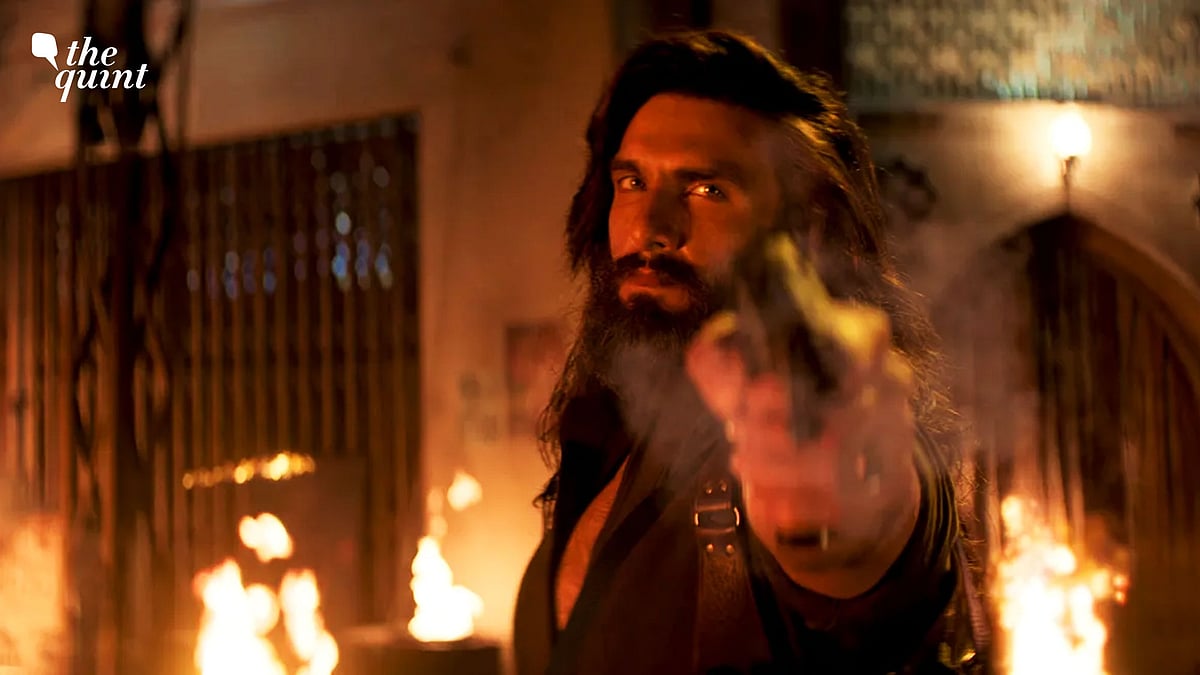
Before dreaded Pakistani gangster—and undercover Indian spy—Hamza Ali Mazari, there was army officer Jaskirat Singh Rangi. In the year 2000, we see a younger Jaskirat (a tremendous Ranveer Singh) buying guns before singlehandedly storming a beastly stronghold in his hometown of Pathankot, maiming and tearing through every man he comes across in search of a family member held captive.
Ranveer Singh as Jaskirat Singh Rangi.
It’s also far superior to any set piece the first film had to offer.
Dhar’s film doesn’t get enough credit for mounting glorious action “vibes” while delivering very few actual set pieces. The first film conveyed the feeling of endless slick gunfights and massive clashes.
But the fact remains that, with the first film, Dhar relied too heavily on packaging, treatment, and the world he’s created—seductive as it was—without offering much narrative juice. Thankfully, despite its bladder-bursting four-hour runtime, this (apparently) concluding chapter packs more of a punch than its predecessor.
A Sauceless First Half
The first half of The Revenge briskly covers how Hamza goes from top general of the now-deceased Rehman Dakait (Akshaye Khanna is sorely missed here), to the ruler of Lyari, and by extension Karachi.
Arjun Rampal as Major Iqbal.
Despite its two-hour duration, it’s curious just how little transpires during the surprisingly sauceless pre-interval half.
The infamous Lyari Gang War and its bloody power struggle, which no doubt inspired the making of these films, is flattened into a single montage and done away with in minutes. It’s a wider issue The Revenge has.
We get "vibes"-heavy sequence after sequence of repetitive shootouts and explosions. The idea is to denote Hamza becoming top dog—and slowly coming into the fold as Major Iqbal and Bade Saab plan another terrorist attack on Indian soil that Hamza must thwart. I’m not sure why the film required over a 100 minutes to cover such little narrative ground. But restraint is certainly not a feature of these films. A punishing duration is the promise.
A Ranveer Show All the Way
But, even at its most flaccid, Dhurandhar The Revenge is a Ranveer Singh show all the way. He’s in almost every frame, and powers the conclusion with fury. If the table-setting first film demanded he be relegated to the background for the most part, The Revenge sees him front and centre.
'Dhurandhar The Revenge' is a Ranveer Singh show all the way.
Much is said about his “range”—the soft stillness of Lootere and Gully Boy to the uncontainable dynamism of Simmba and Padmaavat. Dhurandhar sees Ranveer Singh examine both in a compelling portrait of a man wearing so many masks, he’s scared to face what’s underneath.
It helps that Dhar proves he’s one of the few aura-farming filmmakers from Hindi cinema who can deliver. He can “present” stars, and root scale and swag in gut-punch emotional conviction. But Dhar’s great talent is his ability to get an audience’s blood boiling like few others.
Not since Uri: The Surgical Strike have I been in a packed theatre with audiences of all ages watching stomach-churning violence and rooting for it.
Second Half Packs a Punch
Any sense of surprise, narrative newness, compelling conflicts, and enjoyable twists are all reserved for the second half of The Revenge.
Hamza encounters a familiar face from his past life, which complicates matters, for example, and the pay-off is another impressive fight sequence. The violence lands because both characters are reluctant toward it. The emotional stakes feel real. Similarly, a showdown with his wife Yalina (Sara Arun is given more to do this time) that follows is among the most human moments Hamza and his bloody crusade are awarded.
The larger problem plaguing The Revenge is the lack of a worthy foil for Hamza. The Revenge has a serious antagonist problem, and by extension an Akshay Khanna-sized hole. After the simmering joys of Rehman Dakait, The Revenge isn’t able to muster a similarly towering figure.
As for the film’s incendiary agenda and ragebait ethos, The Revenge expectedly just doubles down on the propaganda.
As teased last time, a key part of the saga here is a buildup to the “masterstroke”—and the apparent victory of demonetisation. It’s not just the film’s framing of fiction as fact that’s unsettling, or that the Muslim population (on both sides of the border) are demonised to no end. It’s that the government glorification sequences are just clunky and feel gimmicky. It’s why the undercover spy story is far more engaging than the India story.
And that remains the real genius of Dhar’s sprawling saga. That he ties the fate of the nation to one man’s brutal rise to power within a thunderous gangster narrative. As if beards and biceps and hypermasculine masala cinema as the genre of the moment wasn’t dominating enough, Deshbhakti KGF meets patriotic Pushpa.
Dhurandhar The Revenge releases in theatres worldwide on 19 March.
(Suchin Mehrotra is a critic and film journalist who covers Indian cinema for a range of publications. He's also the host of The Streaming Show podcast on his own YouTube channel. This is an opinion piece, and the views expressed above are the author’s own. The Quint neither endorses nor is responsible for the same.)