COP31: Can Fossil Fuel Lobbyists Be Stopped From Derailing Climate Action?
These lobbyists are known to spread disinformation, such as claiming fossil fuels are part of the solution.
advertisement
This week, it was revealed that 100 corporations and industry groups tied to fossil fuel interests – including the US multinational ExxonMobil and French energy company TotalEnergies – have sent delegations to this year’s global climate summit COP31 in Turkiye.
These climate talks have a long history of lobbyist interference. More than 1,600 fossil fuel lobbyists attended the COP30 talks in Brazil last year, and more than 1,700 at the 2024 talks in Azerbaijan.
At COP31, fossil lobbyists will have been hard at work promoting fossil fuels. Their methods often draw on what academics call “discourses of delay”.
This is how it works. To slow the shift away from fossil fuels, lobbyists spread disinformation, such as claiming fossil fuels are part of the solution (“gas is a transition fuel”), that future technologies will save us (carbon capture), or we’re doomed and it’s too late to act. Oil and gas companies have dramatically increased their Google ads in the month leading up to COP31, for example.
A new UN report says it’s now too late to hold the global temperature rise to 1.5°C. The world will likely pass this threshold in 2030.
A big reason for this is obstruction by lobbyists of climate policies that target the root cause of climate change – fossil fuels. So, why are fossil fuel lobbyists allowed into these talks?
A Long History of Lobbying
Sadly, this story is all too familiar. For as long as there have been international climate talks, fossil fuel lobbyists have tried to persuade countries not to act with the urgency the science demands.
It took more than a quarter of a century of climate talks before fossil fuels were explicitly addressed at the Glasgow COP in 2021. Until then, the focus was on greenhouse gas emissions – but not the fossil fuels causing them.
Corporate fossil fuel lobbyists have been assisted by so-called petrostates, such as Russia and Saudi Arabia, whose economies are highly dependent on oil and gas production.
Pushback in Brazil
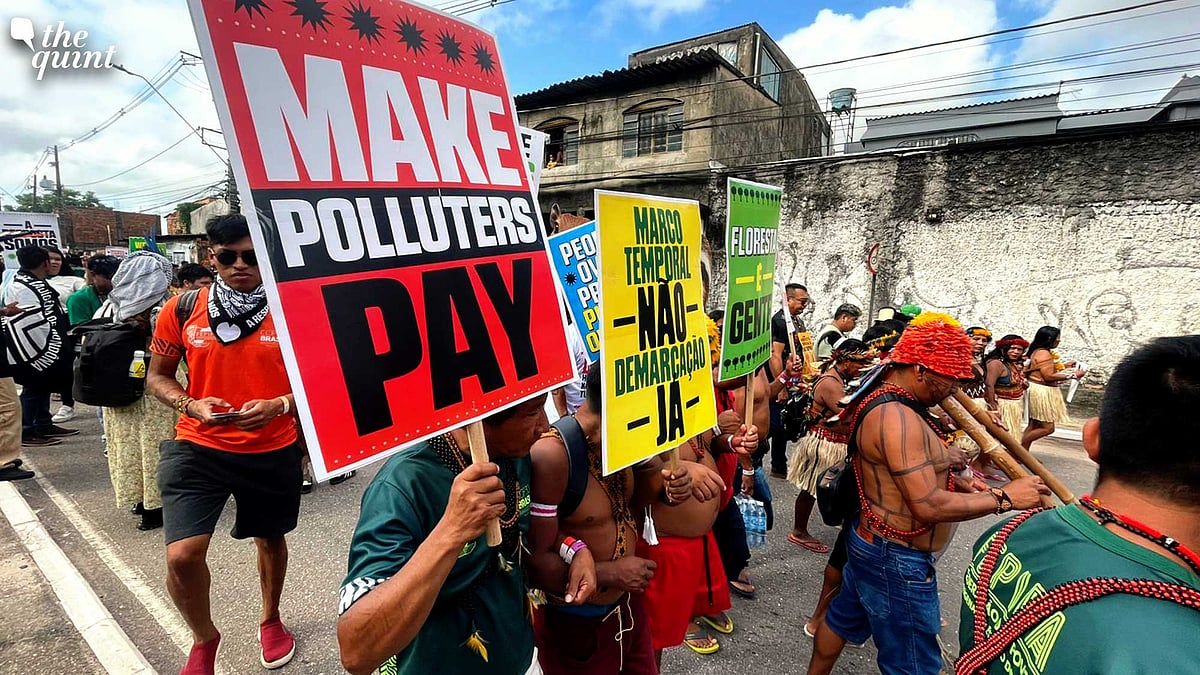
At last year’s COP30 summit, host country Brazil tried to push back against fossil fuel lobbyists.
Alongside the UN and UNESCO, Brazil launched an international partnership to counter climate change disinformation and misinformation.
Thirty countries have since signed onto the declaration, which calls out the:
Lobbyists gain access to the talks in different ways, including through affiliations with non-governmental organisations and industry groups and as part of official government delegations.
While this year’s draft negotiating text makes reference to information integrity, there’s still no clear code of conduct or meaningful disclosure of fossil fuel industry ties for the thousands of delegates attending COP31. There are no clear, explicit rules against spreading climate disinformation.
What are Lobbyists Targeting This Time?
There are more than 100 different agenda items up for debate at COP31, many of which are opposed by fossil fuel lobbyists.
Negotiators are still discussing a UN initiative designed to rapidly increase efforts to cut greenhouse gas emissions, for instance.
Alongside the official agenda, COP President and Turkish Environment Minister Murat Kurum released a separate “action” agenda organised around 10 themes. Some of these, such as transitioning to clean energy, threaten fossil fuel interests.
Fossil fuel lobbyists will likely try to block calls for phasing out coal, gas and oil – just as they did last year, where Brazil’s efforts to formalise a roadmap transitioning away from fossil fuels ran aground.
If this translates to more electric vehicles, batteries and heat pumps in homes and electric furnaces in factories, it would mean less demand for oil and gas. That would affect profits for companies such as ExxonMobil and Shell.
Australia on the Tightrope
Australian Climate Change Minister Chris Bowen is acting as president of negotiations at COP31 as part of a co-hosting arrangement with Turkiye. This represents a tightrope walk for Australia.
Domestically, the Albanese Labor government is attempting to speed up the energy transition. Policies such as subsidising home batteries have proven a strong success. More than 600,000 households have installed batteries since the program began last year. Electric vehicle uptake is rapidly accelerating.
Internationally, however, Australia remains one of the world’s largest coal and gas exporters. State and federal governments keep approving new projects. Given this, many countries have questioned Australia’s climate credibility, especially its Pacific neighbours.
“The dinosaurs did not have a lobby. Fossil fuels do,” he said.
Can Progress be Made Despite Lobbyists?
As COP31 enters its final days, the eyes of the world will be on Australia and Turkiye.
Should the co-hosts fail to get agreement on concrete steps to advance Brazil’s latest efforts to transition away from fossil fuels, many countries will be left disappointed.
But despite the best efforts of the fossil fuel industry, momentum for a shift away from oil, gas and coal is gathering pace outside the UN talks.
In April, nations attended the first international conference on transitioning away from fossil fuels, while the Fossil Fuel Non-Proliferation Treaty Initiative continues to gain members.
As always, though, much more needs to be done, and quickly. Clamping down on lobbyists and climate misinformation is well overdue.
(Christian Downie is Professor of Political Science, School of Regulation and Global Governance, Australian National University. William Kakenmaster is a Postdoctoral Research Fellow in Regulation and Global Governance, Australian National University. This article is republished from The Conversation under a Creative Commons license. Read the original article.)