Heat, Pregnancy, Mental Health: The Health Crisis COP31 is Putting in Focus
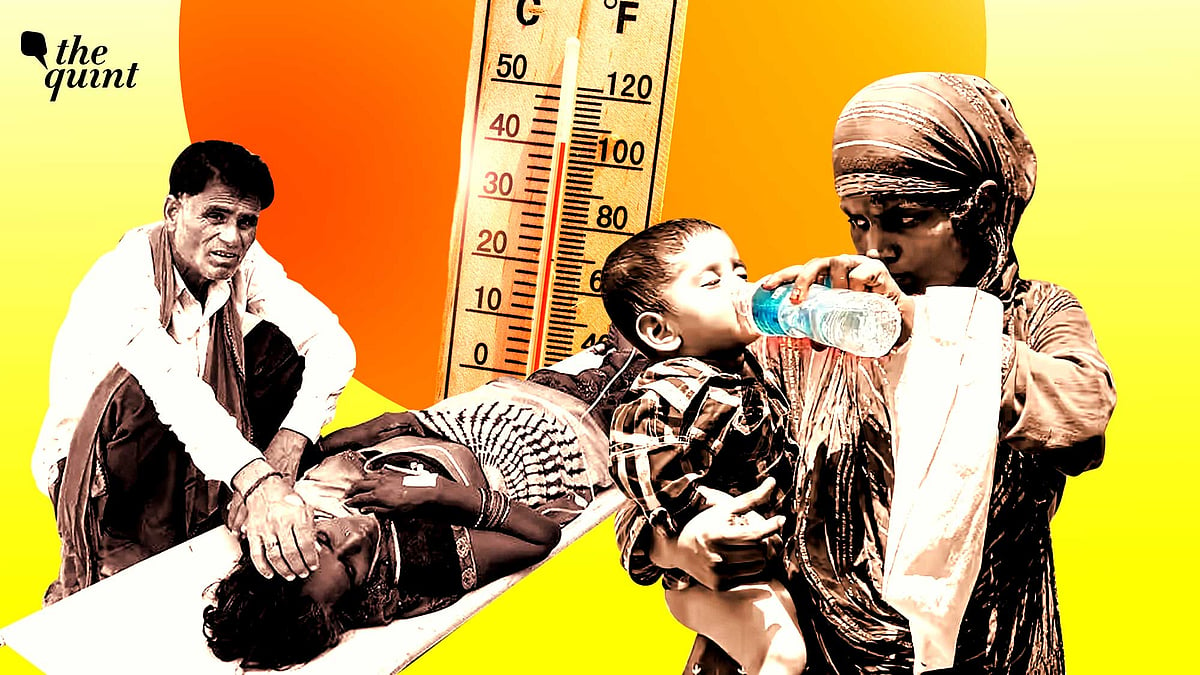
A new survey revealed that clinicians have growing concerns about heat-related impacts on maternal health.
advertisement
The Quint is telling the full story of how climate change is reshaping lives in India. Help us do more. Become a member.
With countries negotiating how to tackle the climate crisis at 31st Conference of the Parties (COP31) in Türkiye, its often-overlooked toll on human health is becoming harder to ignore.
As the first week wrapped up, the World Health Organisation (WHO) and Wellcome—a UK-based charitable foundation supporting health research—hosted more than 35 panels with experts and policymakers at the Health Pavilion. Discussions on the sidelines spotlighted how climate change is affecting health, particularly for expectant mothers.
According to a study released by Wellcome at COP31, the risks faced by pregnant women and newborns are startling.
Pregnant Women at Risk as Heat Guidelines Lag
On what can be done to address the situation in India, Dr Alan Dangour, Director of Climate and Health at Wellcome, told The Quint, “The first thing is a much better understanding of the fact that pregnant women are a vulnerable group—now that there’s clear evidence. The next thing, of course, is how we care for pregnant women and what the health system and our health care workers are going to do to protect women."
Karthika Kumar, Research Fellow at The George Institute for Global Health, is part of the five-year Heat in Pregnancy – India project, which runs until 2028. The research explores how pregnant and lactating women experience and navigate extreme heat, including the everyday strategies they adopt to cope with rising temperatures.
"What is important is understanding that these choices are shaped not just by individual awareness, but also by the resources and circumstances women live in. Our research is helping us understand these everyday adaptations, the barriers women face, and where additional support is needed,” Dr Kumar told The Quint during the discussion, which she joined virtually.
Political Declaration to Advance Transition
On 9 November, when climate leaders marked Health Day in Türkiye, the governments of Spain and Peru launched the Political Declaration on a Healthy Transition, urging undersigned ministers to commit to advancing renewable energy and energy efficiency given fossil fuels are the root driver of climate-related health impacts. The declaration commits the health sector (representing 10 percent of the global economy) to lead in the transition, adding that doing so will lead to significant health and economic benefits.
The declaration will gather pace towards the World Health Assembly in May 2027 and the 2nd Transitioning Away from Fossil Fuels conference in July 2027.
Jeni Miller, Executive Director, Global Climate and Health Alliance (GCHA), who moderated the panel introducing the declaration at COP31, told The Quint, “The health declaration continues to build momentum on phasing out fossil fuels.”
Similarly, Türkiye's Ministry of Health launched the Antalya Initiative for Health Resilience, alongside the United Nations Framework Convention on Climate Change (UNFCCC) secretariat and the WHO. The Antalya Initiative is a knowledge-sharing initiative to strengthen climate-resilient health systems.
These efforts spotlight the health consequences of climate change, but they remain non-binding and exist outside the UNFCCC process.
In June 2024, the World Health Assembly adopted a landmark resolution on Climate Change and Health, which carries relatively more institutional weight.
117 Countries Include Health in Climate Plans
An assessment by the GCHA of 117 NDCs found that all of them include considerations related to health or air quality. Furthermore, 80 percent mention mitigation or adaptation actions specifically in the health sector.
The 2026 Healthy NDC Scorecard ranked Colombia (29), Nigeria (25), Cambodia (24), Paraguay, and Timor-Leste (22) as the top-scoring countries across eight categories. Each category offers a maximum of four points. This leads to a total possible score of 32 points. The categories assessed include: health impacts of air pollution, health sector action, and health co-benefits: just transition, integrated governance, economics and finance, and monitoring and implementation.
Fewer than half of the countries mentioned in the study have calculated the costs of implementing changes, the benefits involved, and the economic advantages of improved health outcomes. Miller told The Quint, “There is awareness of the connection between health and climate change, but there is a significant gap between that awareness and the commitment to take informed action.”
India also promotes a sustainable way of living through a mass movement called "Lifestyle for Environment", but the health impacts and health-related co-benefits are not adequately addressed in the NDCs.
“India's limited discussion of health is reflected in its emissions-reduction ambitions, which are insufficient to safeguard health. Notably, the NDC does not mention air pollutants, despite the high death rate attributable to air pollution,” according to the assessment.
Heat-Related Mortality
With global temperatures set to overshoot the 1.5°C threshold according to the United Nations Environment Programme Emissions Gap Report 2026, strengthening adaptation to protect populations from the growing health risks is the need of the hour. According to the report, if current policies remain unchanged, they will inevitably lead to 2.8°C of warming by 2100. Even if every country fully implements its existing climate pledges, warming will still only reach 2.6°C.
During COP31, Marina Romanello, Executive Director of the Lancet Countdown on Health and Climate Change, presented the newly released report that tracked a decade of progress on health and climate change (2016-2025). The most notable impact she noted over the last 10 years was on heat-related mortality.
Romanello believes that Health in All Policies, a collaborative approach that integrates all sectors, is the way to handle adaptation. For example, ensuring that mitigation on land use change or in the cultural sector goes hand in hand with increased availability of, and access to, healthier diets that could save over 10 million lives globally each year.
“Access to clean renewable energy, particularly in parts of the world that are still exposed to high levels of energy poverty and dependence on unreliable fuels, because we know that that is also a big determinant of ill health,” the researcher at University College London told The Quint.
Several speakers at COP31 emphasised the importance of incorporating adaptation and resilience into health systems and healthcare delivery. They also highlighted the need to include health considerations in broader climate action decisions and expressed a desire to be involved in drafting climate commitments, such as NDCs.
Mental Health
ClimateMind was established in 2021 by Janna Hoppmann, a psychologist who specialises in climate psychology and organisational transformation. The Germany-based organisation integrates psychological insights into climate policymaking to accelerate climate action.
Hoppmann initiated a COP-related networking event in Antalya that brought together 35 attendees working in climate psychology and climate-related mental health. Participants included both psychologists and other mental health practitioners.
She said that an earlier group of roughly 5-10 people began connecting in the period leading up to COP30 in Belém, Brazil, in 2025. They found one another through outreach and contacts at organisations, including the American Psychological Association, Climate Care Center, and United for Global Mental Health.
Hoppmann told The Quint that “psychology and mental health had been neglected in climate discussions, but health had received greater attention since the previous COP30, helping the field grow.”
She hopes the community will expand further at the next COP.
(Seema Prasad is a freelance journalist based in India, covering health, energy and climate change.)