Arabian Sea’s Heat Crisis: The Marine Threat People Can’t See But Must Face
Arabian Sea, which traditionally cooled during the monsoons, is now showing persistent warming, writes Pratik Kad.
advertisement
The Quint is telling the full story of how climate change is reshaping lives in India. Help us do more. Become a member.
For centuries, the Arabian Sea has shaped the climate, fisheries, trade, economy, and food systems of countries such as India, Oman, Pakistan, Yemen, and Somalia. Today, however, the sea itself is under growing stress. It is changing faster than many people realise, and one of the clearest signs of this transformation is the rapid rise in marine heatwaves.
Marine heatwaves are prolonged periods of unusually high sea surface temperatures, which are reshaping marine ecosystems, disrupting fisheries, influencing monsoon circulation, and affecting the lives of millions living along coastal regions.
Scientifically, a marine heatwave is defined as a period when sea surface temperatures exceed the 90th percentile of the long-term climatological threshold for at least five consecutive days. Over the last decade, such events have become increasingly frequent across the Arabian Sea.
Recent observations from Indian National Centre for Ocean Information Services (INCOIS) have shown that several parts of the Arabian Sea repeatedly entered “Warning” and “Alert” categories during recent warm periods. The Arabian Sea, which traditionally cooled during the monsoon transition because of strong winds and ocean mixing, is now showing persistent warming even during seasons when cooling once dominated.
Ocean warming affects oxygen availability, nutrient circulation, marine biodiversity, fisheries productivity, and even large-scale weather systems connected to the sea.
Why Is the Arabian Sea Warming So Fast?
The Arabian Sea has become one of the fastest warming tropical ocean basins in the world. Ocean heat content in the region has increased significantly during recent decades, and marine heatwaves are becoming more frequent, more intense, and longer lasting. In many cases, these events now persist for weeks or even months.
Several interconnected factors are driving this rapid warming.
One important reason is the geography of the Arabian Sea itself.
The basin is semi-enclosed and surrounded by land on three sides—the Arabian Peninsula, the Iran-Pakistan region, and the Indian subcontinent. Its relatively restricted exchange with the open ocean allows heat to accumulate more efficiently compared to more open ocean basins.
At the same time, nearby regions such as the Red Sea are warming rapidly.
Warm saline waters from these connected regions influence the thermal structure of the Arabian Sea.
Increasing greenhouse-gas-driven warming, weaker ocean ventilation, reduced vertical mixing, weak surface winds, and strong solar radiation together create favourable conditions for marine heatwaves to develop and persist.
El Niño events further intensify these conditions.
During El Niño years, atmospheric circulation changes weaken the normal wind systems over the Indian Ocean.
Weak winds reduce ocean mixing and suppress the upward movement of cooler, nutrient-rich waters from below. As a result, warm water remains trapped near the surface, causing sea surface temperatures to rise rapidly.
It also creates favourable conditions for stronger and more persistent marine heatwaves, while also increasing the risk of monsoon disruptions, rapid cyclone intensification, and additional stress on marine ecosystems and fisheries across the region.
With a potential Super El Niño on the way, concerns are growing that warming across the Arabian Sea and the wider Indian Ocean could intensify further. One of the key ocean-atmosphere systems linked to this warming is the Arabian Sea low-level jet.
During a normal monsoon, strong southwesterly winds help cool the Arabian Sea through evaporation and vertical mixing. However, recent studies show that the summer monsoon low-level circulation has strengthened and shifted northward in recent decades.
This change promotes anticyclonic conditions and downwelling over the Arabian Sea, suppressing the upward movement of cooler subsurface waters. As a result, more heat remains trapped in the upper ocean, contributing to rising ocean heat content, and this can lead to persistent marine heatwaves.
A Global Climate Signal
The warming observed in the Arabian Sea is part of a broader global trend. According to recent climate assessments from Copernicus Climate Change Service under the European Centre for Medium-Range Weather Forecasts (ECMWF), April 2026 recorded the second-highest global sea surface temperatures outside the polar regions and became the third-warmest April globally.
At the same time, Arctic Sea ice extent dropped to its second-lowest April coverage on record.
These observations show how rapidly excess heat is accumulating within the Earth’s climate system, particularly in the oceans, which absorb more than 90 percent of the additional heat trapped by greenhouse gases. The Arabian Sea is directly responding to this broader global warming trend.
Impact on Marine Ecosystems and Fisheries
Marine heatwaves are already affecting marine ecosystems across the region.
Phytoplankton productivity is also declining in some regions because reduced ocean mixing limits nutrient supply from deeper waters. Since phytoplankton forms the foundation of the marine food chain, disruptions at this level affect the entire ecosystem.
Warmer waters are also reducing oxygen levels in the ocean. The Arabian Sea already hosts one of the world’s largest oxygen minimum zones, and continued warming is intensifying deoxygenation further. Low-oxygen conditions create stress for marine organisms and can lead to fish mortality and habitat loss.
Fish are highly sensitive to temperature changes, and even small increases in sea temperature can alter migration patterns, breeding cycles, and food availability.
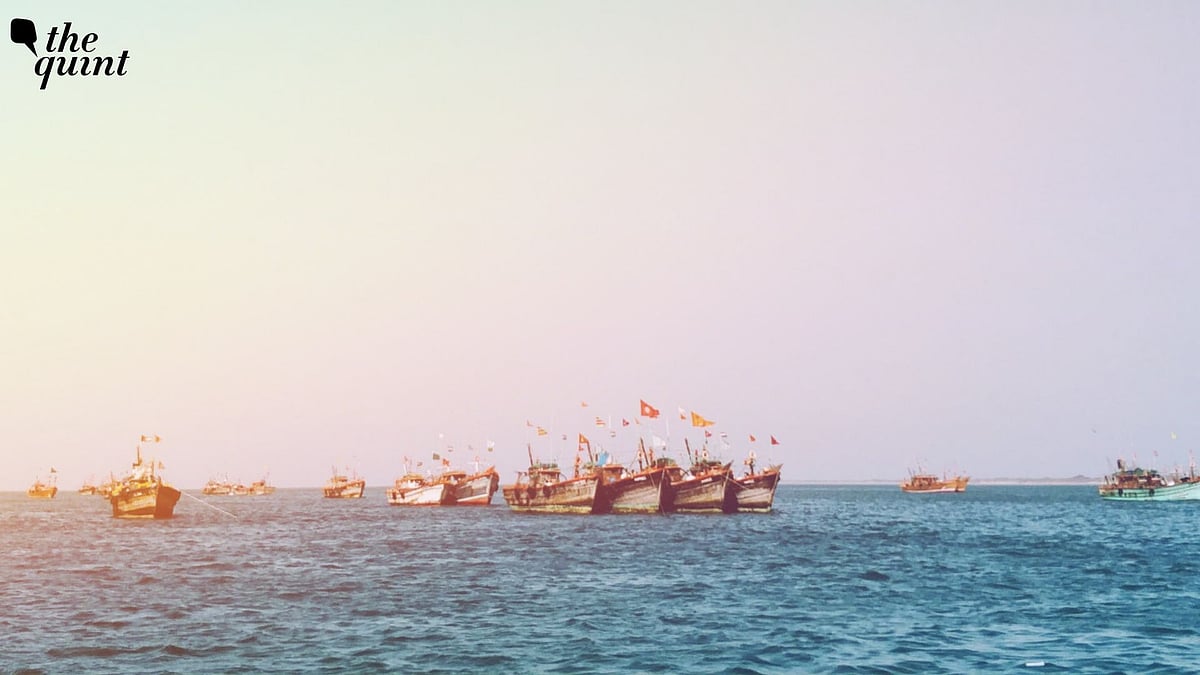
For coastal communities in India, these changes are becoming increasingly visible. Fisheries across parts of India’s western coast are already reporting declining and unpredictable catches.
Small-scale and artisanal fishers are among the most affected because they depend heavily on nearshore fishing grounds and have limited ability to travel farther offshore.
Larger industrial fleets can often follow shifting fish populations into deeper waters, but traditional fishing communities cannot easily adapt to these rapid environmental changes.
Fish is also one of the most affordable protein sources for millions of coastal households. Declining catches therefore affect both livelihoods and food security.
Cyclones, Monsoon Changes, and Coastal Risks
Marine heatwaves are also linked to stronger cyclones in both the Arabian Sea and the Bay of Bengal. Warm ocean waters provide additional energy that allows cyclones to intensify rapidly. Over recent decades, the Arabian Sea has shown a noticeable increase in severe cyclonic storms.
Rapid intensification has become a growing concern, where cyclones strengthen dramatically within a short period, leaving very little preparation time for coastal communities.
The impacts are not limited to cyclones alone. Marine heatwaves in the Indian Ocean are also influencing the monsoon system.
Research increasingly shows that warming in the Arabian Sea and the wider Indian Ocean can reduce rainfall over parts of central India while increasing extreme rainfall over southern peninsular regions.
Excessive ocean warming can also contribute to localised cloudbursts and short-duration heavy rainfall events. For instance, Cyclone Shakhti, which originated in the northeastern Arabian Sea in September 2025, intensified under warm sea surface temperatures of 28-29°C, and moved west-southwestward and dissipated off the coast of Oman by October.
The storm also triggered intense rainfall across south Gujarat and Saurashtra, forcing more than 11,500 people in Maharashtra’s Marathwada region to evacuate, while two people lost their lives.
Changes in the Arabian Sea low-level jet further complicate the monsoon system because this wind system plays a major role in transporting moisture and cooling the ocean during the monsoon season.
An Emerging Climate Risk
Despite their growing influence, marine heatwaves still receive far less public attention than floods, droughts, or atmospheric heatwaves. Yet, they are emerging as a defining climate risk for the Indian Ocean region.
The sea that once acted as a climatic buffer for the region is now storing increasing amounts of heat, and the consequences are beginning to emerge across ecosystems and societies along its coasts.
(Dr Pratik Kad is a climate scientist specialising in climate dynamics, extreme events, and impacts. He serves as Vice-President of APECS, an Executive Committee member of YESS, and a working group member for WCRP's Regional Information for Society (RIfS). This is an opinion piece and views expressed are the author's own. The Quint does not endorse nor is responsible for them.)