In her Budget speech, India’s Finance Minister Nirmala Sitharaman announced that the nation’s AVCG sector — that is, Animation, Visual Effects, Gaming and Comics — is projected to require two million professionals by 2030. Rs 250 crore has been allocated for talent development, which is expected to expedite the rapid rise of competitive gaming industry in India.
Over the past decade, India’s esports ecosystem has shifted decisively from the fringes to the mainstream, propelled by the rise of mobile gaming and affordable internet access. Industry estimates suggest the country is currently home to over 500 million mobile gamers, a figure projected to rise to 724 million within the next three years. At the heart of this gaming boom is Battlegrounds Mobile India (BGMI) — the India-specific version of PUBG — which boasts more than 100 million active players.
The Quint spoke with Karan Pathak, Associate Director of Esports at Krafton, the developer and publisher of BGMI, to examine the evolution and future of India’s gaming landscape. Excerpts from the interview follow.
How do you see the future of esports unfolding in India?
The revolution is massive. People now understand that esports isn’t just for fun — if you want to play seriously, there’s a clear pathway. Given the talent India has, this ecosystem is going to grow 10x, 20x, even 30x. There’s no stopping esports. It’s already big, but it’s only going to get bigger. Traditional sports and esports now coexist — traditional athletes play games to unwind, and esports players follow traditional sports for the same reason. In the coming years, esports will be far bigger than it already is.
How are parents responding to esports today, especially amid concerns around gaming and real-money platforms?
With the new regulations, there’s been a major shift in how real-money gaming and esports are understood. Parents are educating themselves and realising that esports doesn’t require paying money to play, but can still generate earnings through performance. When parents see that a player is waking up early, going to the gym, eating right, training hard and putting in serious hours, they begin to understand that this isn’t mindless gaming. Of course, not everyone will become a Dhoni or a Kohli — there are levels to every sport. Esports careers are shorter, usually eight to ten years. The real question is whether you can make an impact in that time. That’s why open conversations with parents and families are crucial, so informed decisions can be made.
Where does India stand globally in esports right now?
Historically, other regions were ahead because technology reached them earlier. But in mobile gaming, India is already ahead — not at par, but ahead. If you look at participation numbers and audience engagement, India surpasses most markets globally. There is still a gap at the international level, but with more exposure, international scrims and practice sessions, Indian teams will always be competitive. The skill levels are improving rapidly, and performance is already showing that.
What kind of career pathways exist for players once they retire from competitive play?
Post-retirement, players have several options. Some become coaches, some turn into influencers and build strong YouTube channels, others invest in or run their own teams. A few move into production roles, while some transition into commentary, much like we’ve seen in cricket. There’s a lot of scope beyond playing. Once you retire, it really depends on your skill set and what direction you choose to take.
What kind of participation numbers and live audience interest are you seeing now in BGMI tournaments?
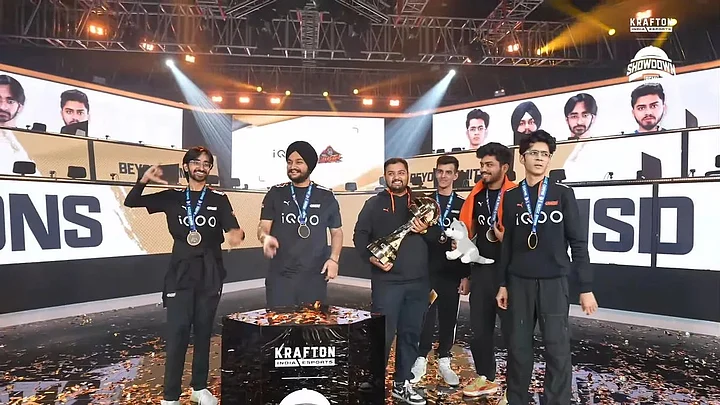
The number of participants is honestly crazy. In terms of active esports athletes, you’re looking at more than five lakh players. In the last BGIS, registrations crossed 4,00,000 — and that’s just one open tournament. There are many more who choose to wait and try again the following year. Realistically, the player base easily crosses a million. As far as live audiences go, our highest turnout was at the IKA Arena in Ahmedabad in December 2023, where we had over 26,000 people across the event. In Kolkata, despite having only 3,000 seats, we had nearly 7,000 people turn up on the first day. The limitation is always seating. Give us a venue like the Narendra Modi Stadium and we’d love to try filling it.
How have prize pools and investment in the ecosystem grown over time?
When we started, the BGMI India Series had a prize pool of ₹1 crore, and the Pro Series was ₹1.5 crore. By 2023, BGIS had a ₹2 crore prize pool, with an additional ₹1.2 crore contributed through fan purchases, taking it to ₹3.2 crore. This year alone, we’ve increased prize pools by 50 per cent. Year-on-year, Krafton’s growth in India is close to 20 per cent. As the number of tournaments increases, prize pools naturally grow, and that directly benefits players.
Why do you think BGMI has struck such a strong chord with Indian audiences?
The reason BGMI is so widely loved is because there’s nothing complex to learn. You can pick up your phone, play your first match, and immediately get into it. It’s easily accessible, you can play with four friends, and even today I play with my cousins who live in different cities. We just take out 30 or 45 minutes to play a game or two together. For a group of friends, it becomes a shared platform where you’re talking, playing and doing something together. And if you want to take esports seriously as a professional, you reach a stage where you’re competing for prize pools worth a million dollars. That access — from casual play to professional competition — is why BGMI resonates with so many people.
How has India's esports ecosystem evolved over the years?
Everything has changed with the advent of mobile gaming. You don't need to spend lakhs on a high-end PC anymore. You could just pick up a decent phone — even something around ₹20,000 could give you solid performance. With that came large-scale tournaments. I was lucky to be part of one of the early battle royale tournaments with a ₹50 lakh prize pool. Today, you’re looking at yearly prize pools for BGMI alone crossing a million dollars. It’s humongous, it’s crazy. For audiences, it feels similar to what cricket was before 1983, before India won the World Cup — kids sitting in front of the television dreaming of becoming the next big star. Or when Mahesh Bhupathi and Leander Paes won our first Olympic medal, or when Neeraj Chopra won gold in the javelin. Those moments inspire generations. I grew up admiring P.T. Usha and even trained for the 400 metres in track and field because of those role models. Esports is a completely different field, but it’s now entering the mainstream. It’s accessible, aspirational, and full of opportunity. In many ways, this feels like the ’83 moment for esports as well.