Before the start of the Test series, vice-captain Ajinkya Rahane had said that Indian batsmen need to score 300-320 runs in the first innings to provide their bowlers with an opportunity to put New Zealand under pressure.
However, in the four innings, which India played at the Basin Reserve and the Hagley Oval, all they managed were totals of 165, 191, 242 and 124.
In the absence of Rohit Sharma, the batting of the Indian team depended heavily on the three most experienced players – skipper Virat Kohli, deputy Rahane and Cheteshwar Pujara. However, all the three failed to make any significant contribution.
Mayank Agarwal turned out to be the highest run-getter in the series for India with 102 runs, followed by Pujara (100), Prithvi Shaw (98), Rahane (91) and Hanuma Vihari (86).
Captain Kohli Faltered
But, the thing which probably hurt the Indian team in New Zealand most was the below-par performance of their skipper, who was found wanting against the swing extracted by the New Zealand bowlers. In four innings, Kohli managed just 38 runs at an average of 9.50 – his worst in recent times.
Virat scored 218 runs in the 11 innings (four T20Is, three ODIs and four Tests) he played in NZ and ended the tour with just 14 in his last innings.
The end result was that the number one Test side had to face a crushing defeat at the hands of Black Caps, who made amends following their 5-0 whitewash in the T20Is and came back strongly to win the ODIs and the Test matches – 3-0 and 2-0 respectively.
"Having clarity, as batsmen," Kohli responded when asked about biggest mistake made by his side in the Test series.
"If you're not clear in your head, then the feet don't move. You're not quite sure whether to play the shot or not, leave the ball or play the ball. I think these sorts of things can creep in, and which have crept in this series."
And Kohli is right in his analysis.
New Zealand bowlers, as the Indian skipper pointed out, did bowl on relentless lines and lengths, used the short-ball ploy – something which was used extensively in the 1980s and made sure the visitors were denied of opportunity to score runs.
The Pujara Way
The Indian batters didn't apply themselves in the conditions, which one can say were difficult. But in no way can it can be said that they were unplayable. The batters couldn't muster the courage to play the waiting game and on many occasions, gifted their wickets away.
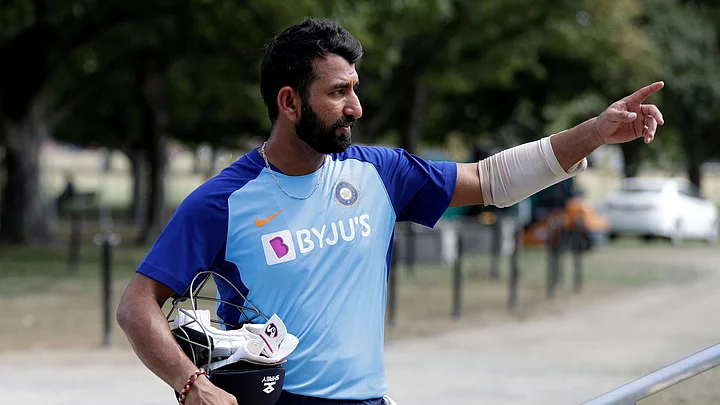
While Pujara was criticised for his slow batting and lack of intent following the defeat in the first Test, it now seems that his was the batting style which his teammates needed to adopt to dig-in on the pitch.
Pujara faced a total of 351 deliveries in the entire course of the series and scored 11, 11, 54 and 24 runs respectively in the four innings. He batted for a total of 517 minutes, which is close to nine hours.
His is the batting style which the Indian batters, probably, needed to employ when playing on foreign soil, especially SENA countries where the team has a dismal record.
The Indian batters, historically, have been found guilty of struggling while adjusting on away tours in the initial stages. However, it was not the case on this New Zealand tour as they had played five T20Is and three ODIs and by the time the Test series started, they were well accustomed to the conditions and were aware of what they would be expecting from the Kiwi pacers.
However, at not a single stage in the two Tests did the Indian team seem to have gotten the upper hand and put New Zealand under pressure. One can say they were in the game in the Christchurch Test after they were able to secure a seven-run lead. But all that advantage was short-lived as the batters just couldn't withstand the class of Trent Boult, Tim Southee and rookie Kyle Jamieson.
India now don't have to play a Test series until the end of the year when they would be touring Down Under where the Australian team would be hungry for revenge after they suffered their first-ever series defeat in their own backyard in 2018-19.
It's true that players don't need to change their batting style and copy another batsman as each individual has a unique style and technique. Having said that, what the Indian batsmen definitely need to learn is on how to put a price on their wickets and not throw it all away when the going gets tough.