
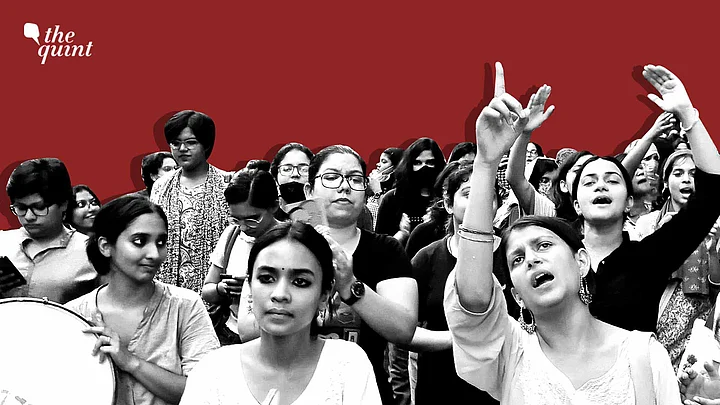
For the past few weeks, the phrase “women’s safety” has once again taken centre stage in our lexicon. Periodically, when a woman is murdered for dowry or assaulted while walking in a park—it briefly catches attention making it seem like an anomaly.
When, in fact, the dial has been slowly turning up over the last decade. Crimes against women have been increasing steadily—this is easily verifiable from the scant data that is available.
And the response has been mostly #notallmen and a renewed focus on “false cases” filed by women. It is no coincidence that the last decade has seen an explosion in social media accounts that vociferously advocate for the rights of men, that highlight the “poor” state of men who are wrongfully accused of crimes. Like frogs in water, the temperature is turned up and somehow life goes on, until it boils over. That is the moment we are faced with now.
So, what has changed this time? Why have these crimes against women triggered such widespread anger and protest?
Perhaps because women are increasingly recognising that their lack of safety is not merely the result of individual crimes, but of a larger system that uses fear and unsafe public spaces to restrict their freedom and control their movement.