
ADVERTISEMENTREMOVE AD

Tamil Nadu Row: Governors Cannot Become Political Gatekeepers in Hung Assemblies

A refusal to invite the single largest party stretches gubernatorial discretion beyond constitutional limits.

Published
story-hero-img
i
Aa
Aa
Small
Aa
Medium
Aa
Large

The office of the Governor was never meant to be used for politics. Yet, every few years, India is reminded how Raj Bhavans can be used to distort constitutional morality while pretending to defend it.

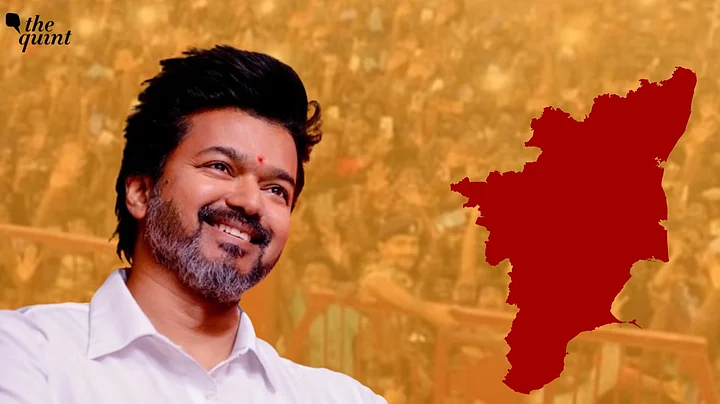
The latest controversy arises out of Tamil Nadu, where Governor Rajendra Arlekar has reportedly refused to invite the Tamilaga Vettri Kazhagam (TVK), the single largest party in the in 2026 Assembly elections, to form the government this raises serious constitutional concerns.

The issue is not whether TVK presently enjoys the support of 118 MLAs. The issue is whether the Governor can insist upon prior proof of majority before even extending an invitation to form the government. Constitutionally, the answer is no. Under India’s parliamentary structure, governments are not formed in Raj Bhavans. They are formed on the floor of the House.

The Article 164 of the Constitution provides that the Chief Minister shall be appointed by the Governor. However, that power is not unfettered or personal. It exists within the larger constitutional scheme of responsible government. Article 164(2) further makes the Council of Ministers collectively responsible to the Legislative Assembly. This provision is central because it locates democratic legitimacy inside the Assembly, not within the subjective satisfaction of the Governor.

ADVERTISEMENTREMOVE AD

What the Supreme Court Has Repeatedly Said

Also Article 163, which states that the Governor shall ordinarily act on the aid and advice of the Council of Ministers except in limited situations requiring discretion. Even that discretionary space has been narrowly interpreted by constitutional courts. The Governor is not an independent political authority empowered to determine who deserves to govern based upon its own assessments.

Further, Article 174 empowers the Governor to summon the Legislative Assembly. The constitutional purpose behind this provision becomes crucial in a fractured mandate. Where competing claims to government formation arise, the proper constitutional course is to summon the House at the earliest and direct a floor test. The Constitution therefore itself provides the mechanism for determining majority.

The Supreme Court has repeatedly affirmed this constitutional position. In S.R. Bommai v. Union of India, the Court unequivocally held that majority must ordinarily be tested on the floor of the House and not determined through subjective gubernatorial satisfaction.

In Rameshwar Prasad v. Union of India, the Court warned against constitutional authorities frustrating democratic outcomes based upon apprehensions of instability or defections. Similarly, in Nabam Rebia v. Deputy Speaker, Jagdambika Pal v Union of India, Chandrakant Kavlekar v Union of India, G Parmeshwara v Union of India and Shivraj Singh Chouhan v Speaker, Madhya Pradesh Legislative Assembly, the Courts have held consistently that the Governor cannot exercise discretion in a manner that destabilises representative government or interferes with legislative functioning.

The moment TVK emerged as the single largest party and formally staked claim to form government, constitutional convention required the Governor to invite it to take oath and prove majority within a short and reasonable period. That is precisely how hung Assemblies have historically functioned across India.

Precedents From Other States

In Karnataka in 2018, the BJP was invited to form government despite not possessing an immediate majority. Similar approaches have been followed in Goa, Maharashtra, Manipur, and Jharkhand. Constitutional principles cannot fluctuate depending upon political convenience.

The Governor’s reported insistence that Vijay must first produce documentary support of 118 MLAs before invitation fundamentally reverses constitutional logic.

The burden of proving majority certainly exists, but that burden must be discharged before the Assembly, not before the Governor sitting in Raj Bhavan.

Why This Expands Gubernatorial Power

There is a deeper constitutional danger in such an approach.

If Governors begin demanding pre-certification of majority before swearing-in, they effectively acquire veto power over coalition negotiations. This transforms a constitutional office into an active political gatekeeper.

Such an interpretation is incompatible with parliamentary democracy and federalism, both of which have repeatedly been recognised by the Supreme Court as part of the Constitution’s basic structure.

Coalition support is often fluid immediately after elections. Political negotiations continue until the floor test itself. The Constitution recognises this political reality. That is precisely why Articles 163, 164, and 174, read together, create a framework where democratic legitimacy is tested institutionally within the legislature

Federalism and Constitutional Morality

Indeed, constitutional morality demands precisely the opposite of what appears to have occurred in Tamil Nadu. Where electoral outcomes are fractured, democratic space must be widened, not narrowed.

The Sarkaria Commission and the Punchhi Commission both laid down clear norms regarding government formation in hung Assemblies. Their recommendations consistently prioritised inviting the single largest party or alliance capable of seeking legislative confidence. Neither commission envisaged Governors functioning as numerical auditors before government formation itself.

What makes the Tamil Nadu situation particularly troubling is the broader institutional pattern it reflects. Increasingly, Governors are no longer perceived as neutral constitutional heads under Article 153, but as political actors aligned with the Union government. Whether in Tamil Nadu, Kerala, Punjab, West Bengal, or Maharashtra, friction between elected state governments and Raj Bhavans has become structurally persistent.

The Constitution Guarantees Procedure, Not Stability

This trend weakens Indian federalism. Dr. B.R. Ambedkar had clarified during Constituent Assembly debates that Governors were not expected to function as parallel centres of political power. Their office was intended to remain constitutional, formal, and restrained within the discipline of parliamentary democracy.

A refusal to invite the single largest party despite a formal claim to government formation stretches gubernatorial discretion beyond constitutional limits. None of this means TVK must necessarily continue in office if it fails to secure majority support. If the party loses the floor test, constitutional consequences naturally follow. Another coalition may then be invited, or fresh elections may become necessary. But denying even the opportunity to seek confidence amounts to pre-judging the democratic process itself.

The Constitution does not guarantee stable governments. It guarantees constitutional procedure. India’s constitutional framework survives not because political actors behave perfectly, but because institutions respect procedural boundaries. The Governor’s role is to facilitate democratic transition, not engineer political outcomes in anticipation of instability.

At stake in Tamil Nadu is therefore something larger than one party or one election. The real question is whether unelected constitutional authorities can override established parliamentary conventions based upon subjective satisfaction.

(Kumar Kartikeya is an advocate, Supreme Court of India. This is an opinion piece and the views expressed above are the author’s own. The Quint neither endorses nor is responsible for the same.)

Speaking truth to power requires allies like you.
Become a Member
Monthly
6-Monthly
Annual
Check Member Benefits
×
×