
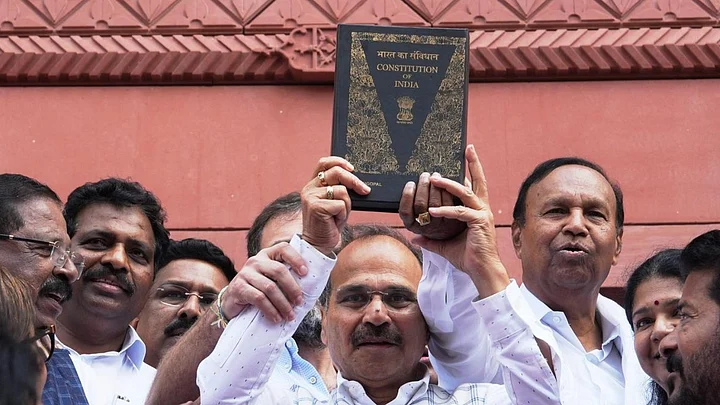
A preamble is often seen as a special text for several reasons.
First, as the Supreme Court of India (SC) noted in Kesavananda Bharati v. State of Kerala in 1973, it is a useful tool of interpretation for the judges. It is the easiest key to ascertain the true intent behind constitutional articles, which might otherwise seem both convoluted and complex.
Second, the preamble has a larger-than-life role to play in the public imagination. If you ask non-lawyers about the specific article of the constitution that provides, for example, the right to speech and expression, it is hard for them to recollect, but a preamble, owing to its concise formulation, is much easier for them to recollect. The preamble, arguably then, is the most recognizable part of the Constitution of India.