
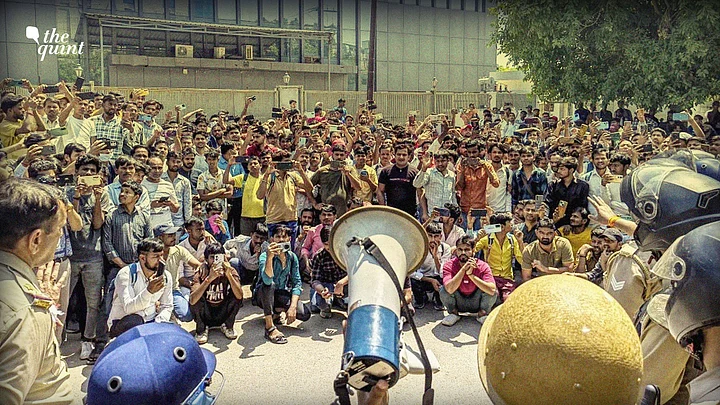
The factories are running again. Production lines that fell silent during the April–May strike wave have resumed across the Delhi–NCR industrial belt. Many workers are back at their machines. Others never returned. When police began making arrests, many fled to villages in Bihar and eastern Uttar Pradesh and have since been unable to recover their jobs. Revised minimum wage notifications have been issued in Haryana and Uttar Pradesh, but implementation remains uneven. Hundreds of workers remain in jail, and many activists continue to face criminal proceedings.
The strike has ended. The conditions that produced it and the conflicts that followed it have not.
The April–May strikes marked the largest wave of industrial action the National Capital Region has witnessed in more than a decade. Across more than 150 industrial sites in Haryana, Uttar Pradesh, and Uttarakhand, workers long divided by contractual employment, migration, and precarious work acted collectively for perhaps the first time on this scale. The strikes demonstrated that a workforce widely assumed to be too fragmented to organise could still disrupt production across one of India's most important industrial corridors.
The central question, however, is not why the strikes occurred but what has happened since. Strike waves do not become movements by themselves. Whether April marks a turning point will depend on whether the collective capacities briefly revealed during the strikes can outlast the efforts of employers and the state to restore the conditions under which resistance once again becomes too costly to sustain.