
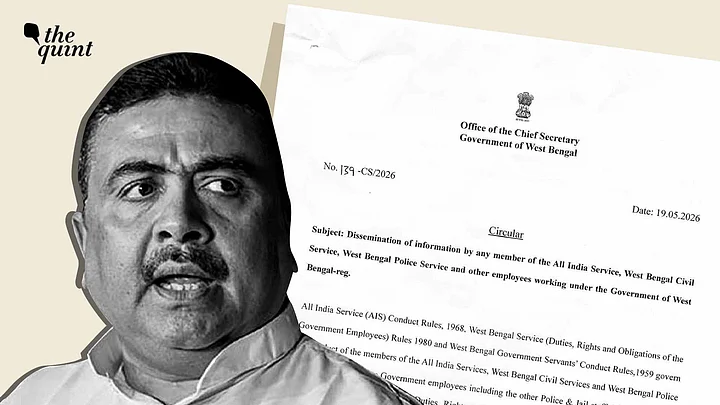
On 19 May 2026, the government of West Bengal issued a circular restricting how members of the All India Services, West Bengal Civil Service, West Bengal Police Service and other state-linked employees could share information with the press, participate in media programmes, or publicly criticise government policy. At first glance, it reads as a stark, even draconian, gag order. The government’s defence, however, would be that it merely restates long-standing service conduct rules. That is precisely why it is politically dangerous.
Circular 139-CS/2026 did not invent a new regulation. It invoked familiar conduct regimes: the All India Services Conduct Rules, 1968, the West Bengal Services Rules of 1980, and the West Bengal Government Servants’ Conduct Rules, 1959. But law does not operate only through novelty. It operates through timing, emphasis and administrative mood. Issued by the freshly elected BJP government in Bengal, the circular turned old bureaucratic discipline into a public warning – the state will decide who may speak, when, and on what terms.
The first version was so sweeping that the government had to clarify it almost immediately. That clarification is now being presented as moderation. It is better read as evidence of authoritarian intent.