
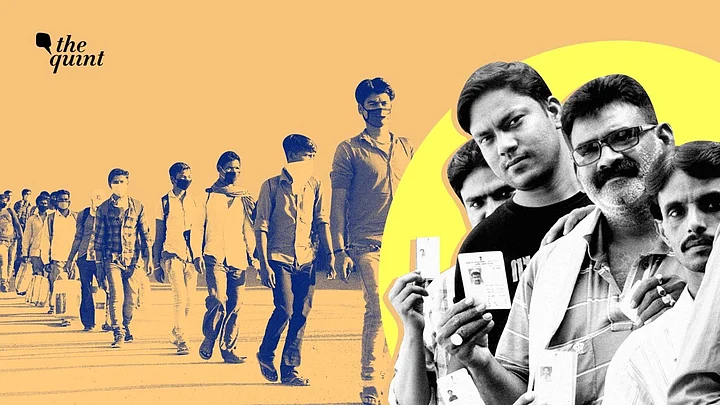
The COVID-19 pandemic has been a gruelling experience for India’s internal migrant population. The stressors of COVID-19 were especially acute during the first lockdown.
As jobs vanished, migrants without access to key social safety nets struggled to return to their places of origin. Many felt they had been left adrift by the state at a moment of crisis.
In a new paper, “Overcoming the Political Exclusion of Migrants,” published in the American Political Science Review, we ask why a sizeable share of migrants find themselves alienated from mainstream politics in India’s cities.
A wealth of evidence suggests that recent arrivals take part in elections less than do long-term urban residents. That’s a problem. Groups failing to exercise suffrage are easily forgotten by governments. The electoral incentives to cater to their interests simply don’t exist.