
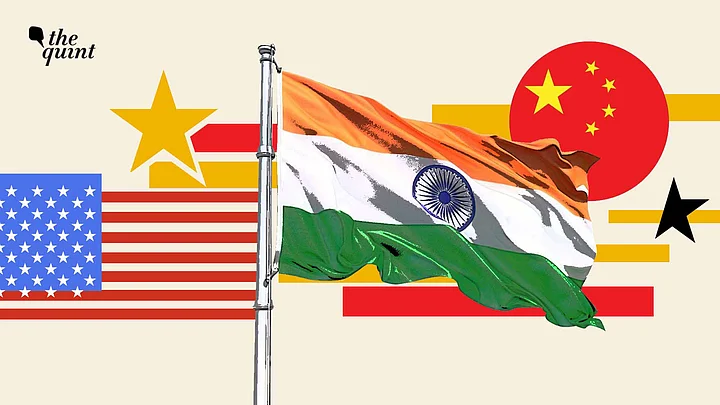
The world loves binaries: East versus West, market versus state, superpower A versus superpower B. India must resist this narrative. Perception is power—if New Delhi appears to slide from partner to proxy under any superpower’s shadow, its hard-earned diplomatic leverage over decades will erode.
India’s foreign policy should be aligned with interests, not instructions. As global discourse flirts with a US-China G2, India’s strategic autonomy must remain non-negotiable to ensure it rises as a distinct pole, not a pawn in a duopoly.
Post-World War II, during the “Cold War” years , the United States and Soviet Union carved a rigidly bipolar world. The USSR’s collapse in 1991 yielded a unipolar moment dominated by Washington. China’s rise—its GDP projected to reach $25 trillion by 2030, rivalling America’s—now results in talk of a G2 and US leaders have acknowledged this trend: in October 2025, President Donald Trump suggested that global decision-making is increasingly concentrated in Washington and Beijing, framing a G2 world.
From Davos panels to Delhi’s backchannels, global choices are often framed around these two capitals. India cannot allow such binaries to define its destiny.