
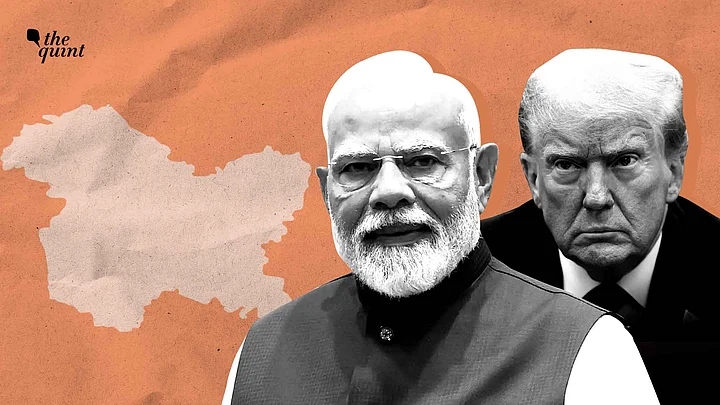
India’s acceptance of Donald Trump’s ceasefire announcement on Saturday, 10 May represented a worrying policy reversal. The following day, the US president further said that he will work with India and Pakistan to see if, after "a thousand years”, a solution can be "arrived at concerning Kashmir".
The recent developments seem to have internationalised the 'Kashmir issue' for the first time since US Senator and UN Representative Frank Graham gave up trying to mediate the issue in 1958. (The Constitution of Jammu & Kashmir, which the government threw out the window in August 2019, had taken effect on 26 January that year. It had described Jammu and Kashmir as 'an integral part of India'.)
For 53 years after 1972, the Simla Agreement held firm. It bound India and Pakistan to treat the issue as strictly bilateral. Even when China and Pakistan raised the issue at the UN Security Council immediately after India’s constitutional changes in 2019, India reiterated the primacy of the agreement.
Trump’s mention of talks at "a neutral venue" suggested that the foreign minister or the national security advisor hosting the talks might sit in—and even seek to chair the talks.