
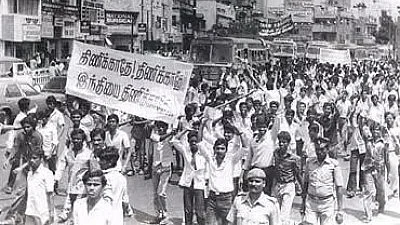
The ongoing battle between Tamil Nadu and the Union government over the National Education Policy (NEP) 2020’s three-language formula is far more than a dispute over pedagogy. In a deeper sense, it is a conflict over federalism, linguistic identity, and cultural autonomy.
Tamil Nadu’s steadfast adherence to its two-language policy – Tamil and English – has been a defining feature of its educational and cultural framework for over five decades.
The state’s resistance to the three-language formula is not just ideological but backed by historical experiences, empirical data, and a broader concern about the creeping imposition of Hindi.
The overwhelming success of Tamil Nadu’s educational model calls into question the necessity and intent behind the Centre’s linguistic prescriptions.