There is a parable in the Bible called the ‘Tower of Babel’. Humans decide to create a tower that would reach heaven. God realises that if all humans spoke the same language, they would be able to achieve their goal. He introduces many languages to cause 'babel' - the Hebrew word for confusion. Humans, unable to communicate, lose their way, and fail in creating the tower.
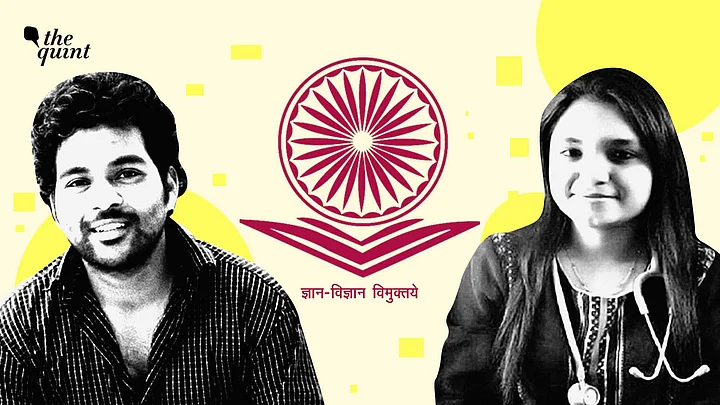
Two mothers - Radhika Vemula and Abeda Salim Tadvi - channelled their decade-long grief of losing their bright adult children to caste discrimination by filing a PIL, which translated into the University Grants Commission (Promotion of Equity in Higher Education Institutions) Regulations, 2026. These mothers found an institutional mechanism to protect other children from a hostile environment that has the power to steal one’s will to live, let alone achieve mobility. The words used in the 16-page UGC document are gentle: ‘sensitise’, ‘protect’, ‘equity and equal opportunity’, ‘promote equity’, ‘transparent’, ‘fair’ and ‘non-discriminatory’. The Regulations seek to create a ‘socially congenial atmosphere’ for students in higher education. It proposes displaying posters and appointing ‘equity squads’ and ‘equity ambassadors.’
After much organised outrage by upper-caste groups throughout the country, the Supreme Court of India has stayed the UGC Regulations, calling them ‘vague and easy to misuse’
Mandal vs UGC Distinction
Concerned authors and social media influencers have equated the current hurt performed by upper-caste communities as one that resembles the outrage witnessed in the early 90s after the implementation of the Mandal Commission, which introduced 27 percent affirmative action for Other Backward Classes (OBCs) in public institutions of employment and higher education. However, this is an erroneous equation because the purpose of the affirmative action was a stake in the economy, and that of the UGC Act is a stake in dignity. While both the Mandal Commission and the UGC Regulations ask for recognition of discrimination, the Regulation is not asking for redistribution. If the first was a stake at assets by OBCs, the second is an admission by upper castes that asking for mere dignity threatens their identity.
The Regulation wants to create an educational environment with posters, events, and equity squads where upper caste students can be cajoled out of bad behaviour. An upper caste student is not being asked to share seats; they are being asked to give up their power to humiliate.
The widespread protest to the Regulations shows the further worsening of the caste equation in India, where even asking for sensitising and protection would be met with such resistance.
The recent Central Bureau of Investigation (CBI) enquiry on a 3-day conference at IIT Delhi titled ‘Celebrating 25 years of Durban: Indian Contributions to Combatting Caste and Racism’, which brought together stellar global academics and activists should be understood in this very context of worsening social fabric conditions because of upper-caste fragility and elite assertion. The intolerance to the Regulations, which I call a gentle reformist approach, is happening because the upper-castes feel betrayed by someone who they see as a father-like figure – Prime Minister Narendra Modi. Who knew elites would one day want to lampoon and discipline their much-admired parent? It must hurt the upper caste minority to see institutions, which by default mirror them, trying to protect majority students from self-destruction.
We could tell the numerous organised upper-caste protestors, those fuming in front of their screen, and the Supreme Court, which has stayed the Regulations, that between 2019-2024, the cases of discrimination in spaces of higher education have increased by 118%. But when has the language of facts ever landed objectively in the Tower of Babel?
Strategic Dissonance of Jindal, Tiwari, Jain and their Likes
Advocate Vineet Jindal, in his Supreme Court Plea against the new UGC Regulations demands a caste-neutral definition of discrimination. Advocate Vishnu Shankar Jain, who asked for the stay, was unhappy with how caste-based discrimination was made into a focal point of Regulation 3 (c). Jain, like Jindal spoke in a language of universalism to attack the UGC Regulations, yet not too long ago, a language of particularism was employed so that the Economically Weaker Sections (EWS) amongst the upper-caste groups could get affirmative action courtesy of their loving father. A majority of India’s wealth is held by Hindu upper-caste groups in urban areas. The reason for their poverty is not the caste system. The switch from universalism to particularism as per elite conveyance is the Tower of Babel – speaking different languages to confuse the outcome.
Prof Satish Deshpande argues that having accrued the benefit of the caste system, the upper caste kicked the historical privilege ladder to embrace a casteless identity. Prof Ajantha Subramaniam shows how the ideology of castelessness is a meritocratic defence, especially employed by upper castes in the state of Tamil Nadu which has a history of subaltern assertions. The EWS reservation has taken away the upper caste cloak of meritocracy. My research shows that upper-castes see themselves as “religious, patriotic, and self-sacrificial”, positioning themselves as suitable actors to be at the helm of the nation-state at this historical juncture when the boundaries between business and state are porous.
So, if upper-caste groups are no longer interested in appearing casteless or meritocratic and see themselves as self-righteous, what does the strategic dissonance of Jindal, Tiwari, Jain, and their likes tell us? Why do they move from a language of universalism to particularlism; a language of caste pride to one of caste reluctance? In the age of Manu, the oppressed do not have access to rights.
The Hindu upper castes of India, having consolidated their economic, political, and symbolic power by pushing India from the world’s largest experiment in democracy to an elected autocracy, would like to rule with an iron fist. They might tolerate dole-outs from time to time – to build their affirming deposit of karma through philanthropy, but they will not tolerate a language of rights.
Those opposing the Regulations should be grateful for the civility of the mothers, for they have not demanded a share in the wealth pie; all they ask is for dignity and an environment in which their children do not self-deconstruct/destruct. That the elite cannot tolerate even this civility is their own tragic Babel; for they have lost the powerful language of humanity to speak only a fragile language of power.
(Dr Ujithra Ponniah is a Senior Researcher at the Southern Centre for Inequality Studies (SCIS), University of Witwatersrand, South Africa. This is an opinion piece, and the views expressed above are the author’s own. The Quint neither endorses nor is responsible for the same.)