
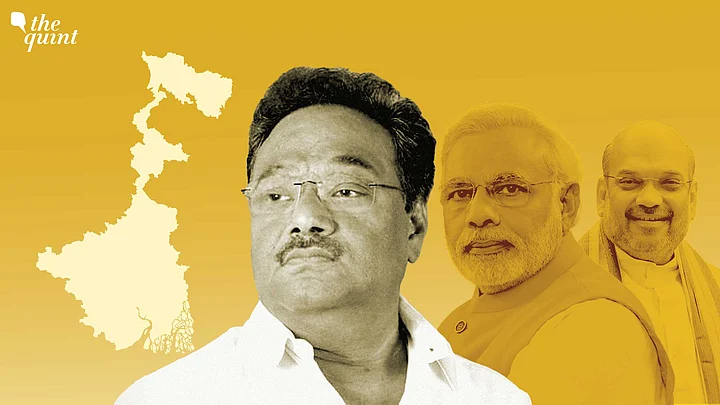
On 3 July, inside Kolkata’s Science City auditorium, a man in a crisp white linen shirt and black trousers took the stage before a packed audience of Bharatiya Janata Party (BJP) MLAs, MPs, councillors, and party workers.
But unlike the characteristic rhetoric of the saffron camp, the man spoke not in fiery slogans or combative one-liners but in polished, composed Bengali—the kind spoken in Kolkata’s middle-class homes. No broken Hindi, no dialect-heavy populism. Just some measured and carefully chosen words.
“We are not against Muslims. We are not fighting Muslims," he stated. "We are challenging a system that compels your children to bear stones. We want to replace those stones with books.”
In a political climate where polarisation defines discourse—and in a state like West Bengal where religious identity is a constant electoral fault line—such a statement was unexpected.
That it came from Shamik Bhattacharya, the newly appointed Bengal BJP president, made it all the more striking.