
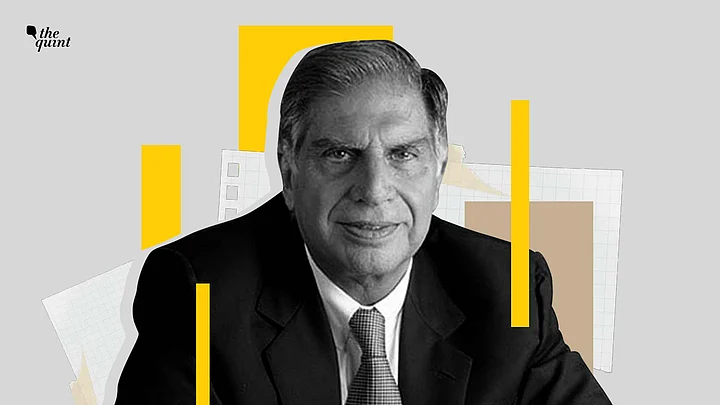
I grew up in Jamshedpur, a small town in Jharkhand that was founded by Ratan Tata’s ancestor, JN Tata, and formally known as Tatanagar.
So, when the news of Ratan Tata’s demise broke amidst Durga Puja celebrations there, many puja committees cancelled cultural events, refrained from playing music, and even included images of him on their marquees in pandals as a way of paying tribute to the man they so revere.
Every year, JN Tata’s birthday is celebrated like a festival in my hometown. In fact, as a kid, I mentally grouped 3 March with 26 January, 15 August, and 2 October. Parks glowed with laser and light shows that continued well into the night, while the entire city came alive in the spirit of celebration.
Like much of Jamshedpur’s middle class, my grandfather worked for the Tatas. After him, so did my father as part of the company’s inter-generational employment policy. As a Tata employee’s daughter, my schooling was subsidised and my healthcare free till I turned 18.
Even when the company was compelled to downsize, it worked with unions to design a separation policy that still paid employees their salaries — and sometimes 1.5 times that — until retirement. That’s how the company avoided mass layoffs. And that’s how I grew up relatively stable, despite my father’s declining health.
Still, my experiences are just that: mine.
It’s true that the Tatas’ industrial entrepreneurship enabled my family to afford financial stability. That doesn’t negate the fact, though, that my family’s prosperity, no matter how indirectly, came at the cost of the generational impoverishment of tribal communities who were displaced by the company’s ambitions.