
A legal maxim goes, maternity is a fact, while paternity is a presumption. The law has always known this. A mother's identity is settled by the act of birth itself. A father's is, in the ordinary case, a conclusion the law draws and then trusts.
The old maxim put it plainly. The mother is certain. The father is the man whom marriage points to.
Our own evidence law carries the same idea. A child born within a valid marriage is presumed legitimate, and that presumption stands until something far stronger displaces it.
A presumption is not a fiction. It is not a guess. It is a settled conclusion that the law adopts because experience has earned it.
The presumption can be rebutted. It is rarely rebutted. Most of the time it simply governs life. A passport works in much the same way.
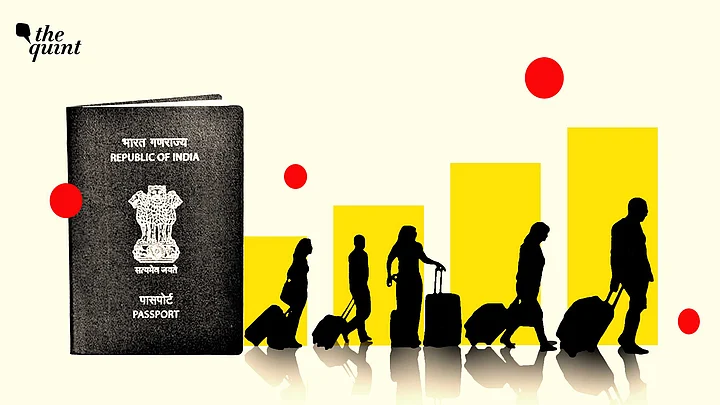
The Republic does not hand out passports to all and sundry. It issues one only after it has satisfied itself that the applicant belongs to it. Files are opened. Addresses are verified. Police reports are called for. The State checks, and only then does it print its own name on a small dark book and place it in a citizen's hands.
The passport, therefore, carries a presumption of citizenship. The presumption is strong. It is rebuttable. It is real. This is why the recent statement on Passport Seva Divas landed so badly.
State, Citizenship, and the Passport
An unnamed spokesperson of the Ministry of External Affairs (MEA) recently stated that a passport is a travel document, and not a document of citizenship. As a matter of strict law, the ministry was right. The passport is issued under the Passports Act. Citizenship is governed by the Citizenship Act of 1955. One law regulates a document. The other regulates a status. In a contested case, before a court, the passport is not the last word.
But the law and the street do not always speak the same language. What is technically legal is not always the common understanding of how things work.
For most Indians, the passport is the most authoritative thing the Republic has ever given them. It bears the name of the country.
It carries their face. It is honoured at every border in the world, because foreign governments trust that India checked all details before it was issued. So, when a citizen is told that this document is not proof of belonging, the natural question follows: If the passport is not proof, then what is?
The history of the word deepens the point. "Passport" comes to us from older European usage, from passing through a port or a gate. It began life as a letter from a sovereign. It was a safe conduct. It was the State's blessing on a traveller who wished to leave and to return. The sovereign vouched for the bearer because the bearer was the sovereign's own. A passport was, in its origin, an authority to leave a country with that country's blessing.
The State does not bless a stranger out into the world. It blesses one of its own. That origin makes the present quarrel strange. The document that was born as the State vouching for its subject is now described as having little to do with belonging.
Consider those who understood its worth. India does not permit dual citizenship. To hold an Indian passport is, therefore, to refuse every other. It is a choice, made and remade with each renewal.
Nobel laureate economist Amartya Sen spent a working lifetime in Cambridge and at Harvard. The easier passports of the West were his for the asking. He kept the Indian one, and he has said as much with some feeling. He was not alone.
Scholars, scientists, and artists have built whole careers abroad and still queued up at Indian missions to renew the little dark book. They could have taken up a more convenient document. They held the Indian one instead.
For them, the passport was never merely a travel paper. It was a statement of who they were. These were not people confused about the law. They knew exactly what the passport meant in ordinary life. It meant they were Indian.
'Demonetisation' Mentality
This is why the timing was unfortunate.
Passport Seva Divas marks the day, in June, when the Passports Act came into force. It is meant to be a day of quiet pride. The Republic celebrates the document and the service that delivers it.
On that very day, the spokesperson managed to make more people anxious than proud. He spoke a legal truth and left a public bruise. People who had never doubted their own passports suddenly wondered what their passports were worth. Call it the demonetisation effect, applied to passports.
In November 2016, the citizen woke up to learn that the notes in their pocket, legal tender that morning, were now to be doubted. The currency was still the Republic's. The promise was still printed on it. Yet, overnight, people stood in queues, uncertain whether what they held was good.
One statement had unsettled a thing that everyone had trusted without thinking. The passport announcement did something similar to the sense of belonging. It took a document nobody questioned and taught a nation to question it. None of this required a change in the law. It only required better phrasing.
The ministry could have said this instead: A passport is issued only after the government has verified that the applicant is an Indian citizen. Citizenship is governed by the Citizenship Act. But the passport remains the Republic's most trusted document abroad, and in ordinary life the clearest evidence that the bearer is Indian.
That is accurate. It is also reassuring. The law is not diluted by putting it kindly.
There is a real lesson underneath the noise. India built its registers unevenly. Births went unrecorded. Names shifted across school rolls and land records. Assam showed how cruelly thin paper can become when citizenship is put on trial. The answer is not to lower the passport in our esteem. The answer is to build registration so complete that no citizen is ever held hostage to a missing page.
Maternity is a fact. Paternity is a presumption. Citizenship, for most of us, lives in that small dark book. The State should be slow to teach us to doubt it.
(Sanjay Hegde is a senior advocate at the Supreme Court of India. This is an opinion piece and the views expressed are the author’s own. The Quint neither endorses nor is responsible for them.)
