
Spotify, in its bid to augment traffic, launched “listening age” for its sustained subscribers this year. While earlier the music app only released time spent in hours to wrap the year with curated digits and snapshots of most-listened artists, it decided to up its game with more personalised metrics.
The new feature places listeners on a generational timeline — from childhood nostalgia to seasoned classics — revealing whether their taste leans younger or older than they are. Through this sonic evolution, Spotify is turning innocuous music habits into identity markers and mindless recap into a cultural moment.
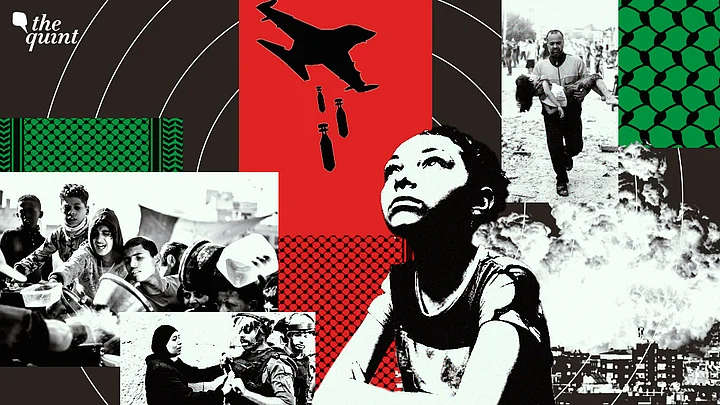
That wouldn’t be a concern if everything were truly well in the world and we could simply revel in the joy music brings. But all is not well and so it is necessary for thoughtful individuals to look beyond the celebration and consider what a 'Palestine Wrapped' might reveal. It would show decades of forced displacement since 1948 – a timeline older than most playlists.
Palestine, when 'wrapped,' wouldn’t be about favourite artists or genres. It would be about people still waiting for freedom, safety, and the right to live in their land.
It would reveal lives interrupted by military occupation, blockades, illegal settlements, home demolitions, and thousands of civilian casualties over repeated escalations – all documented by major international human rights and the United Nations.
A ‘Wrapped’ No One Should Have
If one built a 'Wrapped' narrative for Palestine, it would look like this:
Tracing the 1948 exile of 7,50,000 Palestinians – ancestors of those still living as refugees.
Waves of displacements after 1967, as land confiscation and erasure of community ties, expansion of settlements, and shrinking space for Palestinian life.
It would lay bare the scale of destruction since October 2023 with 6,80,000+ Palestinians dead.
Zero fully operational hospitals with 1,000+ health workers killed.
More than 80 percent of buildings destroyed.
257 journalists killed
Verified fatalities are between the age of 5 to 9 years.
A Catalogue of Loss
With Top Replayed Moment as Fleeing Home – yet again.
Top Emotion as Fear.
Top Setting as Displacement.
‘Normal Life’ as Top Missed Event, and Resilience as Top Played Genre.
These are not just historical statistics generated through hours spent on playlists, these are accounts of loss and longing. This long running tragedy is a result of new escalations, new waves of displacements adding to the intergenerational wound: families reconstruct their lives only to be uprooted again.
Children inherit refugee status at birth and communities lose access to land, livelihood and dignity. The disruptions caused by systems of violence, dispossessions and occupation are multiplying across countries and generations as we bear witness to the most horrifying and most extensively documented war crimes in the 21st century.
Lives on Loop, Justice on Pause
This recap of survival rather than a recap of songs shows people living on a relentless loop, while we listen to our favourite artists on repeat. A history older than most of the app users, and yet, it is still buffering, still loading, still waiting for the world to click 'update.'
Every year millions share their Wrapped on social media – loud, proud, eager to be seen. But Palestinians are still struggling for their stories to trend and go viral as much as Spotify’s content. The world cannot keep hitting 'snooze' on a crisis that has already had so much stolen from them.
The top 5 tracks on Palestine's 'Wrapped' would ironically be Top 5 Lived Realities of Palestinians – rights denied, lives interrupted mid-verse, communities fragmented across borders, children with unrecorded dreams, and human releases we hope for.
Instead of proudly displaying number of songs played, it would compare them with something the world should never have to count: the number of people who have died. The app tells users, “All of your listening made you part of something bigger.” Palestinians could say the same – except what they are part of is a global story of loss, displacement, and endurance that they never chose.
They mourn the silences of the voices 'muted' too soon while we celebrate our most-streamed artists. It’s high time the settings change and codes get rewritten.
(Meenakshi Jha is an educator and freelance aspirational writer. This is an opinion piece and the views expressed are the author's own. The Quint neither endorses nor is responsible for the same.)
