
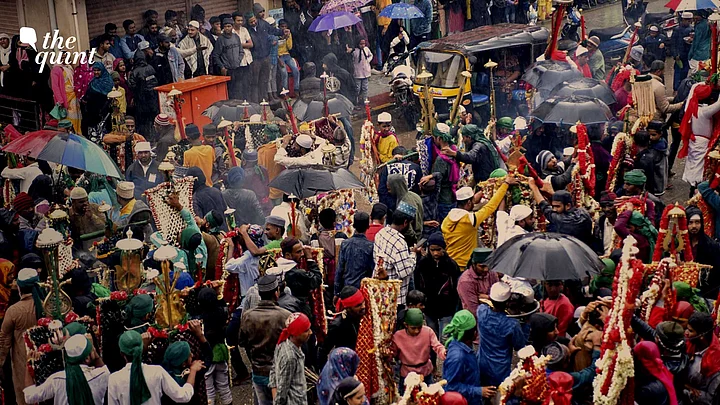
Can pain truly be owned possessed, quantified or shared? As the month of Muharram commences, the world once again begins to recall, remember and vows never to repeat the tragedy of Karbala.
As the question of remembrance, memory and mourning over the incidents of Karbala looms large in these days of mourning, I recount here the proceedings of Muharram in Paintepur (a village near Lucknow, Uttar Pradesh). The Muharram proceedings of Paintepur bloom fresh in the mind of my grandfather.
My 83 years old Nana (maternal grandfather) recites an Awadhi Marsiya (elegy) which he used to read half-a-century ago at his native place in Paintepur. His eyes begin to water and voice starts to shiver. I hear him recite the lamentation for two martyred sons of Imam Hussain, which goes:
Kon dagar me dhoondhan jaun, (Which way should I go to look for you)
Lallan tumhe kaise paun, (How do I reach you beloved child)
Apni bipat main kaike sunaun, (How do I convey my pain)
Akbar more Asghar more (O my Akbar O my Asghar)
I am transported to the days of the Muharram in the 1960s and 1970s when people belonging to all castes, sects and creeds came together to mourn the pain and remember the sacrifice of Imam Hussain in 680AD.
In one such Muharram proceeding, fresh in the mind of my grandfather, a Dalit mourner used to lead the taziya procession on the 10th of Muharram.