
“BJP's riot-accused lawmaker Sangeet Som has been given special 'Z category' cover by the union home ministry, which says threats to his life justify top level security.” - NDTV
“Dera Sacha Sauda chief Gurmeet Ram Rahim Singh has been given Z-plus security cover during his 21-day release on furlough from a Haryana jail where he has been serving a sentence." - The Hindu
“How Can An Accused Seek Police Protection?: Uttarakhand High Court To 'Mohammad' Deepak” - LiveLaw
“The police told us to throw stones’: BBC meets Delhi residents who took part in communal violence. In new video evidence released by BBC, members of the Hindu mob have admitted to the Delhi Police helping them pick stones and throw them towards Muslims. “We did not have enough stones here, so the police brought some and told us to throw them,” Himanshu Rathor said in the video.” - Scroll
“Political parties slam Delhi Police for using force against SSC aspirants” - Business Standard
"Aise matter ko sensationalise nahin kiya jaana chahiye. Police ke upar dekhiye kitna burden hai, 3 FIRs ko investigate karna hai, law and order bhi maintain karna hai...unhe blame karna easy hai lekin unka burden samajhiye. You do not understand the burden on the police, as they have 50-50 investigations and less manpower. Har ek ko investigation mein trust repose karna chahiye. (Such matters should not be sensationalised. Look at the burden on the police—they have to investigate multiple FIRs and also maintain law and order. It is easy to blame them, but one must understand the pressure they are under. You do not appreciate the burden on the police, given their workload and limited manpower. Everyone must repose trust in the investigation.)" Uttarakhand High Court To 'Mohammad' Deepak” - LiveLaw
When Courts Ask the Wrong Questions
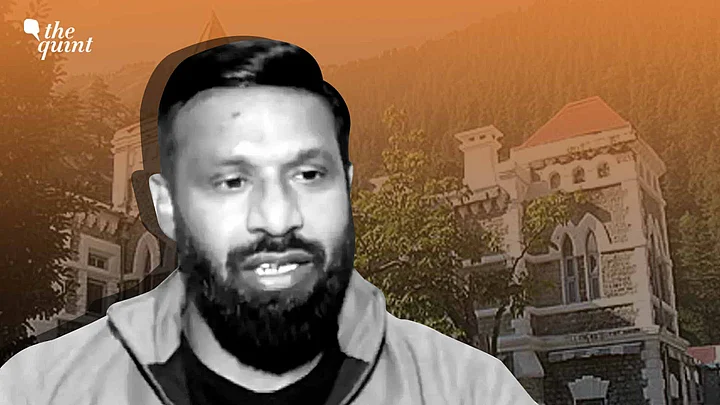
Deepak Kumar moved a High Court—established by India’s Constitution— stating that there is danger to his life and that he must be granted protection, that the criminal proceedings against him have no merit and must be quashed, that FIR be registered against those who engaged in provocative hate speech, and inquiry be instituted against police officials who he believes have been prejudiced against him.
The court could asked the police to file a report on the nature of threat perception or it could have appointed an impartial observer to report the same. It could have granted him security or said that on the basis of report received, case for security is not made out. Quashing petitions are routinely filed in High Courts, notice is issued, merits of the case are argued, and a verdict is reached in favour or against. The court could have simply said case for quashing not made out.
What happened instead:
Deepak Kumar was asked about the money he has collected, something that is irrelevant to the matter.
He was gagged from discussing the case on social media, amid the proceedings for quashing. Even the police did not ask for this. His social media use was not the subject matter of the proceedings.
He was told to “trust” the haai bechaari (poor thing) overburdened police.
From Rule of Law to ‘Vibes Jurisprudence’
Those expecting to read about fundamental rights, duty of state towards citizens, exceptions to fundamental rights, etc will be disappointed.
In the court’s eyes, Deepak using social media, maybe even earning a livelihood or collecting money, was a sin, which overrode any rights which the Constitution may have granted him.
Note that the court didn’t say that the money was collected illegally or some crime had been committed in his social media use. When someone tries to crush you, you must quietly suffer instead of fighting back, is the message. In layperson speak, the sentiment seems to be, "Zyaada hero ban raha hai? (Think you’re some kind of hero?)"
Constitutional scholar and lawyer Gautam Bhatia calls this “vibes jurisprudence”—where anything goes. A Hindi version would be jo marzi (as you wish) jurisprudence.
In another case, India’s Supreme Court, deeply upset by a chapter about corruption in Indian judiciary, passed the following observation against Professor Michel Danino, Suparna Diwakar, and Alok Prasanna Kumar:
“We direct the Government of India and all state governments/ Union Territories, all Universities, public institutions receiving government funds to dissociate with them forthwith and not to assign any responsibility which incurs fully or partially public funds. This order, however, shall be subject to their approaching this court for modification along with an explanation, if any,” said the bench.
A show cause notice was not issued. It was simply declared that from the moment the last alphabet is typed, the individuals in question should lose those rights.
Citizens, Not Subjects. Or So We Thought
Truth be told, I am a little stressed writing these words. I understand that every single arm of the State now wants citizens to understand that they are merely subjects. They want us to know that when we walk into a court or a government office, we must tremble in fear, fold our hands and ask for mercy, for beneficence, for generosity, not for rights.
Someone could announce tomorrow—no publication will let me write. No laptop manufacturers will sell computers to me. There is no shortage of powers—contempt, UAPA, truly endless.
There is no shortage of the fetters on rights. I gulp, I really do, and yet, these words come out, because something inside India—Deepak Kumar and many others—insist that the Constitution is a real thing. What is written in it is true. Indians have rights, institutions are not Gods who will smite us with lightning at the smallest provocation. This is, hopefully, not the British Raj.
We could be delusional. In which case, to quote Anand Teltumbde—speak up before your turn comes.
(The author is a lawyer and research consultant based in Mumbai. This is an opinion piece, and the views expressed are the author’s own. The Quint neither endorses nor is responsible for them.).
