
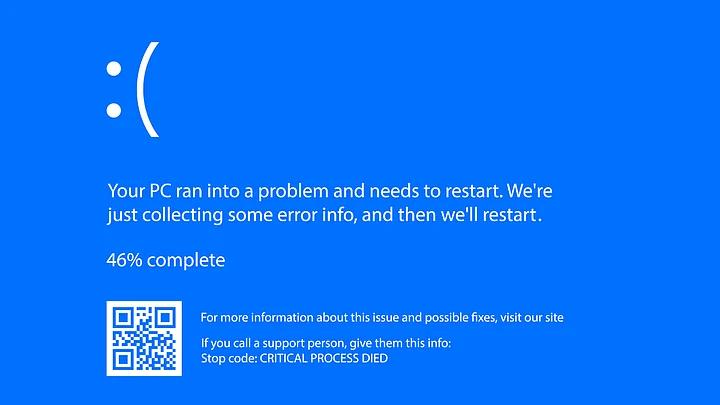
Last week, on 18-19 July, widespread outages struck Microsoft's Windows operating system (OS) across the globe, causing severe disruptions in multiple sectors. Aviation, railways, media broadcasts, banking, stock exchanges, and hospitals were among those most severely affected. The issue manifested as the Blue Screen of Death (BSOD), a critical error screen displaying white text on a blue background. This error occurs when Windows encounters a fatal issue it cannot safely recover from, forcing the system to halt to prevent hardware damage or data corruption. Affected computers shut down and restarted repeatedly, hampering operations.
The disruption has extended beyond 19 July, with no newer systems being affected but the affected systems remaining out of action in many cases. Even in India, the aviation sector was impacted, resulting in numerous flight cancellations at various airports. Many businesses also experienced significant operational difficulties during this period. Interestingly, the disruptions impacted only Windows OS-based systems, not Linux and Apple machines.
The findings so far indicate that the widespread outages were caused by malfunctioning updates to the Falcon Sensor, a product of cybersecurity firm CrowdStrike. This sensor is integrated into various Microsoft systems, including Azure, Microsoft 365, and Windows OS, as part of a business partnership to enhance cybersecurity coverage. CrowdStrike's role involves providing advanced endpoint security for Microsoft environments and assisting organisations in meeting compliance requirements within Microsoft ecosystems.