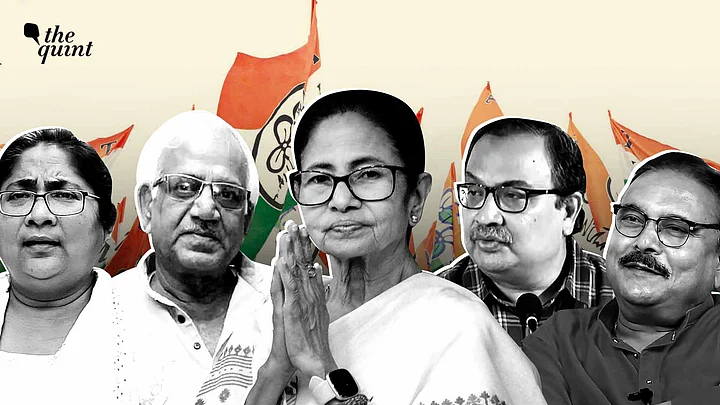
On 2 June, as Trinamool Congress (TMC) supremo Mamata Banerjee stood at a sit-in protest at Kolkata’s Y Channel, the scene was sparse. Just weeks after the party’s crushing defeat in the West Bengal Assembly elections—ending 15 years in power—around 58 of its 80 elected MLAs had broken away. They chose their own leader of opposition, triggering a legislative split and swirling rumours of a deeper parliamentary divide. The Bharatiya Janata Party (BJP) loomed large, with whispers of direct or indirect pressure accelerating the exodus.
In the frenzy of opportunism, where loyalty to the TMC seemed to melt under the heat of defeat and ambition, one story risked being buried: that of enduring friendship, comradeship, and personal bonds. The few who stood beside Mamata that day were not chasing fresh power or hedging bets. They were the old guard—leaders tested by time, sidelined by internal shifts, yet unyielding in their allegiance.
Their presence spoke not of calculation but of a deeper human connection forged in the fires of Bengal’s turbulent politics. In an era when MLAs defect en masse and younger faces chase control, these veterans embody something rarer: loyalty that survives neglect, scandal, and loss. Their stories touch the heart because they remind us that politics, at its core, is about people—flawed, resilient, bound by shared struggles and quiet sacrifices.
Madan Mitra: The Man Who Never Left Mamata’s Side
Madan Mitra, affectionately “Madan Da” in Bengal politics, sat beside Mamata on 2 June with his trademark colourful persona and “Oh Lovely” quip ready. Many know him through memes or rumours of his flamboyant style and proximity to film stars. What they miss is his ironclad loyalty. Recently, he declared in Bengali, “Buker rokto diye debo, Mamata’r pash charbo na” — I will give blood from my heart but never leave Mamata’s side.
Mitra’s journey traces back to the Congress Chhatra Parishad and the bloody 21 July 1993 police firing on youth workers during Mamata’s movement. He stood by her then, followed her when she founded the TMC in 1998, and rose as MLA and minister. Setbacks came hard: arrested in the Saradha chit fund scam, stripped of portfolios, and sidelined. After his release, the 21 July Shahid Dibas rally excluded him from the stage; he watched from the crowd without regret.
At 200 meters from that spot on 2 June perhaps he reflected on Suvendu Adhikari—whose career Mamata built, now leading the other side. Mitra stayed. A few months younger than Mamata, he still calls her by name, not title. In a party where convenience often trumps history, his unwavering stand feels personal, almost familial, a rare anchor in shifting sands.
Dola Sen: The Leftist Who Found Home in Mamata
Dola Sen’s story is the quiet triumph of a trade unionist who carried the fire of the Left into Mamata’s fold. Born into activism, she was organising workers at the Kolkata Municipal Corporation from the tender age of ten. Her heart beat with leftist convictions—grassroots, ultra-left even—shaped by years of union battles.
She was never a Trinamool insider from day one. Her real proximity to Mamata bloomed during the seismic Singur and Nandigram movements, when land acquisition protests shook the Left Front’s foundations. Dola Sen, like many left-leaning trade unionists, saw in Mamata a genuine fighter against forcible land grab. She threw her lot with her.
That trust was repaid. After the recent electoral rout and the party’s internal turmoil, Mamata entrusted Dola Sen with critical responsibility—making her one of the joint secretaries alongside Derek O’Brien, reporting directly to national general secretary Abhishek Banerjee. It was a deliberate move: an eye and ear for Mamata, ensuring balance in the organisation. On 2 June, she was among the very few MPs standing firm at the dharna. No grand portfolio, no dynastic claim—just decades of union work, ideological conviction, and personal loyalty.mamta Banerjee
In a party often accused of being run by a small coterie, Dola Sen represents the bridge between old leftist activism and Trinamool’s mass politics. Her presence that day was not mere attendance. It was the return of a comrade who found in Mamata the courage the Left had lost.
Kunal Ghosh: Whose Loyalty Is Also Sweet Revenge
Kunal Ghosh’s loyalty carries the sharp edge of betrayal survived. A seasoned journalist who witnessed Mamata’s rise from the very beginning, he was there the day she was brutally attacked in the streets. It was Ghosh who rushed her to the hospital in his own car. He became a Rajya Sabha MP, a close advisor on national matters, and for a time, one of her most trusted voices.
Then came the Saradha storm. As head of the Saradha group’s media wing, he was arrested by Mamata’s own police. While in custody, he lashed out bitterly, claiming Mamata was the biggest beneficiary of the scam. Conspiracy theories swirled—close confidants had allegedly misled her, some even say Mukul Roy played a role to save themselves. The party suspended him. The opposition trolled him mercilessly.
Yet after his release, Ghosh never quit the TMC . He fought case after case, stood by the party through its darkest days, became its spokesperson, took organisational charge, and even voiced open opposition to certain decisions and leaders when he felt they were wrong. This year, the party gave him the Beleghata ticket. He won handsomely.
And when the split erupted, when so many MLAs turned their backs, Kunal Ghosh stood rock solid beside Mamata. He still calls her “Mamata Di.” His loyalty is not blind obedience. It is layered—part gratitude for second chances, part the sweet revenge of proving wrong those who tried to bury him. In the debris of the split, his presence feels like poetic justice.
Sovandeb Chattopadhyay: The First MLA
There are very few people left in the TMC who address Mamata Banerjee by her name. After the death of Subrata Mukherjee, that circle has shrunk to almost no one — except a handful who knew her before she became "Didi" to an entire state, who remember her as a colleague in Congress rather than as a leader to be followed. Born in 1944, Sovandeb Chattopadhyay is considered one of the founding pillars of the TMC and began his political career in the Congress, winning the Baruipur Assembly seat in 1991 and 1996. When Mamata broke away to form the TMC in 1998, he followed her — and in doing so became the first MLA ever elected on a TMC ticket.
He was also the founder president of the Indian National Trinamool Trade Union Congress, the labour wing of the party. But power within TMC never came easily to him. After the TMC came to power in 2011, he was appointed Government Chief Whip in the Assembly — a move that reportedly disappointed him as more influential portfolios went to others. He was given power portfolios later, and agriculture in the final term, but the grand organisational positions that his seniority arguably deserved were never consistently his. He was quietly sidelined at various junctures, never quite placed where a man of his tenure should have been.
And yet, at 82 years of age, when the BJP's Suvendu Adhikari took oath as the new Chief Minister of West Bengal following the BJP's record win of 207 seats in the 293-member assembly, it was Sovandeb Chattopadhyay that Mamata chose as her Leader of the Opposition. He retained the Ballygunge constituency by defeating the BJP candidate by 61,476 votes — creating a record by becoming the only MLA in West Bengal to win ten consecutive assembly elections. When the split came, and 58 rebel MLAs walked out, Sovandeb Chattopadhyay remained the recognised Leader of Opposition, the formal face of a party navigating its most existential crisis.
There is something profoundly moving about an 82-year-old man who has never lost an election, who was the very first to carry Mamata's new flag in 1998, now standing as the opposition's standard-bearer in a hostile assembly, having watched dozens of younger, more ambitious colleagues desert his leader under pressure. The party is smaller than it has ever been. The corridors of power belong to others now. But Sovandeb Chattopadhyay is in his seat. As he has always been.
These four, Mitra, Sen, Ghosh, Chattopadhyay along with a handful of others, form Mamata’s thinned circle. Sidelined at times, they never weaponised grievance into exit. As TMC fractures under new ambitions and external pulls, their stories humanise the crisis. Politics devours the convenient; it immortalises the loyal. In standing by Mamata through defeat and desertion, they remind Bengal that some bonds run deeper than power—touching the heart with their raw, enduring humanity.
(Sayantan Ghosh is the author of two books, Battleground Bengal and The Aam Aadmi Party, and teaches at St. Xavier’s College (Autonomous), Kolkata. Views expressed are the author's own. The Quint does not endorse or is responsible for them.)