
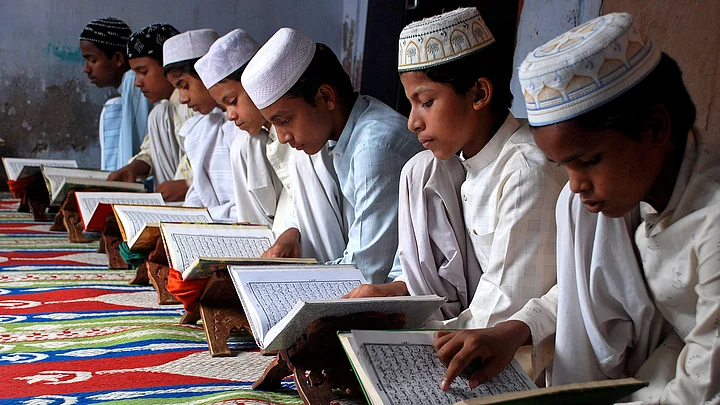
There are good madrassas and there are bad madrassas as there are good and bad schools. To make sweeping statements about madrassas is as meaningless as saying that, “all government schools are bad.” Madrassa in Arabic means a place of learning and traditionally many great Muslim thinkers, philosophers, scientists, scholars emerged from these madrassas. Convent schools were also Christian seminaries or madrassas but with emphasis on secular education they have gradually emerged as centres for quality secular education.
The recent controversy regarding madrassa education in Maharashtra seems to be more political than a genuine concern for imparting modern secular education to Muslim children. In Maharashtra, there are 1,889 madrassas of which 550 are already teaching modern subjects and their students are appearing for open school examinations.
Nearly half of the madrassas are merely on paper with hardly any students on their rolls. Most of them are prepared to teach modern subjects provided they have the resources. In fact, the general trend among madrassas across India is to go for computer and science education. All major madrassas in the country, from Dar-ul-uloom Deoband to Nadwatul Uloom in Lucknow to Amarat-e-Shariah in Patna to a majority of madrassas in Bengal, Tamil Nadu, Kerala, and Karnataka have adopted modern technology and are encouraging their students to appear for school and university certification.
Consultation is the Key
If Maharashtra education minister Vinod Tawade genuinely wants to bring madrassa students into the educational mainstream he should consult the management of important Islamic seminaries and persuade them to adopt modern education, instead of issuing a dictat and declaring all madrassas as “non-schools”. Former HRD Minister Arjun Singh initiated the scheme to provide quality education in madrassas (SPQEM). The HRD ministry under the NDA is continuing with this scheme which is gradually changing the focus of education in a large number of madrassas in the country.
Tawade’s assertions may win him a few brownie points with his hardcore constituency but will only create an unnecessary controversy and do utmost damage to efforts to modernise madrassas. In fact, Tawade can learn a lot from Bengal where madrassas in rural areas have become so popular that they are attracting large number of non-Muslim students.