
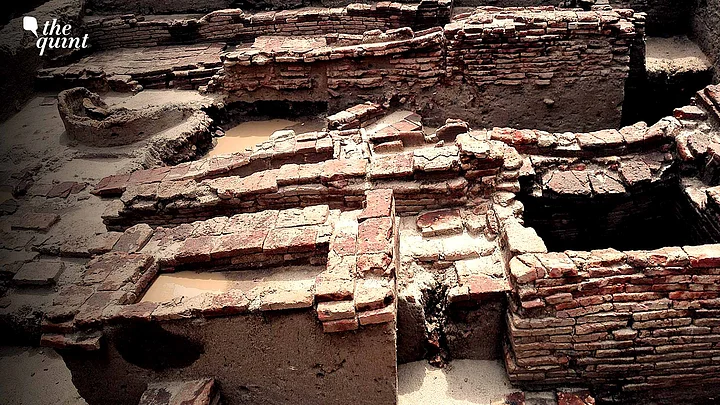
In the quiet village of Keeladi, on the banks of the Vaigai River in Tamil Nadu, the Earth has yielded secrets with the potential to disturb modern India’s political and cultural imagination.
What began as a routine archaeological excavation has spiralled into a simmering national controversy, revealing far more than shards of pottery or crumbling brick walls. At stake is nothing less than India’s historical narrative itself: who writes it, who controls it, and what it says about the tangled relationship between North and South, Tamil and Sanskrit, Vedic tradition and Dravidian identity.
The Keeladi excavations have unearthed evidence of a sophisticated, urban, literate civilisation dating as far back as 600 BCE, pushing the Sangam era into deeper antiquity. These findings suggest that long before the north Indian Vedic civilisations flourished, the Tamil region nurtured an advanced society, complete with urban planning, brick structures, drainage systems, and inscriptions in Tamil-Brahmi script.