
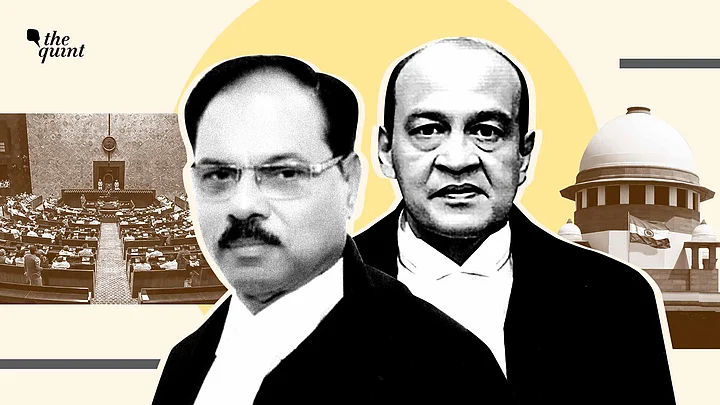
In recent months, an affair of quiet consequence has unfolded within the judiciary—one that speaks less about an individual judge and more about the institutional balance of power between the courts and the political class.
The Justice Shekhar Kumar Yadav episode is no longer just about communal remarks at a public event. It is now about whether the Supreme Court of India retains the authority to discipline its own, or whether it must first seek clearance from those in high political office.
Let us be clear. When a sitting judge of a constitutional court speaks at a platform hosted by the Vishwa Hindu Parishad (VHP) and makes comments that are—by all accounts—communal and provocative, the matter cannot be brushed aside as mere indiscretion.
Such remarks strike at the foundation of judicial impartiality, and prompt, dispassionate inquiry. This is the least that the institution owes to the Constitution and to the people.