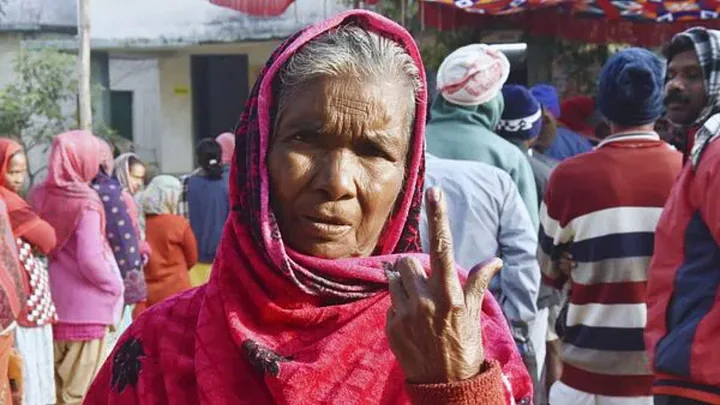
In the recent Jharkhand Assembly elections, the JMM-led INDIA bloc secured 56 out of 81 seats, while the BJP-led NDA won 24.
Along with the general population of Jharkhand, the long-forgotten displaced people of Bokaro have high expectations from the incoming government.
The people of Bokaro decided to change their representative in the Vidhan Sabha this election season. After two consecutive terms, the BJP’s Biranchi Narayan lost their trust, who were eager for a new voice to address their long-ignored concerns.
This time, they gave the chair to Shweta Singh of the Congress party, representing the INDIA bloc, who has emerged as a beacon of hope, becoming the first woman MLA of Bokaro.
The Steel Plant
In the dense jungles of the Chota Nagpur Plateau lay a village named Maraphari. This remote settlement remained shrouded in obscurity until post-independence India, when Pandit Jawaharlal Nehru, as prime minister, envisioned building the country’s first steel plant in collaboration with the Soviet Union.
In 1964, the Bokaro Steel Plant, India’s first swadeshi (indigenous) steel plant, was established, which was later integrated into the state-owned Steel Authority of India (SAIL).
The plant illuminated the once-forgotten villages in the deep jungles of Jharkhand. But there was little consideration of the price that the locals would have to pay, a price they continue to pay even after more than 50 years.
Established on the site where Maraphari stood, large-scale displacement occurred during the set-up of the Bokaro Steel Plant.
To establish the steel plant, some 64 moujas (a mouja may contain multiple villages) ceded their land. "As many as 49 villages are disputing the acquisition. While residents of 19 villages are yet to get compensation, rehabilitation or jobs, those in the remaining 20 who were given meagre compensation want more money and jobs," writes Sanjeev Kumar Kanchan for Down to Earth magazine.
SAIL notified the district administration in 2021, directing them to prepare a roadmap for the evacuation of 19 villages, as the residents are living on unused land previously acquired by the company. This notice has reignited focus on the displaced persons in the region, prompting local political leaders and organisations to advocate for their rehabilitation.
These 19 villages in Bokaro still lack basic amenities like clean water, sanitation, reliable electricity, and roads, and do not come under any panchayat or municipal corporation but, at the same time, are entitled to vote in the assembly and general elections.
Hollow Election Promises
In every election, these innocent people are used and exploited by local leaders, who extract their precious votes with the lure of providing rehabilitation and including them in local panchayat elections. In more than 20 years since the formation of Jharkhand, the government has changed several times, but there is still no change in the living conditions of the displaced people of Bokaro.
In more than 50 years, there has been no significant step taken by either the Bihar government or the Jharkhand government (after getting its statehood). Articles 14 and 21 of the Constitution of India provide for the right to equality and the right to adequate livelihood, which have become distant luxuries to enjoy for these people.
Many landowners whose land was acquired 50 years ago, have still not received compensation, which violates the provisions of the Land Acquisition Act of 1894. Section 23 enlists several factors to determine the compensation for the acquired land, for example, the court shall consider the market value of the land, damage sustained by the person interested, etc.
The recent election has again provided Hemant Soren an opportunity to do help these people. Time will better decide whether the so-called abua sarkar (our government), as claimed by Soren, is truly for the betterment of the people of Jharkhand or merely for those sitting in the Vidhan Sabha.
Till now, several elections have been won, and several local leaders have launched their careers on the basis of their lucrative promises of rehabilitation. It is up to the INDIA bloc's representative - will she follow the footsteps of previous leaders, or create a new history for the long-forgotten people of Bokaro?
(The author is a final-year BA LLB student at AMU. Views are personal.)