
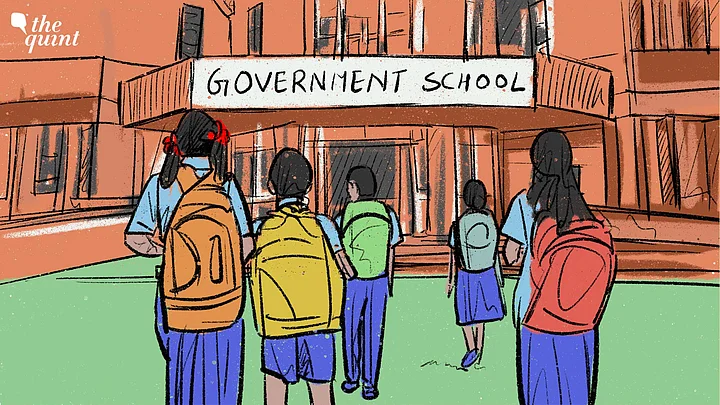
(This piece is a counterview to an article on The Quint that examined why the closure of government schools is becoming the new normal in India and whether the education system can bridge the widening public-private gap. Read the view here.)
When a government school shuts down, the reaction is immediate and emotional. It assumes that public education infrastructure is slowly being dismantled to encourage private schooling. This concern is understandable. Education must remain a public good, and the state has a constitutional obligation to ensure that every child has access to schooling.
But the debate around school closures in India is asking the wrong question.
The real question we should be asking is not why schools are closing, but whether the public schools that exist today are structurally capable of delivering meaningful education to children.
The Legacy of an Earlier Policy Design
Many of India’s schools were built in response to a very different policy challenge.
In the late 1980s, the National Policy on Education (1986) introduced Operation Blackboard, a programme designed to ensure that every primary school had basic minimum facilities. The goal was simple: expand access to schooling across a vast and unequal country.
The policy mandated three essential provisions:
At least two all-weather classrooms
At least two teachers per school
Basic teaching-learning equipment such as blackboards, charts, maps, and science kits
For its time, Operation Blackboard was transformative. It helped extend schooling to thousands of previously underserved habitations. But policies designed to guarantee access are not necessarily sufficient to ensure learning.
Over time, the legacy of Operation Blackboard combined with the Right to Education (RTE) Act’s neighbourhood school norms, which require schools to be located close to habitations. Together, these policies helped create one of the world’s largest schooling systems and also one of its most fragmented.
A System of Extremely Small Schools
India today has roughly 15 lakh schools, government and private combined (UDISE+ 2023–24). But many of these schools operate at an extremely small scale.
According to UDISE+ data:
Around 83,000 schools enrol 10 or fewer students and only 1 teacher
Nearly 5 lakh schools enrol fewer than 50 students and only 2 teachers
More than 8 lakh schools enrol fewer than 100 students and only 3 teachers
More than one lakh schools operate with only a single teacher, responsible for teaching multiple grades simultaneously. In addition, a large number of schools lack instructional leadership: hundreds of thousands of schools fall short of RTE norms for a designated head teacher (UDISE+).
This produces classrooms that are difficult to imagine in most urban discussions about education. Picture a two-room building. Five grades sitting together. One teacher. One blackboard. On paper, such schools may meet the minimum requirements of policy compliance. In practice, they struggle to deliver effective teaching and learning.
The Learning Crisis Is Already Visible
India’s learning outcomes reflect these structural constraints.
The ASER 2024 report shows that only 27 percent of children (rural) in class 3 can read a class 2-level text, The ASER 2005 report has the student outcome numbers. More than 20 years of reform but India has not made any sustainable and systemic progress that can ensure delivery of even the most basic education to our children.
These lack of improvement in students outcomes are often attributed to teacher shortages, qualification, pedagogy, curriculum, or lack of parental involvement.
An uncomfortable question remains unasked and unanswered: how effectively can teaching happen in classrooms when our schools and school system were not built to deliver education that a child requires in the 21st century.
Structural conditions matter.
A school system designed around extremely small institutions makes it difficult to support teacher deployment, subject teaching, teacher collaboration, instructional leadership, and administrative excellence at the school level.
The ingredients that make schooling effective.
Why Families Are Leaving Government Schools
The rise of private schooling is frequently described as the result of ideological privatisation. But the story on the ground is often simpler.
Families (including low-income households) frequently choose private schools because they perceive them to offer more consistent teacher attendance, presence of basic infrastructure , regular teaching and better classroom environments, not necessarily better learning.
This migration to private school is often driven by a search for better learning conditions. If the public system cannot provide those conditions, families will look elsewhere.
The Case for Learning-Ready Schools
A functioning school system requires more than a building and a minimum number of teachers.
Schools need a set of minimum structural conditions that allow teaching and learning to happen effectively.
These include:
Adequate enrolment to support grade-level classrooms
Sufficient teachers to enable subject specialisation
Basic infrastructure and learning resources
Instructional leadership through head teachers
Professional support for teachers
A school principal
Transportation facilities to enable access
When schools operate with very small enrollment, it becomes extremely difficult to create these conditions. Teachers are forced to manage multiple grades. Subject teaching becomes impossible in upper grades. Leadership and professional collaboration disappear.
They are structural constraints on learning.
Moving Beyond a Simplified Debate
None of this means that school closures should be celebrated. Poorly designed consolidation exercises can disrupt access, especially in remote areas. Affordability is also a legitimate concern. If public schools weaken without strengthening the public system itself, families may indeed be pushed toward private schooling they cannot afford.
But preserving every small school building indefinitely is not a viable solution either.
India’s education system serves more than 24 crore children across 15 lakh schools. In comparison, China has a similar population of school going children, its landmass is approximately 3 times larger but has only 5 lakh schools
The real challenge is how to reorganise the public education system so that every child has access not merely to a nearby school, but to a school that is actually capable of delivering quality education.
In some cases, this may require consolidation of very small schools. But consolidation must be accompanied by investments in transport, improved infrastructure, better staffing, and stronger academic leadership.
The Question That Matters
Framing school consolidation primarily as “privatisation by stealth” risks oversimplifying a much deeper systems challenge.
Ensuring that India’s public education system works for every child requires confronting difficult structural questions. The debate should therefore not be limited to whether schools close or remain open.
It should focus on a more fundamental question: How can we give all children in India access to a Learning Ready School?
Protecting public education cannot simply mean preserving existing structures. It must mean building a public system that is capable of teaching every child well.
(Aadi Rungta, Amitav Virmani are associated with The Education Alliance, an NGO working for improving the quality of government schools in India. This is an opinion article and the views expressed above are the author’s own. The Quint neither endorses nor is responsible for them.)
