India has witnessed a mayhem recently post the controversy of NEET paper leak followed by nation wide agitation by the youth. This has been a tumultuous movement led by young students and Gen Z. All these episodes of anger, frustration, blame game of the politicians, police action, suicides by some of the aspirants, intervention by our courts reflect that India now needs a robust and outstanding medium to conduct national examinations in the most transparent, foolproof and student friendly manner.
The examinations such as NEET or JEE are high stake, keeping in view the scale, the trust of students, the meritocracy, the choice of colleges and universities etc. We talk of quality education to students on equitable basis but before quality comes the question of drawing up the merit lists of eligible students. The latest showdown has exposed the fragility of the education system and the trust deficit among various stakeholders.
There have been allegations of paper leaks which proved to be correct, cases of impersonation, cheating, etc.
I do not say that this has happened for the first time. There has been previous instances of paper leak, involvement of unscrupulous elements, use of unfair means in these examinations. All these vulnerable points undermine the confidence of the common man in a just and fair State and the dreams of the millions are shattered.
Years of Sacrifice Come Down to One Paper
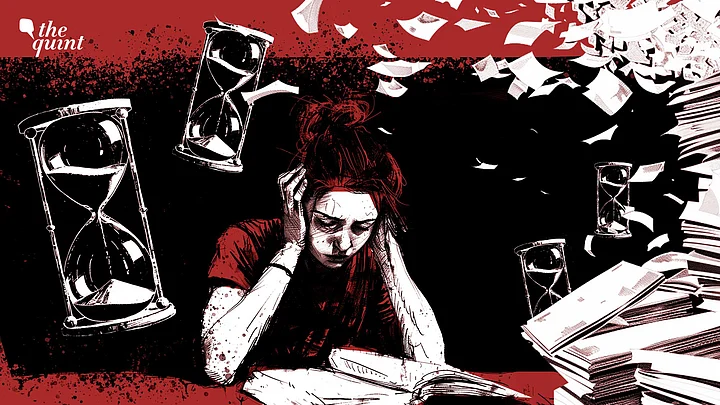
NEET or JEE are not just examination, it is the result of their aspirations of becoming a doctor or engineer. Most of the parents and students start preparing for these examinations at a very tender age of 12 or 13 years when they enter into grade 6 or grade 7. The ordeal that most of the parents and students go through is nerve shattering as their day starts early for morning study hours, then long schools hours followed by long and gruelling coaching at the coaching centres.
It also entails a lot of spending by parents so that they may live their most cherished dreams. Many long years are devoted for preparation, sacrifices of other passions, handsome finances, dreams of a beautiful morrow, social commitments and answerability are key factors that go in the making of a medico or engineer or other coveted professionals. When a paper is cancelled or counselling is postponed, it take a huge toll on the mental health of the whole family.
The Union Government has responded well to address and mitigate the issues that the nation has experienced. The introduction of the Public Examinations (Prevention of Unfair Means) Amendment Bill, 2026 in the ongoing session of the Parliament and the constitution of a high-powered task force under the chairmanship of Nandan Nilekani to recommend comprehensive examination reforms are laudable steps of the State. These interventions are significant as there seems a ray of hope to regain the trust of the public, governance, sound legal remedies, humongous use of technology and the solid set of procedural protocols.
The Law Can Punish. Can it Prevent?
The Bill proposes to bring significant amendments in the Public Examinations (Prevention of Unfair Means) Act, 2024. Strong punitive deterrents like imprisonment ranging from five to ten years and higher financial penalties are the main amendments. Even the service providers have been put on the radar; they shall be fined several crores too in case of their involvement in malpractices. Those involved in organised cheating, paper leakage or coordinated manipulation may face a minimum of seven years’ imprisonment, extendable to ten years, together with substantial fines.
The Bill further proposes constitution of a specialised task force for investigation, a two-month period for completing investigations, designated Special Fast Track Courts, day-to-day hearings and time-bound disposal of trials and appeals. So the Government has given a strong message that examination fraud is a major crime not just a routine irregularity.
These proposed amendments shall be a huge deterrent for the wrong doers. Though these are strong punitive actions that will take place once the crime is committed, yet the Government ought to ensure that the examination system is robust, technology driven and fool proof. How to prevent such accidents in the future requires some sustainable structural reforms. Keeping the long term successful vision in view, the Centre has further decided to constitute a high powered task force led by Nandan Nilekani which will give recommendations on the structural reforms.
The Nilekani Committee: A Ray for Structural Reform
Nilekani has a vast experience in building large-scale digital public infrastructure so it is expected that the task force under him shall recommend some futuristic and long term solutions to conduct national examinations.
Though the mandate of the task force is yet not notified officially but through the statements of the leadership, it is clear that the task force would work in a serious fashion and make some palpable solutions. Let’s hope that it goes beyond online examination that hasits own vulnerable points like availability of infrastructure, rural and difficult areas, ill equipped testing centres etc.
The committee should examine the relevance and structure of the National Testing Agency too It should work on the entire examination cycle right from paper setting, question banks, hiring of agency, if needed, examination centres, evaluation, result processing and declaration followed by grievance redressal. Every year a huge number of aspirants appear for various examinations, the committee may also be mandated to give practical solutions of a single examination on a single day or by conducting parallel examinations or subsequent shift examinations.
In such a scenario,there would be an urgency to have moderators with strong credibility. Such large examinations are not new to the world. Most of the developed countries also conduct examination on a large scale; nevertheless their systems are robust and fool proof. I do not say that we replicate any tested and successful model of any other country per se as we have our own challenges and issues.
China admits students to universities, including medicine and engineering programmes, largely through the Gaokao, its highly competitive national entrance examination. China approaches examination security as a coordinated whole-of-government responsibility. Security extends from question setting and printing to transportation, storage, centre management, collection and evaluation. One important feature of the China model is the accountability of the institutions for security failures. The USA follows a decentralized model which may not be a good idea as it will give a lot of autonomy to institutions and the States.
Japan offers a useful hybrid model. In Japan, students take a national commonexamination, after which universities conduct their own subject tests, interviews or assessments. India could explore a similar approach, particularly for highly specialised programmes. A national examination could establish eligibility and academic ranking, while regulated second-stage assessments could be conducted by institutions or regional clusters.
There should be a large pool of questions out of which the question paper may be prepared, there should be at least 10 sets of question papers. Such examinations should be held bi annually, through online mode with all digital and online paraphernalia of holding such examinations. NTA requires experts at the helm, sound service providers with proven track records.
Independent oversight is equally important. A permanent national examination integrity board could include experts in education, law, cyber-security, psychometrics, public administration and student welfare. It could audit major examinations, investigate systemic failures and publish annual reports.
The Public Examinations Amendment Bill provides the necessary punitive force.
The Nilekani Committee must now provide the technological, institutional and educational imagination. We should take the NEET controversy as an opportunity to redesign our fragile examination system. We can learn from our own UPSC examination. That model is time tasted and has been successful at the same time.
I conclude with some lines from The Second Coming by WB Yeats where he says:
"Turning and turning in the widening gyre
The falcon cannot hear the falconer;
Things fall apart; the centre cannot hold;…
Surely some revelation is at hand;
Surely the Second Coming is at hand.
The Second Coming!"
(Prof (Dr) Hemant Verma is the Director of Institutional Policies, Government and Regulatory Affairs, Senior Fellow at Jindal Institute of Haryana Studies, O.P. Jindal Global University, and Former Vice Chancellor, SGT University, Gurugram. This is an opinion piece and the views exrpressed are personal. The Quint does not endorse or is responsible for them.)