
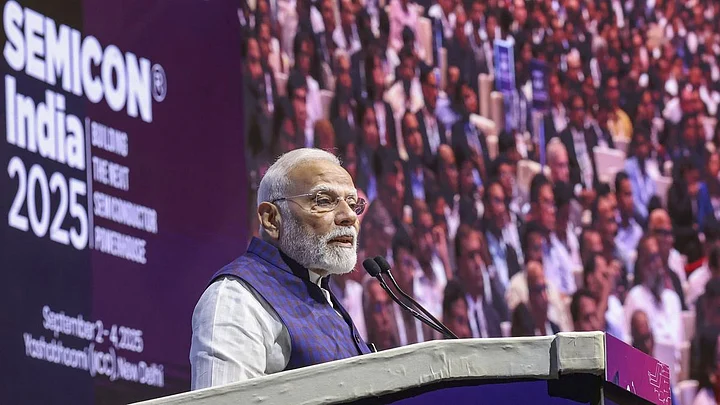
2 September 2025 marked a watershed moment for India's technological sovereignty as Prime Minister Narendra Modi received the first set of 'Made-in-India' chips from a pilot line, the Vikram 32-bit processor, developed by the Indian Space Research Organisation's (ISRO) Semiconductor Laboratory at the Semicon India 2025 conference.
The pilot chip system on display had the involvement of more than 28 entities including engineering colleges in far flung areas of the country. With 12 strategic MoUs signed and a $1 billion Deep Tech Alliance launched, the event at New Delhi's Yashobhoomi marked a pivotal moment in India's quest to establish itself as a global semiconductor powerhouse despite being a late starter.
Designed to withstand the harsh environmental conditions of space launch vehicles, the processor demonstrates India's capability to create high-reliability, mission-critical semiconductors.