
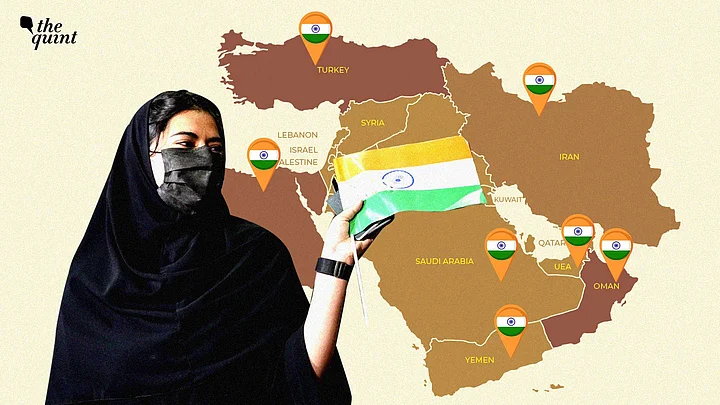
On 24 June, marking the 14th Passport Seva Divas, the Ministry of External Affairs reiterated that an Indian passport is merely a travel document and not proof of citizenship. The clarification set off a small storm. Politicians and writers — among them Aaditya Thackeray and Javed Akhtar — asked the obvious question: if a passport does not prove citizenship, and neither do Aadhaar, PAN or the voter ID, then what does?
I have spent almost twenty years living the answer to that question from the other side — the side where Indians must prove, paper by paper, that they belong to the country they were born in.
After a short stint with The New Indian Express in Bangalore and Kochi, I migrated in 2007 to Oman, carrying my travel document — the Indian passport. I worked as a sub-editor on an English newspaper for two years before moving to the reporting bureau, where, being an Indian, I was handed the Indian migrant beat.
There was no shortage of rags-to-riches stories — the man who arrived with nothing and built an empire. They had been told many times over. I did not want to write them. I went looking for the others: the workers held inside the kafala system, the sponsorship regime that operates across the Gulf as a form of bonded labour, enslaving people in a dozen quiet ways. They were everywhere. I only had to sit in a tea shop, or walk through a labour camp, and begin a conversation.
When Identity Becomes Leverage
The first thing they told me, almost without exception, was this: Sir, the Arabab — the word we migrants use for the employer in the Arab Gulf— will not return my passport. Not to leave an exploitative company. Not to fly home, even for a death in the family.
Anyone who has worked in the Gulf knows the ritual. The moment you land, the company's representative takes your passport with a smile and a promise to "keep it safe." That single act — the confiscation of a worker's identity document — is one of the ILO's eleven indicators of forced labour, drawn from the Forced Labour Convention, 1930 (No. 29). The ILO's own guidance notes that document retention is among the most common methods of controlling migrant workers, because it weaponises their fear of deportation and their inability to leave.
That fear is the point. The withheld passport is not safekeeping; it is a threat held in reserve. Ask for your overtime pay, your sick leave, a raise — or refuse dangerous work — and the answer comes back the same: You want your passport? Then don't make trouble. Every migrant worker understands exactly what that means.
It means your citizenship itself has been placed at risk. Without the passport — the one document the Indian state recognises as its own — the burden of proving you are Indian falls entirely on you. Walk into an Indian embassy with a workplace grievance and the first question is: Where is your passport? And if you cannot produce one, not even a photocopy: Then how do we know you are Indian at all?
Between 2009 and 2017, I heard that question put to workers in embassy halls more times than I can count — years in which the line between journalism and activism blurred for me, as I trained on the migrant-rights conventions under the Migrant Forum in Asia, the United Nations and the International Labour Organisation to sharpen my reporting.
The Passport Delhi Dismisses
This is not a handful of hard-luck cases. According to a reply tabled in the Lok Sabha in December 2025, Indian missions in the Gulf received 1,38,213 grievances over three years — an average of roughly 125 a day. And that is only what is written down. In my experience, not even a tenth of the real complaints ever reach an embassy, because a worker who registers one risks everything his employer can still take away. The government itself concedes the pattern: in its own submissions, the MEA acknowledges that Indian workers in the Gulf face difficulties from inhumane conditions, and that the bulk of their complaints concern unpaid or delayed wages, withheld end-of-service benefits, and the unauthorised retention of passports.
And here is the contradiction I cannot reconcile. Inside India, the government now tells its citizens that a passport proves nothing. Yet at its embassies abroad, the very same state will tell you that even a photocopy of a passport — even an expired one — is enough to issue a fresh document and bring an Indian home. The booklet dismissed in Delhi is the lifeline in the Gulf.
I know this because I have carried that paper to the embassy myself, for one family, and for many more since.
A Malayali mother once came to me with a single wish: to go home. Her six-year-old son lives with an intellectual disability. Her own passport had expired. The boy had been born outside a registered marriage, and his father had been deported from Oman for bootlegging. I took her case to the embassy. The officials asked how we could prove the child was Indian. I said: he speaks Malayalam. The officer replied that he could show me Pakistanis who speak Malayalam, too.
In the end, it was not language, not blood, not a mother's word that made the boy Indian. It was a letter from the hospital where he was born. We carried that paper to the embassy. They issued a temporary passport. The boy became Indian. They flew home. A six-year-old who had to be documented into his own country.
What it Takes to Come Home
He was neither the first nor the last. This March, an Indian social activist — a close associate of mine for years — found a Punjabi woman and her two small children stranded in a park in Dubai. The mother held a valid passport. The children held nothing at all. The moment the activist called me, we began. I did the groundwork here in Punjab, tracing and reconnecting the family. In Dubai, with the help of a local organisation, the activist arranged a DNA test — because a mother's word that these were her own children was not, by itself, enough. The test proved what she had been saying all along. With the mother's passport, the embassy issued exit passports for the children, affirming they were Indian, and bringing them home.
Using the mother’s passport as proof, the embassy issued exit passports for the children, affirmed their Indian citizenship, and helped bring them back home.
For an Indian who never leaves the country, the statement “a passport is only a travel document” may sound like a harmless technicality. But for the millions of Indian workers in the Gulf — whose passports are often locked in their employer’s drawer, torn, or lost — it is far more dangerous.
In Delhi, a valid passport may suddenly no longer be enough to prove Indian citizenship. Yet in the Gulf, even a photocopy of a valid or expired passport is routinely accepted as proof. I have done it. We have done it. Not once or twice, but many times.
(Rejimon Kuttappan is a forced labour investigator, investigative journalist, and author of 'Undocumented'. He has over 15 years of experience and has led investigations for organisations like Associated Press, Human Rights Watch, and Corporate Accountability Lab. This is an opinion piece and the views expressed are the author’s own. The Quint neither endorses nor is responsible for them.)
