
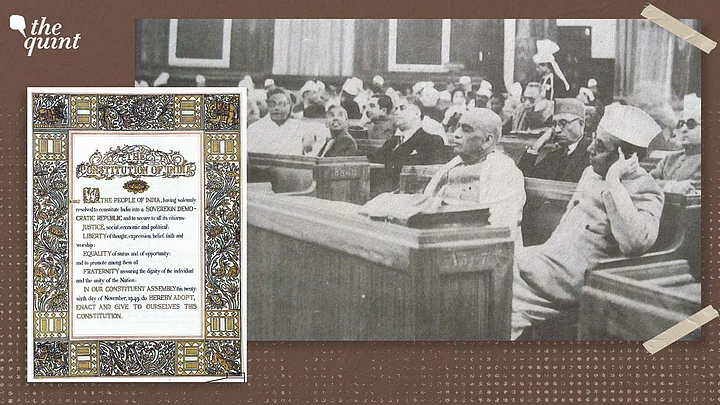
(This article has was first published in December 2025.)
As we celebrate Republic Day—and commemorate the adoption of the Constitution of the Republic of India—it would do us well to have an honest appraisal of why it has failed to cultivate unity and social harmony.
The signs of disunity are all around us: Hindu-Muslim violence, caste-based politics, North-South divide, linguistic disputes, separatist movements in Kashmir and Punjab, armed insurgencies in Chhattisgarh, Jharkhand and Odisha, communal violence in Manipur, to name just a few. Since many of these conflicts have persisted since Independence and many are new, it is hard to blame one political party or one set of leaders.
Such pervasive discord points to a fundamental problem in the way India is governed.
When our founders adopted the Constitution in 1950, they hoped that it would serve as a glue holding the country together. They enshrined in the document many features with that goal in mind: majority-rule with parliamentary checks; federation of states with a unifying Centre; freedom of religion with secular protections, and accommodation of regional languages without imposing a national language.