
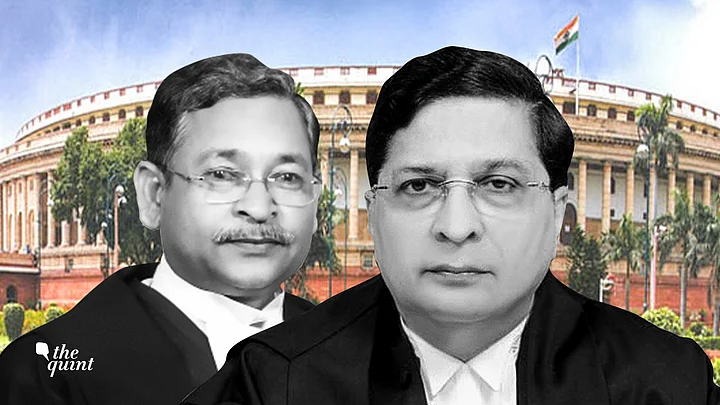
Who will guard the guards themselves?
It is one of the oldest dilemmas in civilised society: what happens when the very people who are supposed to uphold the law, and ensure it is followed, fail to do so? In modern democracies, this relates to more than just the ‘rulers’ – whether Prime Minister, President or Parliament – but also applies to the judiciary.
This is something which is becoming all the more apparent with every development in the medical bribery cases, which has cast its shadow over the judiciary like a dark cloud for months now. The latest? An in-house inquiry committee appointed by the Chief Justice of India has found that a judge of the Allahabad High Court, Justice Shri Narayan Shukla, committed judicial impropriety in one of the cases, and has recommended that he be removed from office.
What does the current structure of judicial accountability allow; has Justice Shukla been removed from office? No. Is he facing any consequences for his misconduct? Not really. The CJI has advised the Chief Justice of the Allahabad High Court to not allocate any work to him, but to avoid all of this, he’s taken a leave of absence for 90 days.
Is there any way to hold him, or any such judge, accountable? Yes. Is it difficult and unwieldy and may not lead to any actual consequences? Absolutely. Does it need to be reformed? Yes, again.