
ADVERTISEMENTREMOVE AD

Operation Sindoor and the Unfinished Business of Defence Reforms

The IAF is the only operator of Jaguars and Avro aircraft that have retired the world over.

Published
story-hero-img
i
Aa
Aa
Small
Aa
Medium
Aa
Large

The year 2025 will go down in the annals of the Indian Air Force (IAF)'s history as one that redeemed the trust reposed in the service by the nation. It was also a year in which a new rulebook for warfighting was written.

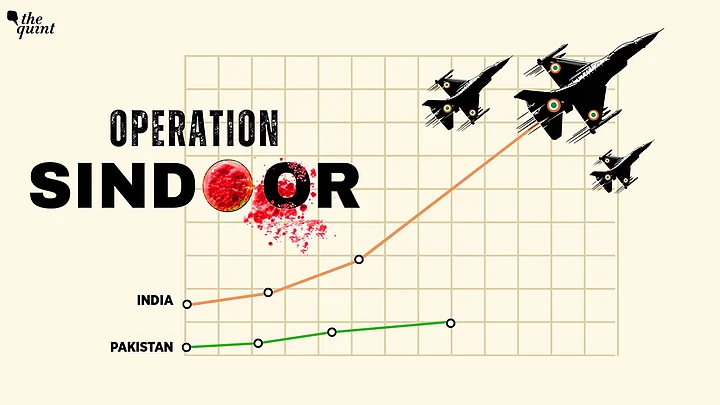
The Pahalgam terror attack on 22 April 2025, in which 26 innocent tourists were brutally killed by terrorists, led to Operation Sindoor. The Indian Armed Forces struck nine terror camps on the night of 6-7 May, of which two were reported headquarters of the Jaish-e-Mohammed at Bahawalpur and Lashkar-e-Toiba at Muridke, which were destroyed by the IAF.

On subsequent days, skirmishes between India and Pakistan led to multiple engagements by UAVs, Loitering Munitions, and strikes by IAF aircraft on targets in depth, including radars, runways, hangars, command and control centres and aircraft on ground.

A ceasefire was announced on the afternoon of 10 May in the wake of damage to PAF war-waging potential in airfields from Chaklala and Sargodha in the north to Sukkur and Bholari in the south.

ADVERTISEMENTREMOVE AD

IAF Outshone its Capability Shortfalls

The IAF used long-range precision weapons to telling effect while the indigenously developed Integrated Air Command and Control System with its near impregnable air defence ensured that there was no significant damage within India.

Success in Operation Sindoor led to the validation of the operational employment philosophy of the Armed Forces. While success in Operation Sindoor is evident, the capability shortfall is out of public sight.

With a continuing depletion of squadron strength, the IAF has had to scavenge spares of Jaguar aircraft from countries that have stopped flying this aircraft. In fact, the IAF is the only operator of Jaguars and Avro aircraft that have retired the world over.

The Tejas crash, however, at the Dubai air show on 21 November 2025, which resulted in the tragic loss of life of the pilot, raised many questions.  The accident is under investigation and the court of inquiry will take its time deliberating on the reasons and remedial measures.

The focus of HAL to showcase the aircraft with the underlying motive to market a product with overcommitted deliveries and no accountability for delays is questionable. There is no denying the fact that the indigenous design and development capability of the aerospace ecosystem has matured over the years, resulting in the production of Tejas Mk 1 by HAL.

The aircraft has had a stellar flight safety record with only one accident before this. The acutely depleting fighter aircraft inventory of the IAF has also been plagued by HAL’s inability to meet the delivery timelines.

Repeated failures of delivery schedules does little to repose faith in HAL. While delays in the delivery of GE F404 engines is cited as being responsible for the same, the integration of the indigenous radar, air-to-air missiles and the electronic warfare suite is yet to fructify.

With 180 Tejas Mk 1A on order and none delivered so far, where is the capacity to export and seek orders from other countries. In this scenario, Tejas Mk II and the AMCA remain a distant prospect.

The existing adversarial relationship between the services and the defence PSUs needs to be converted into a collaborative approach that must emerge from the Ministry of Defence. Development of an aeroengine that has been much delayed needs the priority that it merits.

Reforms Needed for 'Atmanirbharta' in Defence

The year 2025 was also declared to be the Year of Reforms by the Ministry of Defence. The reforms intended interoperability, jointness, and integration along with the adoption of new technologies like AI, cyberspace, and other emerging technologies to enhance multi-domain operations.

These reforms were expected to culminate into structural changes leading to the formation of integrated theatre commands. As one looks back at the year gone by, there has been some progress, albeit at a pace that needs to gather momentum.

Operation Sindoor came as a blessing in disguise, wherein joint planning and decision making at the apex level worked in perfect synergy without an established structure for the same. This was the first instance wherein the Indian Armed Forces were engaged in a conflict after the establishment of the Chief of Defence Staff and the Department of Military Affairs. The lessons that emerged from this would have to be factored into the proposed structures towards integration.

The Defence Acquisition Procedure formulated in 2020 and under revision has still not been operationalised. It needs to align to keep pace with the speed at which the technology cycles are changing, while keeping the war waging potential of the services in mind.

The emphasis on atmanirbharta in defence manufacturing with an impetus on exports was also intended to be a strong pillar of the defence reforms. The reforms must prioritise key technologies with spiral development instead of laying down SQRs for products that are readily available.

Tech Adoption

This would foster R&D within the domestic industry, both public and private, leading to atmanirbharta, which is the desired end state. Exports would subsequently ensue, once this happens. Critical requirements of the services towards indigenisation of secure and encrypted communications, seekers for radars and long range weapons, electronic warfare suites and incorporation of AI and quantum technology need to be hastened with timelines and accountability.

Unless the Ministry of Defence is willing to accept shorter risk-tolerant procurement cycles that align with the demands of technology and the armed forces, atmanirbharta will remain largely a slogan.

As India lives in a neighbourhood that is volatile and uncertain, aggravated by complex geopolitics and shifting alignments it needs to keep the powder dry. While the diplomatic, information and economic instruments of national power continuously churn at all times in national interest, it is the military instrument which is the last resort. As India peeps into 2026 and beyond, force structure and combat readiness needs to be improved beyond rhetoric that would ensure that its armed forces continue to deliver when called upon to do so.

(AVM Anil Golani is Additional Director-General, Centre for Air Power Studies. This is an opinion piece and the views expressed are the author's own. The Quint neither endorses nor is responsible for them.)

Speaking truth to power requires allies like you.
Become a Member
Monthly
6-Monthly
Annual
Check Member Benefits
×
×