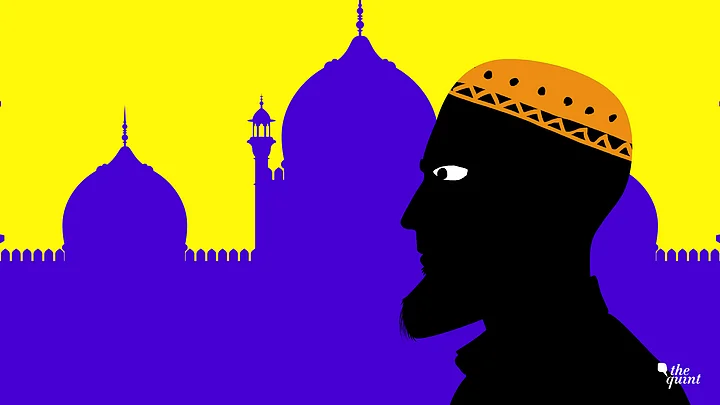
“I would like to, one day — if it is possible, and I don’t know why it shouldn’t be, because, we are a democracy after all, right? — I would like to not agonise over leaving the security of my domestic arrangements for the occasional vulnerabilities of a communal space. To loiter without worry, to move or travel without trepidation. To not doubt the intentions of folks in the market, in the park, in the metro coach, in the café. To not have someone look askance at me and my children and my loved ones, to not be fatigued by negative thoughts or paralysed by the probability of harm befalling me. Can’t I just be myself, to live without a care in my mind, without this bystander or that onlooker presupposing what I’m all about? Can’t I be accepted without judgement, and received with the understanding that I am equally capable of empathy, love, and loyalty? Can’t I be allowed my humanity, and be embraced for my Indianness?”
Living Under Suspicion
Those who were warned, “Your enemies have mobilised their forces against you, so fear them,” the warning only made them grow stronger in faith, and they replied, “Allah alone is sufficient as an aid for us and He is the best Protector.” (Surah Ali Imran, 3:173)
In amongst times of peace and absences of worry, India’s Muslims have known horror and tragedy. But since the enthronement and subsequent entrenchment of a dispensation so obviously inimical to their interests, life here must oftentimes feel as if they are actors without consent in the theatre of the grotesque, participants denied any agency by a ruling elite that aspires to make a spectacle out of its loathing of Islam.
Put yourself, for a moment, in their shoes, as you step outside your home and make your way to your place of work or college, to the bazaar or masjid, or for just a bit of welcome recreation. You’ll likely be left with a sense of bewilderment and disquiet. And far too many questions.
Questions that rob you of your serenity.
What do you call it when a torniquet has been applied to collective potential? When the doors of advancement are shut closed on the Ummah? When an autocrat and his deranged bhakts deliberately and perniciously stop a community and its many gifted from demonstrating their worth and merit? When a degree and a future can be sacrificed at the altar of a venal chauvinism? When a people are sidelined politically, institutionally, economically, socially — legally, even — and their access to jobs, housing, land, or any space to call their own, restricted?
What do you call it when the faithful are stripped of dignity, of every basic human right? When they are singled out, traduced, and humiliated for their quirks, for what they wear, what they eat, how they speak, how they look, and who they love? When their very identity is weaponised and criminalised, their every movement, word, and gesture suspected, their character assassinated? When they are pursued by ugly stereotypes and idiotic conspiracy theories?
And what do you do when your safety cannot even be assured, since the powers-that-be do not deem you worthy enough to be a citizen of a country in which you were born? When you are left exposed to the frenzy and bloodlust of state-sanctioned hoodlums intent on purloining your peace of mind, and depriving you of even the smallest of joys that make life, amid the capitalist hell of our days, tolerable?
What do you do when your commitment to this land of multiple creeds and ethnicities is questioned every waking hour of every day, over a lifetime, within worlds both physical and digital? What do you do when your children are confronted, unprepared, for the inevitable pointed query about faith and identity?
No one can speak for another possessed of a worldview on — and experience of — life that is poles apart from yours. As much as I would claim to strive to plough on, dismissing the canards and brushing off the threats, I know that having to wake up every morning and bear with such antipathy would demoralise and numb me no end.
A pained reaction, a candid remark, an indignant comment can, under the circumstances, be taken out of context and twisted by sick minds whose only currency is violence, and whose only recourse is to abuse a religion and its peaceable adherents solely for the puerile satisfaction of avenging a perceived transgression from a few centuries back, encouraged by the anti-constitutionalists in power.
Such a life, uncertain, baleful and anxiety-ridden, one would not wish on their wickedest enemy. But from whence will sukoon come, when the line between the everyday, and its expectation of sanity and security, and the hostility of the outside world, gets blurred? When your best — for yourself, your loved ones, and your country — is not only not enough, but falls well short of what the obscurantists reckon as appropriate? When your very existence is considered a betrayal of an odious ideology? When the present feels like a trial run to a more ominous future?
For many, that future is already here.
Living In Fear, Choosing Resistance
Every soul will taste death. And We test you, O humanity, with good and evil as a trial, then to Us you will all be returned. (Surah Al-Anbiya 21:35)
What do you do?
You make yourself scarce, keep your head down, and resolve to make it from one day to the next. You survive, or you fight. Fight with words, on the hustings and in parliament, on college campuses and inside lecture halls, and on the streets alongside comrades. You make it fiercely political, all the while mindful of the vitriol that is bound to come your way, and knowing goons lie in wait to remind you that freedom of expression (guaranteed by the Constitution, but not that we’re keeping score) is conditional if you’re a Muslim, and to ultimately crush your spirit.
Depressingly, the atmosphere today is as vitiated as it was during those dark, bloodstained days of Partition, when neither mohalla nor mofussil, and neither village nor town, was spared. And it is our Muslim brethren, held hostage by abhorrent Hindutva, who are feeling the strain. This didn’t start on December 6, 1992, or during the pogroms in Gujarat in 2002, yet this is the melancholy of our times, hanging in the air like the particulate matter in our cities that leaves us gasping, and settles on our psyches like a coating of dust on old furniture.
And I haven’t even mentioned the recent massacres in Lebanon and Iran, and the genocide in Gaza in which a generation of Palestinians — women, children and men, just like you and I — have been murdered. How does a co-religionist feel when she sees and hears of the agony being inflicted on ancient people, their land and their culture? And how do they feel when their own prime minister bears-hugs the leader of the rogue regime intent on wiping out every trace of Palestine from the map and from our minds?
The torment and anger that we — Muslims and non-Muslims alike — have felt since October 7, 2023, has scarred but also defined our age, made us all the more determined to stand up to the bullies amongst us — including those counterfeit Hindus who would drag their own faith through the mud just to surrender to their macabre urges.
Still, even amid the dangers to Muslim lives and livelihoods, even as we struggle to see through the mephitic smog of ethno-nationalism, we dare to imagine a time when no longer will we have a fascist knee on our throats. We dare to dream differently, to believe in a world in which solidarity exists not only as a form of resistance against tyranny, but as something that binds us, and speaks to the humanity in all of us.
Muslims have been part of – and belong eternally to – Hindustan for the best part of a millennium (Christians, the other minority facing the resentment and cruelty of an unhinged majoritarian cult, for far longer), and have as much right as any other group of believers to call this soil theirs. But being an Indian Muslim in 2026 can feel like a life sentence, hearts burdened and souls emptied of hope. It’s as dispiriting as it is mentally, emotionally, and physically draining.
How can it not be when the humanity of India’s Muslims, just like that of the Palestinians, is being negated, and markers of Muslim-ness are fading physically and from our imaginations, unambiguously by design? When the names of Muslim personages and their contributions to the life and worlds and heritage of Hindustan, are being erased one by one, out of both envy and a warped sense of right and wrong? When old Sufi shrines are being knocked down for fun, and madrasas targeted brazenly? When doubt is being cast on the provenance of mosques, spaces both sheltered and sacred, by those whose intent is debatable at best and prejudicial at worst?
In such an oppressive atmosphere, and stalked by an asphyxiating dread, we would doubtless be preoccupying ourselves with the act of just existing, enduring, while trying to stay alert to the gaslighting, taunts, and provocations without. Defiant but pragmatic. But, gosh, the toll such a life would take: neighbours forever objects of suspicious minds, colleagues presumed guilty until not presumed innocent, friends tainted as outsiders.
And we would be justified in asking: Isn’t this akin to living with grief?
When Solidarity Becomes Suspicion
Our Lord! Remove this torment from us, and we will certainly believe. (Surah Ad Dukhan Ayat 12)
If anything has underscored the excruciating scrutiny and unspeakable harassment faced by members of India’s largest minority, it was the unyielding protests around the leaked NEET paper, in the wake of which some Muslims who helped organise, joined, or gave their time to support the agitating thousands – by feeding or having food delivered to the demonstrators, or by simply turning up in solidarity – were scapegoated for their humanitarian actions.
In Delhi, Kolkata, Patna and elsewhere, the vindictive police state identified them, tracked them back to their neighbourhoods, and arrested them. This, staggeringly, was their punishment. And their crime? Exercising their democratic rights and being good citizens.
What can you do?
What can you do when the institutions you should trust fail you utterly? When politicians employ the tools of democracy – delimitation, special intensive revision – not to strengthen the republic but to weaken it, and to ultimately disenfranchise, dispossess, and impoverish you? You double down, you assert your identity with pride. India’s Muslims are expected – even, sadly, by those who swear by secularism but betray its very ideals – to behave in a certain way, to not draw attention to themselves, to be apolitical, to keep a low profile, and to not, at all costs, be vocal.
Always remember, however, that courage begets courage.
The dauntless Rana Ayyub has never held back in her journalism, calling out the thugs and the thieves, and shining a light on the invisibilised millions who the despots and satraps condescendingly ignore, only because she cares deeply about India. So do Umar Khalid and Sharjeel Imam, politically aware and engaged, who became activists and student leaders because they saw communities across the land – including their own – encumbered and devoured by injustice. And just like Nehru and his fellow travellers in the journey towards Independence, incarceration hasn’t hardened their hearts for anyone and everyone who feels abandoned, persecuted, and brutalised by the neo-colonialist state’s creeping authoritarianism.
When a Muslim, or any other Indian distrusted, disbelieved, and dehumanised by New Delhi, articulates the fears and forebodings of their fellow nationals, they do so from a place of pain, for they have experienced neglect and endured the sting of being cast aside as the other. Their voices carry further, and with greater resonance.
Rana, Umar, Sharjeel — among many outspoken others — are trolled viciously for standing up for egalitarianism and diversity. But when the state so zealously seeks to silence and vilify, there comes a point when you no longer fear the consequences, or worry for your physical well-being. They, and the millions of Indians subsisting on honest endeavour, recognise that moral clarity as an antidote to an overwhelming angst is a most beautiful thing; it is from where resistance derives its strength. No amount of demeaning propaganda (Bollywood or otherwise) or lazy name-calling will divert them from embracing the promise of the India Bhagat Singh and Dr. Ambedkar envisioned.
Azadi Beyond Identity
When we heard the guidance of the Quran, we readily believed in it. For whoever believes in their Lord will have no fear of being denied a reward or wronged. (Surah Jinn Ayat 13)
I was born to a Hindu mother and a Sikh father, but I don’t believe in a supreme power. My atheism, though, has never come in the way of my affinity for and solidarity with my Muslim sisters and brothers, or indeed, all my countrywomen and countrymen who labour to make themselves heard to an insensitive and tone-deaf government, a craven and delusional bunch who choose to discredit and forsake the luminous syncretism of a millennia-old civilization for the make-believe ‘glory’ of a Hindu rashtra. To paraphrase the socialist C.L.R. James, ‘What do they know of Azadi who only Azadi know?’
For, Azadi was always a journey, never a moment in time, a commitment of heart and mind to which each generation must pledge anew. And so the emotion of Azadi, as well as loyalty to the Constitution, is something that comes more organically to the Indian Muslim – and to anyone whose Indianness is relentlessly and mockingly queried – the former a reminder of a shared quest, the latter a promise that your lives matter.
There is both beauty and comfort in observing the Ummah, so maligned and traumatised, not lose their faith in Allah. His words offer guidance for the uncertain, solace for the despairing, and perseverance for the doubting. In his words too is anchored the possibility of liberation, a liberation that is physical and emotional – of Palestine, Sudan, Yemen, and every other Muslim nation forced to accede to a vision conditioned on deracination — as well as spiritual, when the fetters of fascism are thrown off and the fog of gloom lifted, allowing us to fully and joyfully reaffirm our belief in life.
As the country’s streets roil with protests, and as an arrogant administration’s grip on reality continues to loosen — making it even more dangerous, and more prone to fall back on the ill-concealed sadism of its tried-and-tested divide-and-rule policy — Muslims across the land are as key as any other community to safeguarding our welfare, and renewing India’s tryst with destiny. The say, don’t they, that it is darkest just before dawn; InshAllah, that camaraderie-filled dawn is not too far away.
So, surely with hardship comes ease. (Surah Ash-Sharh Quran 94:5)
(The author has been writing on sport, the arts, culture, politics, and the environment for 25 years. He is based in Bhopal. The Quint neither endorses nor is responsible for the same.)