
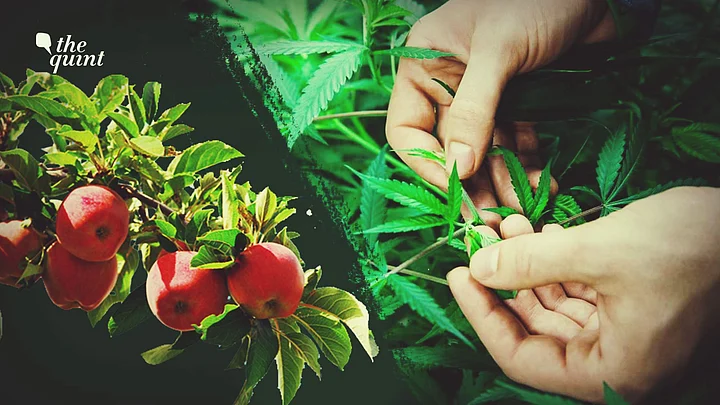
We were on our way back from Jana to Naggar. One of our guides pointed to a large house off the road. It was surrounded by apple trees. “My father was in talks to buy that land”, he told us. “The plan was to grow apples. 25 bighas legal, 25 illegal. But the deal fell through”.
In the November of 2020, we were traversing up and down the Kullu valley. The apple harvest had been picked and packed. Most trees had shed their leaves and the vast tracts of apple orchards covering Kullu valley had transformed into a uniform shade of brown. In the village of Naggar, which was our base, every house with a little open space around it had at least three or four apple trees.
Himachal produces roughly a third of all apples in India, second only to Jammu and Kashmir (albeit by a wide margin). As a local in Naggar explained, even in Kullu valley, the epicentre of tourism in Himachal, most of the region’s prosperity comes from apples. This might be true of Himachal in general — apple farming is estimated to be a ₹5,000-crore industry in the state.