
It’s easy to forget how easily bride-burning, 'dowry deaths,' and the oppression of (and extortion from) young brides took place just half-a-century ago. But social conscientisation, stringent laws, judicial firmness, and women’s support groups had already come about by about halfway through the 1980s.
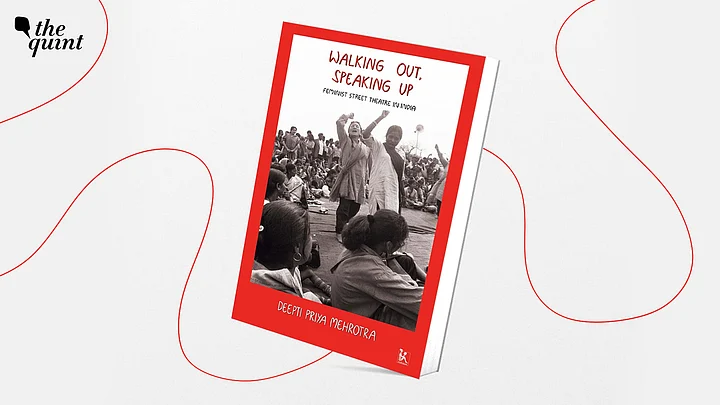
A recent book has brought out the bold and creative roles that feminist street theatre played to cause that change, starting from 1979 with Om Swaha and Ehsaas, and building through the 80s. They were so impactful that, when women’s resource group Jagori called for street play scripts in 1986, at least 80 of the scripts were modelled on Om Swaha.
This is one of the amazing nuggets of information in Deepti Priya Mehrotra’s riveting book, Walking Out, Speaking Up, Feminist Street Theatre in India, just published by Zubaan. The book is not just informative but insightful. It brings alive the processes and iterations through which feminist street theatre subtly but substantially changed social milieus and individual lives—and, one might even say, contemporary history.