
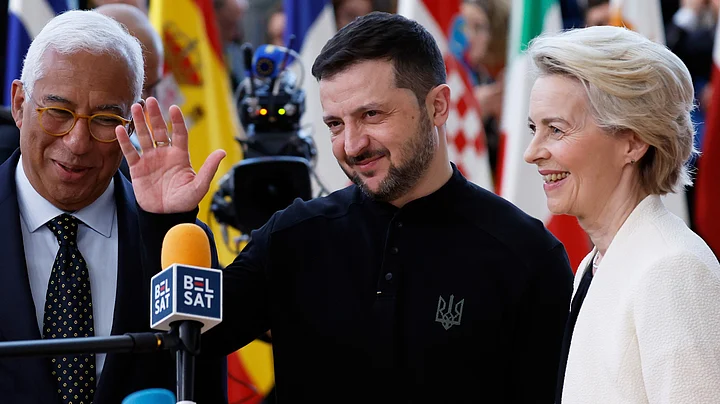
Since the infamous shouting match between US President Donald Trump and Ukrainian President Volodymyr Zelensky, the latter has been scrambling to try and repair what looked initially like a near-total breakdown in the relationship between the US and Ukraine.
Zelensky, urged by European leaders, including British Prime Minister Sir Keir Starmer, and NATO Secretary General, Mark Rutte, has tried to mend his ties with Trump. The US president acknowledged as much in his first post-inauguration speech to the Congress on 5 March, saying that he appreciated Zelensky’s readiness to work for peace under US leadership.
But that happened just 24 hours after he decided to halt all military aid to Ukraine. And since then, the new director of the CIA, John Ratcliffe, and national security adviser, Mike Waltz, have confirmed that intelligence sharing with Kyiv, which was critical to Ukraine’s ability to hit strategic targets inside Russia, has also been suspended.
Neither of these two moves will have an immediate game-changing effect on the war, but they certainly increase pressure on Ukraine to accept whatever deal Trump will ultimately make with Putin.
So far, so bad for Zelensky. Yet, Trump’s manoeuvring does not only affect Ukraine. It has also had a profound impact on the relationship between the US and Europe.