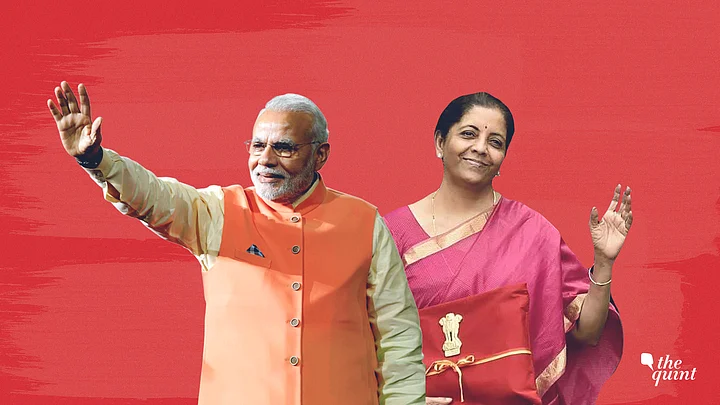
The Economic Survey tabled annually in Parliament, just prior to the budget proposals of the Union government, has three key features:
First, it is the only government document that reviews all sectors of the economy in an unbroken chain from 1951. This year’s Economic Survey has 16 chapters. The 16th chapter is an omnibus curation defining Atmanirbharta dynamically—from import substitution in the past to strategic reliance in the present, and strategic interdependence in the future.
Second, the Economic Survey is prepared by the Office of the Chief Economic Advisor (CEA) where, since 2009, incumbents of this office have been appointed from outside the government civil service system to helm the work of about 400 in-house professionals from the Indian Economic Service. In this sense, professionals own the Economic Survey, though the finance minister tables it in Parliament. This illustrates the unique trust and confidence between politicians, the civil service, and professionals inducted into the government—a model worthy of replication across all ministries.
Third, while it is a government document, it gains value by going beyond extant government policy. This year, to enhance non-tax revenues, it suggests redefining public sector companies as those in which the government owns at least 26 percent equity rather than the current 51 percent. This change would enable additional divestment of public sector equity without privatising management.
But is this a good move? Government profits by selling more equity once a private owner enhances the company’s market value. However, increasing the equity stake at sale also raises the purchase outlay, which could dampen private investment interest and competitive bidding.
The Survey conjectures that medium-term real growth could be around 7 percent of the gross domestic product (GDP), and between 6.8 percent and 7.2 percent of the GDP next fiscal 2026-27. This assessment is realistic, given the prevailing uncertainty and enhanced global insecurity, but it is not aligned with the long-term goal of Viksit Bharat by 2047. More substantively, the Survey highlights that India must do more to move on to a 9-10 percent real growth path in rupee terms.
The Economic Survey runs to 700 pages. It is a rich and varied read, with an engaging depth of analysis and introspection. Summarising it would do it an injustice. Nevertheless, four chapters stand out.
The State of the Economy, Fiscal Consolidation
Chapter 1, “State of the Economy: Pushing the Growth Frontier”, is mildly self‑congratulatory but well deserved, as India ends the fiscal year with a real growth rate of 7 percent and the distinction of being the fastest growing large economy.
Chapter 2, “Fiscal development: Anchoring Stability through Consolidation”, evidences a declining fiscal deficit and stable tax revenues despite rationalisation in income and corporate taxes, and more recently in the Goods and Services Tax (GST). Belt‑tightening has reduced the Union government’s revenue deficit, releasing more resources for capital expenditure, including defence and infrastructure.
Homilies urge state governments to exercise similar fiscal prudence. However, states have their own concerns: liberal discretionary use of “cess” rather than taxes increases Union government revenues without sharing them with states. Can a collaborative forum set limits on the discretionary use of such sovereign privileges?
Rupee Weakness, Capital Flows, and Hidden Upsides
Chapter 3 on “Monetary management and financial intermediation“ provides clues for the ongoing depreciation of the rupee, even though this subject comes squarely under the Reserve Bank of India (RBI).
Foreign portfolio investors were net sellers of Indian securities from April to December 2025, because Indian equities were trading at high valuations relative to earnings. Combined with a “broad‑based global risk‑off sentiment”, this explains why foreign portfolio investors (FPIs) sold Indian equities exposed to external market risks such as IT and healthcare in FY26 (April-December).
The ongoing weakness of the rupee is, however, not without its benefits. It helps Indian exporters by hedging against extortionist import tariffs in export markets. Also, the consequent rise in import costs also creates market incentives to invest in India, make for India and the world, create jobs, and add to GDP growth.
Inflation: Confidence Amid Uncertainty
Chapter 5, titled “Inflation: Tamed and Anchored,” is unusual.
The Survey notes that “India’s inflation rate—headline and core, excluding precious metals—will be higher in FY27 than in FY26 (by 1.7 percentage points)”. Yet, it concludes that inflation will remain within the normative 4 percent range and is “unlikely to be a concern”.
Full reservoirs for the winter sowing of kharif crops and government efforts to restrain fertiliser prices are expected to deliver a bumper harvest in 2027. Meanwhile, softening global commodity prices should contain core inflation (excluding food and fuel).
Artificial Intelligence: Follow, Don’t Lead
Chapter 14 is a perspective on the next steps for Artificial Intelligence (AI). The World Economic Forum at Davos 2026 also focused on AI. Regulating disruption to employment, surging energy demand, the diversion of public fiscal resources, and private capital were key themes.
But these are relevant only to advanced economies, where capacities and systems are fully developed, not India, where incremental investment remains key. Nevertheless, experience suggests a flight of substantive volumes of risk capital to AI. But is there a choice? Countries which are not “at the table will be on it.” This points to the need for imaginative partnerships and “just enough” regulation so as not to trigger a flight of capital to somewhere else.
In this context, policy prescriptions for AI appear too rigid. Comprehensive regulation in advance of investment is often viewed as a benefit, but this might be a mistake. Instead, the government should encourage the flow of private capital (foreign and domestic) into AI. Private capital will come with its own set of policy prescriptions. If these are consistent with extant domestic laws, global practice, and beneficial for industry, as opposed to a particular corporation only, approval should follow.
It is normal for governments to want to be in the driver’s seat. India has seen where a government-driven bus can take us. This temptation should be avoided. In this sector, the government must listen rather than preach, facilitate rather than promote, and remain minimalist rather than maximalist in rules and regulations.
Entrepreneurs should determine the scope, direction and scale of enterprise. Anything else risks putting the golden goose into a coma.
From Import Substitution to Strategic Interdependence
Chapter 16 correctly defines the broad parameters for moving from import substitution to import partnerships and finally to interdependence.
Initially, others have the capital and the technical smarts. We have the population to generate data and a growing market to absorb new services and products. Others will look only at the efficiency of investment. We will subtract the social costs (unemployment, new infra cost, loss of existing tax revenues) from our benefits. Where these calculations intersect, both sides can gain.
Next, India could be partners in third country markets. Eventually as rapid growth provides India economic heft, we could deepen our strategic resilience by exploring developed markets for investment opportunities. This is the stage of strategic interdependence—the business equivalent of mutually assured destruction in the nuclear race—providing both stability and growth.
(Sanjeev Ahluwalia is distinguished fellow Chintan Research Foundation and was previously in the IAS and the World Bank. This is an opinion piece and the views expressed are the author's own. The Quint does not endorse or is responsible for them.)