
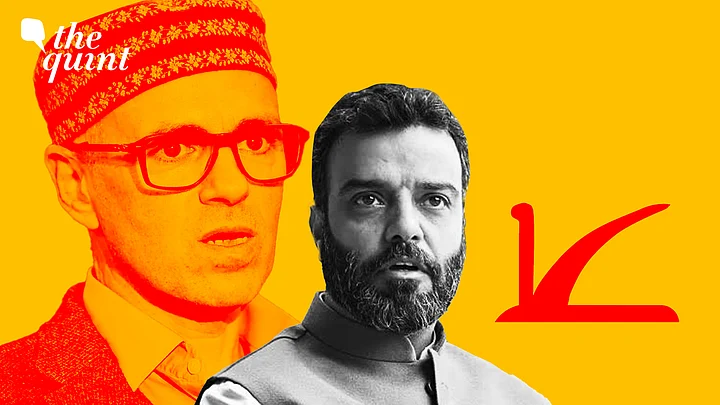
In the charged political climate of post-Article 370 Jammu and Kashmir, dissent, especially from within the mainstream political fold, carries layered meanings.
It is no longer merely about ideological differences or leadership styles; it has become a complex performance shaped by institutional irrelevance and a desperate battle for political survival. In this context, when a senior leader like Aga Syed Ruhullah Mehdi publicly challenges his party, the Jammu and Kashmir National Conference (NC), for its silence and strategic ambiguity, it is tempting to read it as a sign of internal democracy.
But the reality is more complicated than that.
Earlier this year, Ruhullah, a Shia leader from Budgam and an MP representing Srinagar, broke ranks to criticise his party’s equivocation on the constitutional disempowerment of the region.
Calling for a more assertive stance on political dignity and the restoration of autonomy, Ruhullah’s statements stood out not only for their candour but also for the eerie quiet with which they were received by the NC leadership. No rebuke. No endorsement. No debate. Just a studious silence.
This episode is emblematic of a broader strategy, one that has become central to the NC’s political grammar since 2019: the careful curation of internal dissent as a survival mechanism. By allowing occasional eruptions of discontent from within, the party simulates ideological vitality without risking structural disruption.