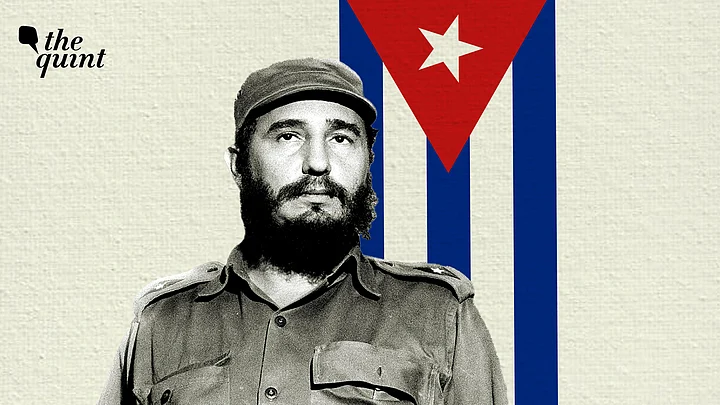
Emboldened by Washington’s regime change in Venezuela, Cubans—suppressed for decades under communist rule—will sooner, rather than later, spill onto the streets. This is inevitable. It is not a question of if, only when.
On a two-week visit to Cuba some years ago, with Fidel Castro hovering on his deathbed and precious few praying for his recovery, I saw this coming clearly—so clearly that even the dullest visitor could not have missed the signs.
Since the 1960s, US embargoes and sanctions had crippled Cuba’s economy, though they never quite managed to keep Americans away.
When I landed at Havana airport, all 18 immigration counters were clogged with serpentine queues of Americans, blithely bypassing their government’s prohibition on spending US dollars in Cuba.
“We just fly to Canada first and then to Havana,” explained the elderly couple behind me. “Cuban immigration doesn’t stamp US passports. When we return, we re-enter the US as if we’ve just been to Canada.”
Sanctions, Cigarettes, and the Illusion of Isolation
Outside the terminal, the all-pervading smell of cigarette smoke—an essential ingredient of the Cuban atmosphere—caressed my nostrils. Cigarette butts carpeted the ground. People flicked cigarettes into the road without even bothering to stub them out. Havana greeted me not with slogans, but with ash.
As my taxi sped towards the city, another car drew alongside. A man and a woman inside. The woman cast furtive glances at me. “Ah!” said my driver knowingly. “A beautiful mulata. A fine lover. She will take very good care of you. You only need to show kindness and generosity.”
She was beautiful—yet her eyes carried a sadness that no amount of tropical light could disguise.
“And the man with her?” I asked.
“Her husband.”
“What! He is pimping his wife?”
“That is Cuba,” the driver sighed. “We all need two jobs to survive.”
Doctors by Day, Taxi Drivers by Night
The couple followed us like a hound stalking its prey. I felt like a hare and resolved not to be caught.
At dawn I left the iconic Hotel Nacional de Cuba—once host to Churchill, Hemingway, Ava Gardner, Sinatra, and the American Mafia, now briefly host to me—and drove to the 16th-century El Morro Fort to watch the sun rise over Havana harbour.
My taxi driver this time was a woman—a medical doctor at a government hospital. “I drive this taxi on my way to work and back,” she said. “A doctor earns only $32–35 a month. In Cuba, everyone needs two jobs.”
“My husband is a university professor,” she continued. “He has been standing outside our house since 5 am selling bread we baked last night. Some things are cheap here. Education is free. Bus fare costs almost nothing.”
“Your healthcare system is very good, I’m told,” I offered.
“It is,” she replied bitterly. “But it only prolongs our life—and our misery.”
Spitting at the Revolution
Twice, while travelling in a tourist bus, I passed the gates of Fidel Castro’s palatial residence. Both times the driver and conductor stopped, got out, and spat contemptuously at the gate.
“Death to this devil who condemned us to a life of want,” one of them shouted.
“How did he rule Cuba for 49 years?” I asked.
“This idiot couldn’t manage a household, let alone a city or a country,” came the furious reply.
Despite the myth, the uniforms, and the murals, Castro was deeply despised by ordinary Cubans. As my guide explained, only those who praised “The Supreme Despot” were rewarded. Obedience brought honour, privileges, and better futures for one’s children. Dissent only brought hardship.
She also confided that her brother, an accountant, masqueraded as a priest in his spare time. Religion may have been banned, but despair was not—and he made brisk business secretly blessing the poor, who could hope for salvation only through divine intervention.
Farmers Without Freedom
In villages across the island, farmers told the same story. With prices fixed by the state, there was no incentive to produce.
“If I don’t work my livestock, they die,” said a farmer near Cienfuegos. “But farming ruins me. If I miss the target, I am punished. We are slaves, just without chains.”
In Camagüey, Cuba’s sugar bowl, another farmer was more bitter still. “I sold four cows just to meet my cultivation expenses. If I exceed the target, nothing happens. Even a dog is rewarded for obedience.”
Near Santiago de Cuba, villages lay abandoned by the state. No electricity. Men sat bare-chested outside their homes; women fanned themselves, skirts lifted above their knees, waiting for night to bring relief.
Later that evening, a waiter leaned close and whispered into my ear. “Almost three million Cubans have fled during Castro’s rule—one in four of us. People will migrate to anywhere. Even Haiti.”
The Soviet Union once kept Cuba afloat. Its collapse sent the economy into free fall. Venezuela later propped it up with highly subsidised oil. Now, with Venezuela subdued and oil supplies cut, Cuba stands paralysed.
In Washington sits a Cuban-American Secretary of State, who openly favours regime change. In the US live 2.4 million Cubans, many fiercely Republicans, waiting for history to knock.
If Donald Trump were to send troops into Cuba today, seeking regime change, his soldiers would be welcomed with open arms by a people utterly exhausted by their government.
(The author is a Fellow of the Royal Geographical Society and Explorers Club USA, and Editor of ‘Indian Mountaineer’. He is also the founder of Bharatiya Yuva Shakti, an organisation that ensures good leadership at the village level. He tweets @AkhilBakshi1. This is an opinion piece, and the views expressed above are the author’s own. The Quint neither endorses nor is responsible for the same.)