One of the most remarkable features of the recently concluded Gen Z-led protest was not just that it succeeded in barely 33 days—making it one of the shortest successful nationwide protests in more than a decade—but how it succeeded.
In recent years, we have seen movements such as the farmers protest continue for months—and in some cases, years—before governments responded. This time, India's youngest generation achieved what many believed was impossible in just over a month.
The success of the movement was not merely in forcing the government to concede its demands. Its greatest achievement was refusing to allow the narrative to be hijacked.
For years now, governments have relied on two powerful tools whenever they have found themselves cornered. One, the support of a large section of the mainstream media, now widely referred to as Godi Media. The other is turning almost every issue into a Hindu-Muslim narrative. Time and again, difficult questions have been pushed aside by manufacturing a Hindu-Muslim debate.
This protest denied both those opportunities.
Instead of allowing attention to drift towards manufactured controversies, the protest kept public discussion centered on the issue that had brought students to the streets.
The movement bypassed much of the mainstream media through social media and independent journalism. At the same time, it consciously refused to be drawn into communal politics. The focus remained firmly on students, public examinations and accountability.
The Protest That Refused to Be Divided
Ironically, this may also explain why many Muslims chose to remain in the background. There was a widespread fear that the moment Muslims became the visible face of the protest, attention would shift away from the issue itself. The movement would no longer be discussed as a struggle for students' rights but as yet another "Muslim protest".
Yet even less participation did not guarantee immunity.
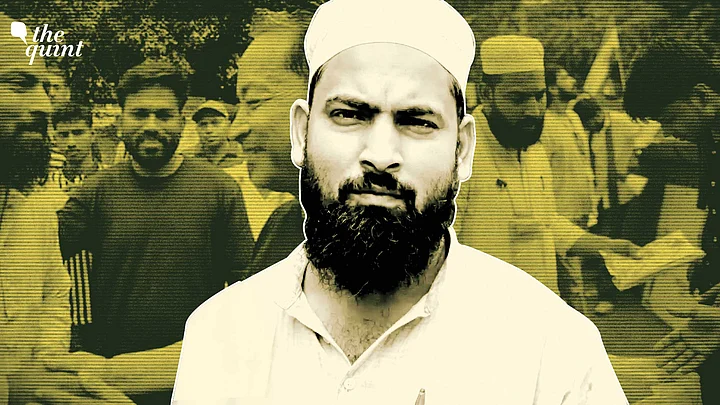
Take the case of Mohammed Junaid, who had been serving free meals to protesters from the very first day. Before Education Minister Dharmendra Pradhan resigned, an inquiry was initiated into the funding behind the free meals Junaid was serving protesters. According to those close to him, police questioned members of his family, including his sister. After the protest concluded, Junaid was detained in Delhi, questioned and later released. To many observers, the manner of the questioning appeared disproportionate for someone engaged in humanitarian support rather than violence.
And Junaid's experience was not unique. Similar incidents were reported elsewhere in the country.
In Assam, three Muslim youths were arrested after they created a WhatsApp group for attempting to organise a protest in support of Cockroach Janata Party (CJP)’s nationwide movement.
In West Bengal, following the massive student protest in Kolkata, chief minister Suvendu Adhikari dismissed it as a "Friday protest" , reducing a 'broad-based citizens' movement to a communal stereotype. It was also said that many participants were not National Eligibility cum Entrance Test (NEET) aspirants.
Soon afterwards, FIRs were registered against 70 people. A little over a dozen people were arrested under the newly introduced Goonda Act in the state, a majority of them Muslims.
Taken together, these incidents reinforce a perception among many Muslims—particularly in BJP-ruled states—that public participation increasingly carries risks they believe other citizens are less likely to face.
Whether these actions ultimately withstand legal scrutiny is for the courts to decide. But the larger question remains: why is it that whenever Muslims participate in a democratic movement, the spotlight so quickly shifts from the issue being protested to the identity of those protesting? And what effect does that have on the willingness of ordinary Muslims to participate in public life?
When Citizenship Begins to Feel Conditional
This recalls another moment in India's recent history.
After the horrific 2012 Delhi gang rape, thousands of young people occupied the streets demanding justice. Nobody asked why those people whose wards did not face sexual harassment were participating, or to which religion they belonged. They were simply Indians exercising their democratic right.
Why should it be different today?
This is where a much larger question emerges.
If Muslims begin believing that participating in any democratic movement could expose them to suspicion or harassment, what does that mean for Indian democracy? Can democracy remain healthy if one section of citizens gradually withdraws from public life—not because it lacks concern, but because it fears the consequences of participation?
India has witnessed protests on unemployment, education, corruption, farmers' rights and many other issues. But perhaps the deepest question before the country today is communalism.
When will lynchings, arbitrary demolitions, economic boycotts, selective policing and unequal application of the law cease to be viewed as "Muslim issues" and instead be recognised as constitutional questions—questions about equality before the law, freedom of expression and the right to peaceful assembly?
If Gen Z has shown that it can think differently and organise differently, it now has another responsibility. It must also ask whether democracy can be complete if millions of citizens participate in public life under unequal conditions.
Irfan, Shaheen Bagh, and the Unseen Talents of India’s Muslims
One of the most powerful voices during the recent movement came from Irfan, a daily-wage labourer. Listening to him, many were surprised by his understanding of the Constitution. He may not have had the opportunity to pursue higher education, but he spoke about constitutional values with remarkable clarity and conviction.
His words reminded us that there are countless such voices across this country—voices that are rarely heard, not because they have nothing to say, but because they are seldom given the space to speak.
The Shaheen Bagh movement had revealed something similar. It introduced the country to thousands of talented Muslim women and men.
They were asking for what every citizen deserves—the freedom to live without fear, to travel without anxiety, to contribute to the nation and to enjoy the same rights that others often take for granted.
The Next Democratic Test
The question is no longer whether such aspirations exist.
The question is whether India is prepared to respond to them honestly. When will politics stop speaking in coded language and openly address the discrimination that many Muslims face? When will political parties fight not only for elections but also for the equal citizenship promised by the Constitution?
These are uncomfortable questions. But every generation inherits one defining challenge.
India does not merely need another protest. It needs a protest against the normalisation of hate itself—not one community marching for another, but citizens standing up for the Constitution. If Gen Z has already rewritten the rules of political mobilisation, perhaps it can now help rewrite the moral priorities of the Republic as well.
(Shahnawaz Akhtar is founder-editor of eNewsroom India and writes on politics, democracy, human rights and marginalised communities. This is an opinion piece and the views expressed are the author’s own. The Quint neither endorses nor is responsible for them.)