
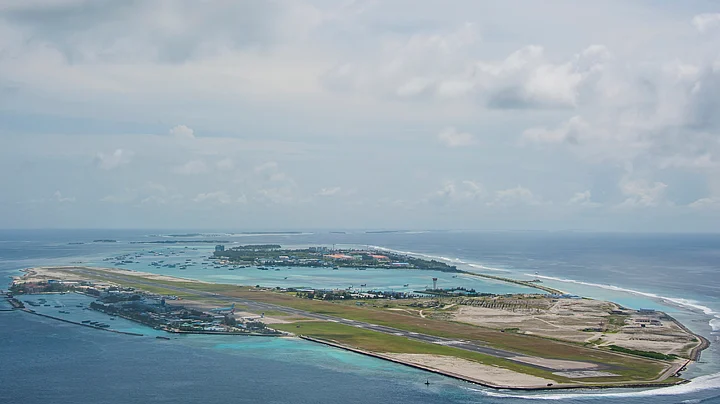
With China’s footprints growing larger each year in the Maldives – the Indian Ocean archipelago in its backyard – New Delhi is recalibrating its policy towards the island nation.
Foreign Secretary S Jaishankar was there this week, trying to rework bilateral ties, which had dipped precariously after Prime Minister Narendra Modi dropped an official visit to the country in March this year.
In an outreach to its ocean neighbours, Modi had planned to visit Maldives, Mauritius, Seychelles and Sri Lanka, but following the 13-year jail sentence against former president Mohamed Nasheed on terror charges, Male was dropped from the itinerary. Indian criticism did not go down well with President Abdulla Yameen who was affronted by the cancellation. More so because the Maldivian Democratic Party made much of it and profusely thanked India for giving Yameen the short shrift.
But besides a statement condemning the sentence against Nasheed and cancelling the PM’s visit, India did not get into the act to diffuse the crisis. Instead, New Delhi left it to the Commonwealth to take up the cause of the jailed MDP leader.
During the crisis in 2012, when Nasheed claimed he was being forced to quit because of a coup, India had played a much more active role. Ironically, India helped install Mohammed Waheed as president. India backed the wrong horse, because Waheed changed Maldives’ past pro-India policy and leaned heavily towards China.