
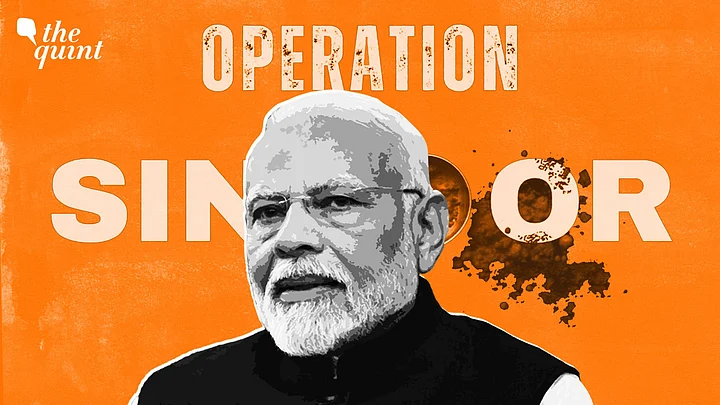
As the first round of talks between India and Pakistan since the ceasefire, Prime Minister Narendra Modi addressed the nation on 12 May, the first time since tensions escalated between India and Pakistan on 7 May. The speech assumed significance, not just in terms of addressing the nation and the Opposition (which has been seeking a special Parliament session with the PM since the ceasefire), but also for assuaging the saffron camp followers and supporters, many of whom have expressed disappointment at how the tensions ended.
The punitive action by India against Pakistani terror bases as a response to the Pahalgam attack put the spotlight sharply on the edifice of “muscular nationalism" built and propounded by the Modi-led Bharatiya Janata Party (BJP) government. The aftermath of the conflict, however, promises to present new strands of majoritarian politics within India's polarised saffron camp.
Had the action, initiated under the cleverly codenamed Operation Sindoor, ended on 7 May, when India carried out precision strikes against nine alleged terror hubs in Pakistan and Pakistan-Occupied-Kashmir (PoK), the “muscular nationalism” plank of the BJP would have remained untarnished.
In fact, the BJP would still have been thumping its chest, had India and Pakistan blown the peace whistles to end the conflict on their own, without external intervention.