
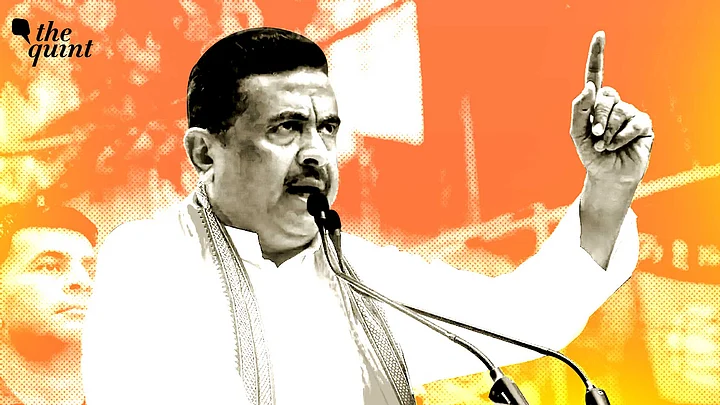
At face value, the twin “anti-goonda” Bills, now the West Bengal Public Safety and Control of Anti-Social Activities Act, 2026 and subsequent West Bengal Maintenance of Public Order (Amendment) Act, 2026 are a strict response to Bengal’s violent political landscape, which since the rule of the CPI(M) has included a necessary nexus between local strongmen and the ruling party.
Yet, a thorough read reveals an asymmetric process of identifying, justifying and adjudicating the threat of “goondas,” with gaps in the policy leaving room for punitive misuse against political opposition in West Bengal.
While the association between party and muscle men began with the Left, muscle men had become integral to Trinamool’s consolidation of power since 2011. Without the ideological discipline of the Left cadre, the Trinamool depended on this network of local strongmen for both campaigning, maintaining chains of patronage and stifling competition from the opposition.
Over time, this association integrated itself as a routine and benign institution within Bengal’s party-state, propounding a culture of cut-money, hawala, “protection-money,” extortion, illegal land acquisition, construction materials, dubious local tenders and so on and so forth. Political backing allowed criminal nexus to monetise its activities, while the political establishment gained from their discretionary use.
Mamata and the Trinamool turned a blind eye to these practices while in power, with the state police not taking cognisance of public grievances.
Towards this end, the raison d’etre for the Acts have been justified as regaining order in the alleged “jungle raj” under Mamata Banerjee.
Did BJP Need New 'Anti-Goonda' Laws in Bengal?
While political goon-ism had become a perennial feature of Bengal’s politics, the shift in policy isn’t simply at the Bhartiya Janata Party’s (BJP) ethical merit, but also in line with the political compulsions and its relative advantage compared to prior regimes in Bengal.
First, the BJP’s 2026 West Bengal Assembly mandate had also been a result of fatigue of voters from navigating the constant intimidation of this politics-crime-market nexus. The decoupling of the state from said non-state actors whose political alignments are transient and whose political association would put BJP voters, attracted by the promised an uncompromising eradication of the Trinamool raj, ill-at-ease.
The Adikari government routinely places this politics of difference from that of Trinamool, with Samik Bhattacharya, the BJP President in Bengal, repeating the leadership’s commitment to prevent “Trinamoolikaran” of the BJP.
At the same time, the BJP, unlike the Trinamool, is a cadre-based party centred around the Hindutva ideology. And unlike the Left, the BJP has a network of socio-cultural organisations and religious organisations operating on its behalf. With the Sangh Parivar ready to provide ground-level management and organisational support, the BJP has no need for the para-state machinery, de-necessitating the staple nexus.
Noting that existing laws were ineffective and inadequate for combating ‘nefarious activities, both, the nomenclature and the historic justification by CM Suvendu Adhikari attempts to strengthen BJP’s credentials as the law-and-order party in Bengal politics, readily referring to public safety bills in Gujarat, UP and Maharashtra, as the inspiration.
However, one cannot view these Acts in isolation, but as part of the legal ecosystem and as having an impact on the political milieu. While most analyses seem to limit themselves to a legal definition of the Acts—seldom do laws translate perfectly in practice. Legal truths are not political realities, and gaps unanswered leave possibilities of misuse.
Expanding the State's Powers
Premised on the principle of strict liability, the Acts set up a “Claims Commission” to compensate from persons accused of vandalising public or private property during unlawful riots or protests. This progressive distinction shifts accountability for sporadic violence to actual perpetrators, ie., those who have actually undertaken acts of destruction rather than leaders or the collective.
For many Bengalis who readily recall the burning of buses on Calcutta streets during agitations, poll and post-poll violence, communal strife during anti-CAA/NRC protests of 2019, and assaults on police personnel—individual accountability is rather welcome as opposed to a surrender to "mob mentality". A liberal reading of these Acts would also hold these to be guarantors against delegitimising movements or political mobilisations for violent elements that may sporadically appear.
However, the finer details of exactly how the causal incident for the damage is established with proof and validity of identification, and the burden of investigation on the already thinly stretched police services of the state, could remain hurdles for efficient use of this provision.
Moreover, what seems to, rightly, draw out leaders like Mahua Moitra and others in the opposition to criticise the Acts is the provision of preventive detention of individuals for up to 12 months without trial and without any formal charges, or trial on the basis of a report submitted by a police officer commanding no less than the rank of superintendent of police deeming such persons a threat to public safety, ie, to prevent a “goonda” from engaging in “anti-social” activities.
By widening the definition of both the terms (goonda and anti-social) in a puported bid to strengthen the arms of state authority in tackling organised crime and public disorder, the Acts allows for subjective and expansive categories for who a “goonda” is and what actions count as being “anti-social.”
Problem With Defining a 'Goonda'
The Acts defines goonda as a category of individuals who satisfies at least one of the following offences: they have either been identified as a member or leader of a group, gang or syndicate, which commits or attempts to commit “anti-social activities.”
They are an offender under serious crimes like narcotics and human trafficking, trading in arms or explosives, etc.
They have committed a chargesheet offence under Section 111 or 112 of Bharatiya Nyaya Sanhita.
Or they simply have a reputation of being generally "desperate" and "dangerous" to the community.
The last of these qualifiers is contentious, with vague wordings like “generally reputed,” “desperate” and “dangerous” to the community. Who identities this desperation or danger? If it is the police, does that make the state administration indirectly incharge of directing the identification of such individuals or offences and thereafter the use of these Acts for preventive detention against such persons?
As vendetta politics has become normalised in political parlance today, partisan incentives can weaponise investigative agencies against political opposition, civic society activism, and social movements.
The alleged misuse of the National Security Act (NSA), and “goonda” Acts in extra-judicial killings in states like Uttar Pradesh have been a growing concern. The Supreme Court too had recently observed the misuse of NSA in Pramod Singla vs Union of India (2023) for prolonged detention of a local politician over personal vendetta.
The BJP’s prompt introduction of UP-like “bulldozer justice” in Bengal, and the Adhikari government naming UP as a stated model for policing, has further polarised the opposition against the Acts.
As the police will neither have to file a chargesheet nor do they need to produce the detainee before a magistrate, individuals who are politically opposed to the government of the day may become victims. Even as proving mala fide intent remains precarious in habeas corpus writs.
Persons may be detained under the Acts and by the time a writ succeeds or the detention time lapses, the process would have become the punishment even if the person ends up not being convicted. Further, an overburdened judiciary routinely delays justice, as court dates are moved forward without verdicts. Delays can further extend detentions.
Similarly, if the recent Bill to disqualify the PM and CMs if they are in custody for 30 days is extended to include legislators, it may politically charge detentions to disproportionately affect opposition parties.
The Elastic Meaning of 'Anti-Social'
Under these Acts, every offence is classified as cognisable and non-bailable, allowing arrests without a warrant, and investigation without court permission. The Bill also adopts an expansive definition of “anti-social activities.” In addition to organised crime, it includes causes that may directly or indirectly—alarm, danger, fear, or insecurity among the general public or any section thereof. Or any disturbance to public tranquillity or obstruction to the lawful exercise of business or duty.
Such broad terms, like hindrance to public tranquillity, could include menial activities like sloganeering, which too can be seen as a hindrance to government duty. While opposition party agitation or even public movements necessarily disrupt the normal course of life, the are often aimed at bringing urgent attention to issues of public interest, be it through rallies, motorcades, strikes, sit-ins, etc.
Calling attention to issues that demand concern from the public at large may also involve sounding the alarm, while whistleblowing on corrupt practices could also include generating insecurity amongst the public. Fear of retribution from state machinery may act as an implicit barrier on civil society, criticism of government ,and opposition mobilisation.
There is a need to give more definition to provisions of the Act, where intent of the actor is considered, as well as the cause for urgency to enforce preventive detention given more clarity.
The Real Target: Political Dissent
The West Bengal government assures that the power of detention is not unfettered, as detention orders would be subject to a three-member Advisory Board, headed by a serving or retired high court judge. What remains alarming is the inability of the accused to have ordinary legal representation when presenting their case before the Advisory Board. An ordinary person representing their case, while in detention, before the legal apparatus of the State, can hardly be contended as free and fair.
While the Supreme Court has repeatedly rejected procedural asymmetry, like in the case of AK Ray vs Union of Inda (1981), and in Md Ajmal Amir Kasab vs State of Maharashtra (2012), the SC upheld that the state is under mandatory constitutional obligation to provide legal access to an accused from the very moment of arrest, the inconsistent with said judgements has resulted in the Acts being appealed for judicial review.
Further, the Acts introduce externment orders, whereby state authorities can direct the removal of a person from an area, district or number of districts for a maximum period of one year if they are believed to be engaged in or about to engage in anti-social activities.
With as high as 46 percent of candidates in 2026 West Bengal elections disclosing criminal cases against them, the possible use of externment powers against candidates during election, which by now is an established norm under the Election Commission of India, adds to opposition's allegations over unfair competition.
While the recent observation by Justice Madhav Jamdar may provide future reprieve rights of protesters to have constitutional safeguards under Article 19, 20 and 32, a juridical consensus is far down the road.
CM Suvendu Adhikari argued that the Act does not impact law-abiding citizens, but leaders from across opposition parties have expressed concern over the Acts' potential for further shrinking space for dissent.
Beyond the possibility for punitive detentions, such laws induce a sense of psychological reverb to self-censor and limit political agitation among an already weakened opposition in West Bengal, where the primary opposition, the AITC, has already dissolved into factionalism, and the INC and CPI(M) do not yet have the footing to act as an effective opposition.
Public agitation and opposition activism are necessary elements of democracy that provide feedback to the government and also align state action with emerging demands and concerns.
Preventive detention has been a flexible kryptonite in the staple toolkit of the State for long. However the emerging trend of using “anti-goonda” laws and policing through State-sanctioned retaliation, including preventive detention, demolition of shelters, etc., actively disincentivises civil society action and generate hesitancy in undertaking political stances against the ruling government.
The lack of legal counsel, inconsistency with previous SC judgements and gaps in the policy, may create more asymmetric challenges for opposition political parties and encourage civil society to exercise more self-censorship, further deepening partisanship.
(Allen David Simon is a political commentator on India, writing on the intersection between political culture and governance. He is currently a South Asia Research Fellow 2026, Center for Gender And Politics (CGAP); a Postgraduate Researcher & Deputy Head of Academics at the International Association of Political Science Students (IAPSS); and Editor at Forum of Global Studies (FGS)This is an opinion piece and the views expressed are the author’s own. The Quint neither endorses nor is responsible for them.).
